7 Tips for Choosing a Large Plastic Water Tank

Choosing a large plastic water tank is not just a matter of buying the biggest container that fits your budget. The right choice depends on what the water is for, how much you need, and where the tank will sit. A tank beside a sunny garden shed faces different conditions from one installed under cover. Small details matter.

This guide looks at seven practical points: capacity, plastic type, intended use, site preparation, access, fittings, and ongoing care. Each can affect how reliably the tank serves a home, farm, or business. Before comparing prices, measure the available space and consider delivery access. A tank may fit on paper but prove awkward to position through a narrow gate. Check the product information for material specifications and usage guidance, rather than relying on a seller’s broad description alone. If the water is intended for drinking, confirm that the tank is specifically suitable for potable water and follow the manufacturer’s cleaning instructions.

There is no single best size or design for every property. A larger tank can provide useful reserve capacity, but it also needs a properly prepared base and enough room for inspection. That trade-off is easy to underestimate. I would still double-check outlet placement before ordering; moving a full tank is not a simple fix. The tips ahead will help you compare options with clearer priorities, ask suppliers more useful questions, and avoid choices that look convenient only at first. A little planning now can prevent daily annoyances later.
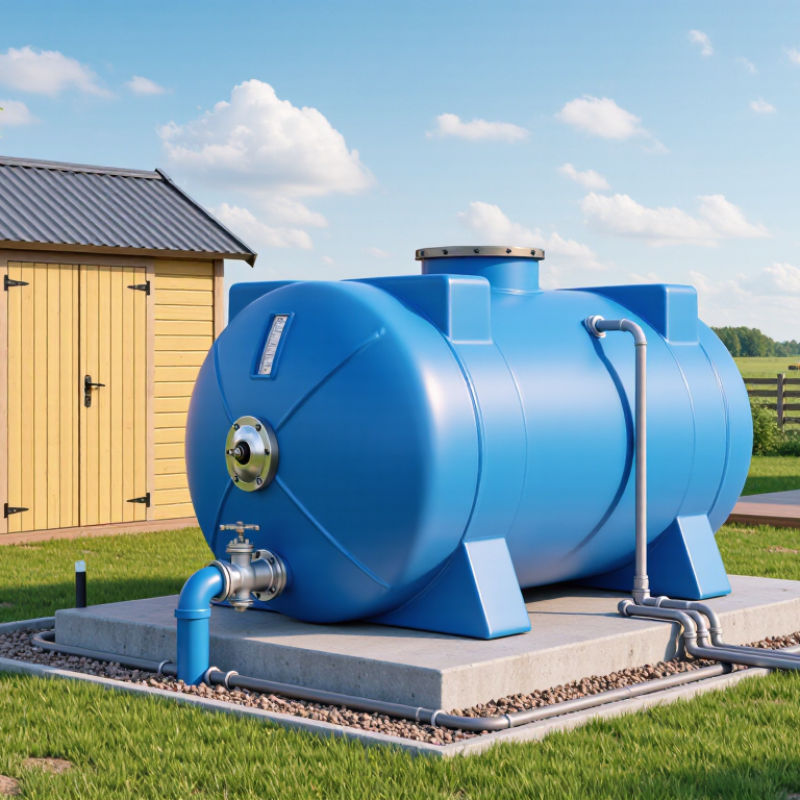
7 Tips for Choosing a Large Plastic Water Tank

Assess Your Water Storage Needs and Required Tank Capacity

Assessing capacity starts with daily demand, not the tank’s advertised size. The World Health Organization’s report, Domestic Water Quantity, Service Level and Health, notes that 50–100 litres per person per day generally meets most basic needs. This is a planning range, not a universal household rule. Four people using 75 litres each need 900 litres for three days. Add a modest reserve, then check the tank’s usable capacity.

Tip: List who will use the water and what it must cover. Drinking, cooking, handwashing, and toilet flushing have different demands. A garden hose can empty a tank surprisingly fast. If the supply is for drinking, use locally verified safe-water guidance and suitable treatment; storage volume alone does not ensure water quality.

Tip: Match capacity to the longest realistic gap between refills. For a four-person household, a three-day supply at the example rate is about 900 litres before reserve. A tank near 1,000 litres may fit that plan, but confirm its outlet height and residual volume. My own estimates tend to look tidy on paper. Actual use varies, so track a week of consumption before buying, especially if laundry or irrigation shares the tank.

7 Tips for Choosing a Large Plastic Water Tank - Assess Your Water Storage Needs and Required Tank Capacity

Tip What to Assess Example Planning Inputs Estimated Storage Needed Suggested Nominal Tank Capacity
1. Define the water use Decide whether the stored water is for drinking and cooking only or for broader household use. Emergency drinking and cooking allowance: 4 people × 1 US gal per person per day × 7 days. 28 US gal before reserve; about 31 US gal with a 10% allowance. 35–50 US gal; confirm the tank is suitable for potable water if used for drinking.
2. Estimate basic household demand Use a realistic daily-use figure for the household and the level of conservation expected. 2 people × 25 US gal per person per day × 3 days. 150 US gal before reserve; about 165 US gal with a 10% allowance. About 200 US gal.
3. Plan for typical indoor use Include regular indoor uses such as cooking, handwashing, bathing, and toilet flushing. 4 people × 50 US gal per person per day × 3 days. 600 US gal before reserve; about 660 US gal with a 10% allowance. About 700 US gal.
4. Choose your autonomy period Allow for the number of days the tank must supply water without a reliable refill. 4 people × 50 US gal per person per day × 7 days. 1,400 US gal before reserve; about 1,540 US gal with a 10% allowance. About 1,600–1,750 US gal.
5. Add outdoor demand separately Estimate irrigation or other outdoor use independently; these uses can raise demand substantially. Garden use of 200 US gal per day × 3 days. 600 US gal before reserve; about 660 US gal with a 10% allowance. About 700 US gal for this use alone.
6. Account for long refill intervals Consider supply interruptions, delivery schedules, or slow well recovery when setting the storage period. 4 people × 50 US gal per person per day × 14 days. 2,800 US gal before reserve; about 3,080 US gal with a 10% allowance. About 3,200–3,500 US gal.
7. Check usable capacity and site constraints Compare usable volume—not just the advertised nominal capacity—with the required amount. Check footprint, access, foundation, and delivery route. 4 people × 50 US gal per person per day × 10 days. 2,000 US gal before reserve; about 2,200 US gal with a 10% allowance. About 2,500 US gal, subject to the tank’s usable-volume specification and site fit.

Planning note: Figures are illustrative estimates in US gallons, not universal consumption standards. The 25- and 50-gallon daily-use assumptions are planning examples; actual demand varies with fixtures, habits, climate, and water use. Calculate capacity as daily demand × storage days, then add a reserve. Check the manufacturer’s usable capacity, required freeboard, local requirements, and potable-water suitability before selecting a tank.
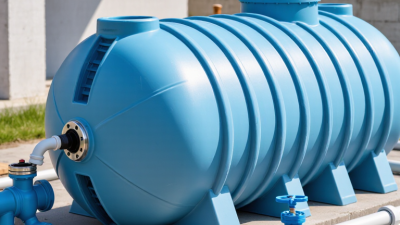
Compare Plastic Types, Wall Thickness, and Tank Construction

Choose the resin for the site, not just the price. High-density polyethylene is common in large molded tanks because it combines low weight with impact resistance. Ask whether the resin includes UV protection if the tank will sit outdoors; sunlight can gradually weaken exposed plastic. PlasticsEurope’s Plastics—the Fast Facts 2023 reports 400.3 million tonnes of global plastics production in 2022. That figure describes the industry, not tank quality, so it cannot replace a resin specification or test record. Check the manufacturer’s stated water-use suitability and temperature limits.

Wall thickness needs context. ASTM D1998-21’s engineering approach considers tank dimensions, stored-liquid specific gravity, and temperature; a single thickness figure cannot tell the whole story. Compare documented design specifications, not only a measurement taken at one accessible point. Look for even walls, reinforced ribs, a stable base, and cleanly formed openings. A full tank puts real load on its floor, and a small, uneven support can become a problem. I would not assume “thicker” always means “safer.” Construction quality and installation matter too. I still find this easy to overlook: inspect the inside and outside for thin spots, warping, or sharp molding flaws before accepting delivery.

Measure the Site and Plan for Delivery and Installation

Before choosing a large plastic water tank, measure the site where it will sit. Check the usable length and width, then allow room for fittings, access, and maintenance. A tank that fits on paper may still block a walkway or sit too close to a wall. Leave practical clearance. It is easy to overlook the outlet position until the tank arrives.

Plan the delivery route as carefully as the final space. Measure gates, narrow turns, steps, and overhead clearances along the way. Ask the supplier about the tank’s delivery dimensions, not just its capacity. Some tanks travel upright; others may need a different approach. A quick phone call can prevent a difficult unloading day. I would still recheck the tightest turn, because estimates are often optimistic.

The base needs attention before delivery. Confirm that it is level, stable, and suitable for the tank’s full weight when filled. Water weighs about one kilogram per litre, so even a modest tank can place a heavy load on the ground. Follow the tank maker’s installation guidance, and consult a qualified installer if the surface or soil is uncertain. Keep vehicle access clear, and agree on where the tank will be placed before the truck arrives. A small chalk outline helps. It is not a substitute for checking the measurements again.

Check Water Safety Standards, UV Protection, and Durability

When choosing a large plastic water tank, verify that its materials are rated for your intended use. If the water is for drinking, look for documented potable-water compliance from a recognized testing or certification body in your region. Check the tank label and request the technical sheet; a vague “food-grade” claim is not enough. Check the paperwork.

UV exposure can make some plastics brittle over time, especially at a sunny, uncovered site. Ask whether the resin includes UV stabilizers and whether the manufacturer specifies outdoor service life. Opaque walls can limit light entry and may help reduce algae growth, but they do not replace cleaning or a fitted lid. Small details matter.

Durability depends on more than wall thickness. Inspect molded seams, outlet areas, and support points, where stress can concentrate when a tank is full. Match the base to the tank’s footprint and load, and keep it level; a slightly uneven pad can create problems later. Check the installation and maintenance instructions before buying. Access for inspection is easy to overlook. No tank is maintenance-free, and lifespan varies with sunlight, temperature, water chemistry, and handling.

Large Plastic Water Tank: 3-Day Storage Planning

Estimated usable water volume for a three-day reserve, using a planning assumption of 50 liters per person per day. This is an example, not a universal requirement; adjust for local guidance, climate, and household use.

When choosing a tank: Check that materials intended for drinking water meet applicable safety requirements, such as NSF/ANSI/CAN 61 where relevant. Look for UV-stabilized construction if the tank will be outdoors, and compare wall strength, fittings, warranty, and maintenance access. Confirm usable capacity rather than relying only on the tank’s nominal volume.

Compare Maintenance Needs, Warranty Coverage, and Total Cost

When comparing large plastic water tanks, look beyond the purchase price and consider the care they require. A wide access opening can make inspections easier, while awkward placement can turn a simple check into a chore. Keep the lid secure, clear debris from vents, and inspect fittings for drips or stress marks. Small problems matter. Sun exposure, water type, and temperature can affect cleaning needs and material life, so follow the care instructions for the specific tank. Also check that you can reach the outlet and drain without moving stored equipment.

Read the warranty carefully. Coverage may exclude damage from poor installation, unsuitable contents, or neglected maintenance, and terms vary between tanks. Ask how long coverage lasts, what documents a claim requires, and who handles transport or repairs. Get the details in writing. Then compare the full cost: delivery, site preparation, plumbing connections, filters, cleaning, and eventual replacement. A lower sticker price may not be the cheaper option over time. It is easy to underestimate maintenance, especially when a tank sits behind a shed and is rarely inspected. A realistic budget should allow for routine checks, not just the purchase day.

We will help turn your vision into reality

Contact Us