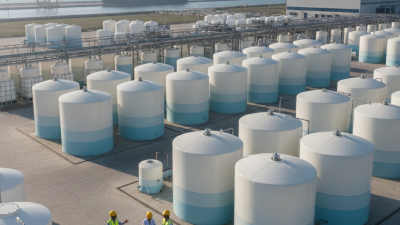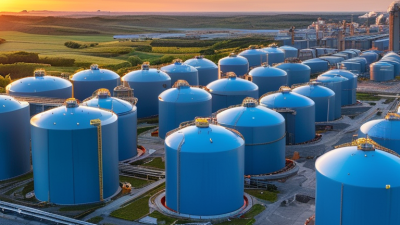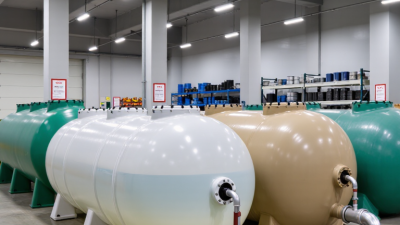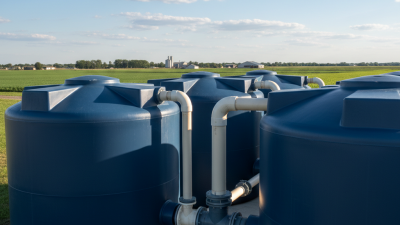
Choosing the best plastic storage tanks from China requires more than comparing prices. Tank performance depends on resin quality, wall thickness, molding consistency, fittings, and after-sales support. The global plastic tanks market continues to expand, according to market analyses from Grand View Research and MarketsandMarkets. Their reports identify water treatment, agriculture, chemicals, and industrial processing as major demand sectors. Growth is encouraging, but it does not make every supplier reliable.
Experienced buyers usually begin with the stored liquid. Polyethylene tanks may suit water, fertilizers, and many mild chemicals. However, aggressive substances require verified chemical-resistance data. A 5,000-liter vertical tank also needs a stable base, correct venting, and protection from prolonged ultraviolet exposure. The International Organization for Standardization and ASTM International provide useful reference standards for material testing, dimensions, and quality control. Certifications should be checked against the actual factory and product model.
Factory evidence matters. Request resin specifications, production photos, dimensional drawings, inspection records, and leak-test results. Chinese manufacturers with export experience should explain their rotational-molding process clearly. They should also identify whether fittings are PP, PVC, HDPE, or another material. Small details matter.
No ranking is perfect. A tank may look excellent online yet arrive with warped walls or poorly sealed ports. This guide compares Chinese suppliers through practical criteria, including material traceability, customization, testing, packaging, shipping readiness, and technical communication. The cheapest quotation may not be the lowest total cost. Careful verification remains essential, especially when tanks will serve farms, factories, or water-treatment systems.
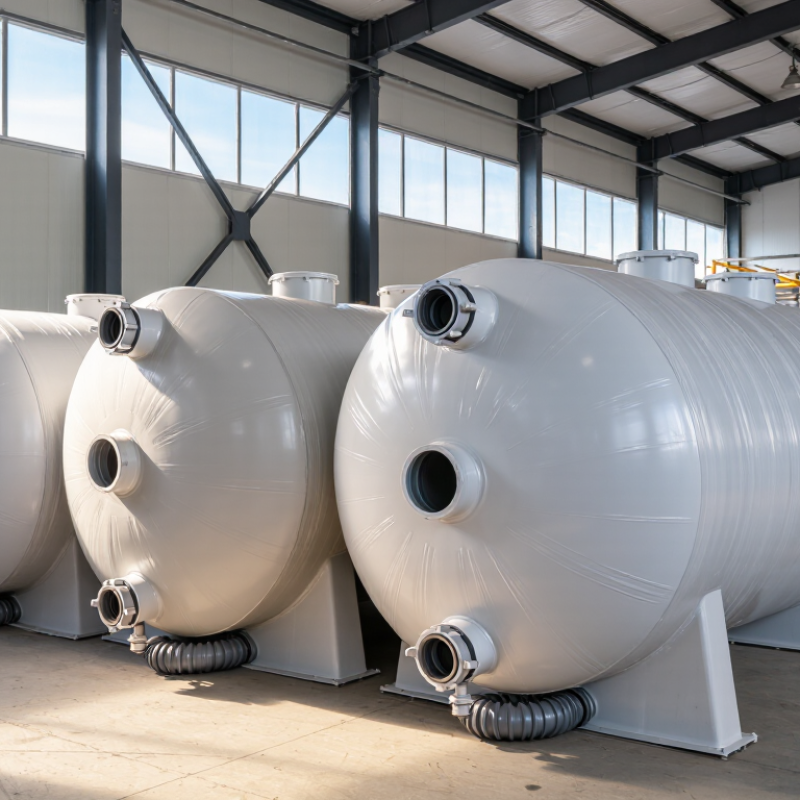
China-made plastic storage tanks are a strong choice because the manufacturing base is unusually broad. Plastics Europe reported global plastic production at 413.8 million tonnes in 2023, with China contributing about one-third. This scale supports competitive resin purchasing, modern rotational-molding equipment, and flexible tooling. Buyers can often request narrow necks, reinforced outlets, translucent walls, or custom fittings. That matters when a tank must pass through a warehouse door or fit beneath a low roof.
Material selection still decides performance. High-density polyethylene offers corrosion resistance, low weight, and useful impact strength. However, not every tank uses the same resin quality. Ask for resin specifications, wall-thickness records, UV-stabilizer details, and batch traceability. The ISO 9001 framework can support process control, but certification alone does not prove tank durability. Request hydrostatic testing records and inspect welds, threads, lids, and molded corners. Small details matter.
The best suppliers also provide clear drawings and realistic load limits. A 5,000-liter tank may look strong, yet uneven ground can distort its base. I have seen buyers focus on price and overlook installation support. That choice can create expensive problems later. China offers strong value, but the factory should be judged by documented testing, communication, and repeatable production—not polished photographs. Independent pre-shipment inspection remains sensible, especially for large orders.
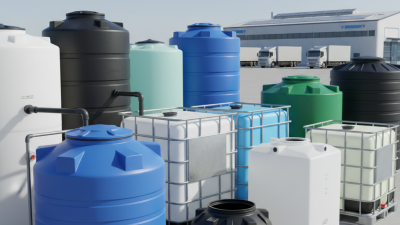
China offers a broad range of plastic storage tanks for water, chemicals, agriculture, and industrial use. Most are produced from high-density polyethylene, polypropylene, PVC, or reinforced plastic materials. Each material behaves differently under heat, sunlight, pressure, and chemical exposure.
Vertical polyethylene tanks suit factories, farms, and water treatment sites with limited floor space. Horizontal tanks work well on trailers or low platforms. Cone-bottom tanks help drain powders, liquids, and thick mixtures more completely. Double-wall tanks provide an added layer for spill control. For smaller volumes, IBC containers and compact dosing tanks are practical choices.
Underground plastic tanks are available for rainwater collection and wastewater storage. They need careful installation because soil pressure can deform weak walls. Polypropylene tanks often handle aggressive chemicals better, while polyethylene remains popular for general storage. PVC tanks may suit selected chemical applications, but temperature limits require attention.
Chinese manufacturers also produce custom tanks with inspection ports, ladders, mixers, level gauges, and heating systems. Quality depends on wall thickness, welding consistency, resin grade, and testing records. Ask for material certificates and load information. A low price can hide poor reinforcement. I have seen specifications that looked sufficient until outdoor heat changed the calculation. Tank selection should match the liquid, capacity, site conditions, and expected service life.
| Tank Type | Common Material | Typical Capacity Range | Typical Shape | Suitable Applications | Main Advantages | Important Limitations |
|---|---|---|---|---|---|---|
| Vertical Polyethylene Tank | Linear low-density polyethylene (LLDPE) or high-density polyethylene (HDPE) | 200–50,000 L | Cylindrical with a flat or slightly dished bottom | Water storage, rainwater collection, agricultural chemicals, liquid fertilisers, and general industrial liquids | Large usable volume, corrosion resistance, relatively low cost, and easy installation | Requires a level foundation; standard polyethylene is not suitable for every solvent or high-temperature liquid |
| Horizontal Polyethylene Tank | LLDPE or HDPE | 300–20,000 L | Horizontal cylindrical tank with saddle supports | Vehicle-mounted liquid transport, low-clearance areas, and farm or construction sites | Lower overall height, convenient access, and good mobility when properly supported | Must be secured against movement; support spacing and load distribution are critical during transport |
| Cone-Bottom Tank | HDPE or LLDPE | 100–30,000 L | Vertical cylindrical body with a conical bottom | Sludge collection, chemical dosing, wastewater treatment, and solids suspension | Improves drainage and helps remove settled material with minimal residual liquid | Needs a suitable support frame; the elevated design may require more installation space |
| Open-Top Process Tank | HDPE, polypropylene (PP), or PVC | 50–10,000 L | Open or removable-top rectangular or cylindrical tank | Mixing, plating, rinsing, wastewater treatment, and temporary processing | Easy loading, inspection, cleaning, and integration with mixers or pumps | Not appropriate where vapor containment, contamination control, or pressure resistance is required |
| Double-Wall Tank | HDPE or reinforced thermoplastic construction | 500–50,000 L | Vertical cylindrical tank with an integral secondary wall | Hazardous chemicals, fuel-related liquids, acids, alkalis, and environmentally sensitive fluids | Provides secondary containment and reduces the risk of an undetected primary-wall leak reaching the environment | Higher purchase cost, larger footprint, and inspection requirements for the interstitial space |
| IBC-Style Intermediate Tank | HDPE inner bottle with a galvanized or coated metal cage | 500–1,250 L | Rectangular container on a pallet base | Bulk liquid handling, warehousing, chemical distribution, and food or water transport where approved | Space-efficient, stackable when designed for stacking, and compatible with forklifts | Limited service life for many reusable units; chemical, food-contact, and transport approvals must be verified |
| Underground Polyethylene Tank | Structural HDPE or rotationally molded polyethylene | 1,000–20,000 L | Horizontal cylindrical or capsule-shaped tank | Rainwater harvesting, septic systems, wastewater storage, and buried utility installations | Saves surface space and is resistant to corrosion and many soil-related conditions | Installation requires correct excavation, anchoring, backfill, groundwater control, and access for inspection |
| Reinforced Plastic Tank | Fiberglass-reinforced plastic (FRP), usually with a thermoset resin | 500–100,000 L | Vertical or horizontal cylindrical vessel | Water treatment, industrial chemicals, scrubber systems, and corrosive-process storage | High stiffness, good corrosion resistance, and suitability for larger engineered vessels | May be more vulnerable to impact or localized damage than thick rotationally molded tanks; resin compatibility is essential |
Chinese plastic storage tanks are commonly made from polyethylene through rotational molding. Powdered resin enters a heated mold, coats the inside, and forms one seamless body. The tank then cools slowly to reduce distortion. This method avoids welded joints, but uneven heating can still create thin areas. The Plastics Europe report Plastics—The Fast Facts 2024 records 413.8 million tonnes of global plastics production in 2023. That scale does not guarantee quality. Material selection and process control still decide performance.
Reliable manufacturers inspect resin batches, mold temperatures, wall thickness, and tank dimensions. Testing often includes visual inspection, hydrostatic leak testing, impact checks, and chemical compatibility review. ASTM D1998 provides guidance for polyethylene vertical storage tanks, while ASTM D543 helps evaluate resistance to chemical exposure. UV testing is also important for outdoor tanks. A tank may look perfect and still fail after months of sunlight or uneven loading. I would request test records, not only photographs. Some suppliers provide impressive documents with weak traceability.
Tips: Ask for the resin grade, minimum wall thickness, test pressure, and production date. Request a sample inspection report. Check whether the tank has internal stress marks, soft corners, or a warped base. Keep the intended liquid, temperature, density, and installation surface in writing. Small details matter. Testing should match real service conditions, because a general water test cannot represent every chemical application.
Choosing the right plastic storage tank begins with the liquid, not the price. Water, fertilizer, cleaning chemicals, and oils can require different plastic grades. High-density polyethylene suits many outdoor applications, but compatibility must be confirmed with the supplier. Never assume that one material handles every chemical safely.
Measure your working volume carefully. A tank should usually have free space for expansion, movement, and safe filling. Check the outlet position, inlet size, drain design, and access opening before ordering. These details affect installation more than many buyers expect. A narrow doorway can also make a large tank impossible to place. Measure twice.
Sunlight and temperature matter. Ask for UV resistance when the tank will stand outdoors. Review the wall thickness, reinforcement, weld quality, and fitting material. Rotational molding can produce strong, seamless tanks, but quality still depends on process control. Request material information, dimensional drawings, test records, and clear photos of the finished tank. A sample or small trial order may reveal problems that specifications hide. I would also inspect packaging and loading plans, because a good tank can arrive damaged through careless handling. Choosing only by the lowest quotation often creates expensive corrections later.
Material density is a useful first indicator when comparing plastic storage tanks. Lower-density materials generally reduce tank weight, while chemical compatibility, operating temperature, UV exposure, wall thickness, and capacity should also be checked before selection.
The chart shows representative midpoint values from commonly published density ranges. Actual density varies by grade, additives, manufacturing process, and tank design.
Choosing the best plastic storage tank from China starts with checking the supplier, not the catalog photograph. Ask for the resin type, wall thickness, production method, and intended liquid application. Polyethylene tanks may suit water, but chemical compatibility must be confirmed for each substance and temperature.
Request recent material certificates, dimensional drawings, and leak-test records. A dependable supplier should explain how thickness is measured around outlets, seams, and the tank base. Ask whether the tank includes UV protection, reinforced fittings, and suitable gaskets. Small details matter. A poorly supported outlet can crack during transport or installation.
Before ordering, inspect the factory through a live video call or an independent audit. Check raw-material storage, welding areas, mold condition, and final inspection procedures. Ask for a sample or a small trial order. Confirm packaging, loading support, spare fittings, and response times for damaged goods. Also review export documents and standards required in your destination market.
Do not trust unusually low prices immediately. They may reflect thinner walls or recycled material. I have seen attractive quotes become expensive after replacement fittings and delays were added. My own process is not perfect; supplier promises can still change between samples and mass production. For this reason, record every specification in the purchase contract and request inspection photos before shipment.