What Is the Best Plastic Injection Molding Machine in China?

Choosing the best plastic injection molding machine in China requires more than comparing prices or reading polished brochures. The right choice depends on production volume, material, part design, cycle time, and factory support. A machine that performs well for automotive clips may not suit medical housings or thin packaging parts. The details matter.

In practical evaluations, buyers should inspect clamping stability, injection accuracy, energy use, control systems, and maintenance access. Ask for molded samples using your actual resin and mold. Watch the machine run. Listen for unusual vibration. Check whether operators can reach filters, heaters, and hydraulic components safely. A factory visit can reveal more than a specification sheet. However, one successful trial is not enough evidence.

Service quality often decides long-term value. Confirm spare-parts availability, technician response times, installation guidance, and training arrangements. Review warranty terms carefully, including exclusions and travel costs. Reliable manufacturers should explain performance limits rather than promise everything. That honesty matters.

The lowest quotation may hide expensive downtime, difficult programming, or inconsistent parts. A higher initial investment can be sensible when it improves repeatability and reduces waste. Still, expensive does not automatically mean better. This is where buyers must reflect. Have the machine’s claimed cycle time been tested under realistic conditions? Does the supplier understand your production environment, or only the sales target?

This guide compares major decision points and practical supplier checks. It aims to help manufacturers make a defensible choice based on evidence, not impressive language. The best machine is the one that remains stable, serviceable, and productive after installation. Reliability is proven on the factory floor.
What Is the Best Plastic Injection Molding Machine in China?

What Defines the Best Plastic Injection Molding Machine in China?

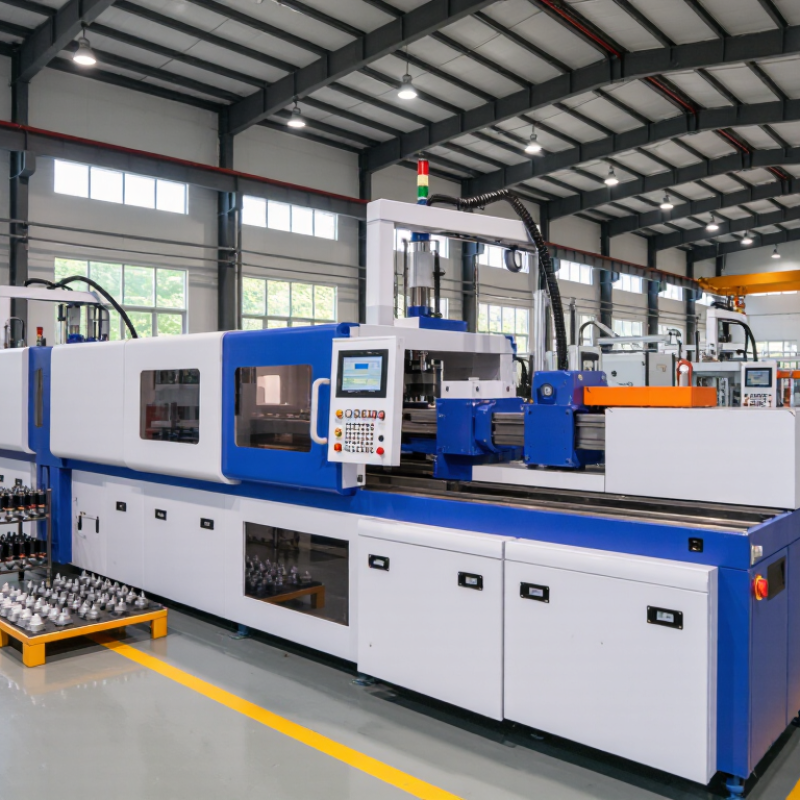
What defines the best plastic injection molding machine in China? It is not the largest clamping force or the lowest quotation. A reliable machine should hold stable pressure, repeatable speed, and consistent mold temperature during long production runs. PlasticsEurope reported 400.3 million tonnes of global plastics production in 2022. That scale makes process control more valuable than impressive specifications. A machine producing identical parts at the first and tenth hour deserves attention.

Energy use also matters. The International Energy Agency identifies industrial efficiency as a major route for reducing energy demand and emissions. Buyers should request measured energy consumption per kilogram, not broad marketing estimates. EUROMAP 60.1 provides a recognized method for evaluating energy consumption in plastics machinery. Servo-hydraulic systems may reduce waste, but actual savings depend on mold design, cycle settings, and operator habits. The machine alone cannot solve poor process discipline.

Safety and service reveal practical quality. ISO 20430:2020 covers safety requirements for injection molding machines, including guarding and control functions. Check emergency stops, access doors, alarm records, and maintenance points on the factory floor. Spare-part availability should be verified with delivery times, not promises. Remote support sounds useful, yet a delayed technician can stop production for days. This is easy to underestimate. My own judgment would also include a trial using the buyer’s material and mold, because catalog performance rarely matches every workshop.
Key Machine Types and Their Suitable Manufacturing Applications

What Is the Best Plastic Injection Molding Machine in China?

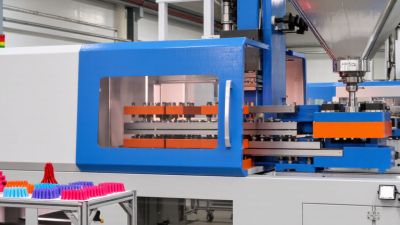
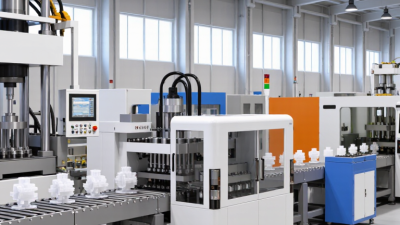
The best machine depends on the product, material, and production rhythm. Mordor Intelligence’s 2024 report estimates the global injection molding machine market at over USD 12 billion. China remains a major manufacturing base, especially for packaging, electronics, and automotive components. Hydraulic machines suit large parts and stable, cost-sensitive production. Electric machines offer cleaner operation, accurate dosing, and lower idle energy use. Hybrid machines balance force, speed, and energy efficiency.

Application should guide the machine type. Electric models fit medical housings, connectors, and thin-wall electronic parts, where repeatability matters. Two-platen hydraulic machines handle automotive panels, crates, and other large components with lower floor-space demands. For caps and food containers, high-speed electric or hybrid systems can reduce cycle time. A 2023 report from the International Energy Agency notes that industrial motor systems are major electricity users, so energy measurement should include the full production cycle, not only rated motor power.

Small details often decide the result. Check clamp force, mold height, screw design, cooling capacity, and local service response. A machine that looks efficient on paper may perform poorly with recycled or moisture-sensitive resin. That is where planning can fail. Trial runs should record cycle time, scrap rate, melt temperature, and kilowatt-hours per kilogram. The ideal selection is rarely obvious. Sometimes a simpler hydraulic machine delivers better value than a sophisticated electric model, especially when the product has wide tolerances and long running hours.

What Is the Best Plastic Injection Molding Machine in China?

Key machine types and their suitable manufacturing applications

The chart uses representative clamping-force midpoints derived from common industry planning ranges. Hydraulic machines are widely used for automotive and general-purpose molding, all-electric machines suit precision and cleanroom production, hybrid machines balance energy efficiency and high output, vertical machines are suitable for insert molding, and two-platen machines are preferred for large automotive and appliance parts. Actual machine selection depends on part size, projected area, material, mold design, cycle time, and required tolerances.

Important Technical Factors for Comparing Chinese Injection Molding Machines

What Is the Best Plastic Injection Molding Machine in China?

The best plastic injection molding machine depends on the product, mold, and production target. In factory trials, clamp force is a practical starting point. Too little force can cause flash around the parting line. Excessive force may increase mold wear and energy use. Compare injection pressure, injection speed, and screw diameter together. A machine with high pressure is not automatically better. Material behavior matters.

Repeatability deserves close attention. Check shot weight variation, pressure stability, and temperature control during several cycles. A stable controller should record alarms and process changes clearly. Servo-hydraulic systems often reduce idle energy consumption, but actual savings depend on settings and maintenance. Inspect the platen flatness, tie-bar condition, nozzle alignment, and mold space. Small mechanical errors can become visible defects.

Tips: Request test samples using your own mold and resin. Measure cycle time, part weight, warpage, and surface quality. Ask for electrical diagrams, maintenance guidance, and spare-part availability. Do not rely only on catalog numbers. I have seen impressive demonstrations fail during longer runs. That is an uncomfortable lesson. Also, compare the machine’s injection unit with future products, not only today’s order. A slightly larger unit may offer flexibility, but it can waste energy when poorly matched. Service response should be tested before purchase, not after a breakdown.

What Is the Best Plastic Injection Molding Machine in China? - Important Technical Factors for Comparing Chinese Injection Molding Machines
Technical Factor Standard Hydraulic Machine Servo-Hydraulic Machine All-Electric Machine Two-Platen Machine High-Speed Thin-Wall Machine
Typical Clamp-Force Range 60–2,000 tonnes 60–1,600 tonnes 30–500 tonnes 500–6,000 tonnes 80–450 tonnes
Typical Application General-purpose parts, household products, industrial components General production requiring lower energy consumption and improved process control Medical parts, electronic components, precision gears and clean-production applications Large automotive, appliance, logistics and industrial molded parts Thin-wall packaging, food containers, caps and high-volume consumer products
Injection Pressure Capability Approximately 1,200–2,000 bar, depending on screw and hydraulic design Approximately 1,400–2,400 bar, depending on screw configuration Approximately 1,500–2,500 bar, with highly controllable injection motion Approximately 1,200–2,200 bar, depending on the injection unit Approximately 1,800–2,800 bar for demanding thin-wall applications
Injection-Speed Range Approximately 50–200 mm/s Approximately 80–300 mm/s Approximately 100–500 mm/s Approximately 80–250 mm/s Approximately 300–1,000 mm/s
Repeatability Generally suitable for standard parts; depends strongly on hydraulic control and maintenance Good process repeatability for most industrial production Very high repeatability for shot size, position, speed and pressure Good repeatability for large molds when platen parallelism is properly maintained High repeatability when injection speed, pressure and cooling are accurately synchronized
Energy-Consumption Profile Higher consumption because the hydraulic pump may run continuously Typically 20–50% lower than conventional fixed-pump hydraulic systems Typically 30–70% lower than conventional hydraulic systems, depending on duty cycle Usually lower than conventional large hydraulic machines when equipped with servo pumps Moderate to high peak power demand because of rapid injection and frequent cycles
Typical Cycle-Time Suitability Approximately 15–60 seconds for common molded parts Approximately 10–50 seconds for common molded parts Approximately 5–40 seconds, depending on mold complexity and cooling requirements Approximately 20–120 seconds for large molded parts Approximately 2–15 seconds for high-volume thin-wall parts
Clamping Accuracy Good for general molding; accuracy is affected by hydraulic pressure stability Good to very good, especially with closed-loop pressure and position control Very good because electric drives provide direct position and speed control Very good for large molds when platen deflection and alignment are controlled Very good when high-speed motion is supported by a rigid toggle or direct-locking system
Recommended Mold Size Small to very large, depending on the selected clamp force Small to large Small to medium Large to extra-large Small to medium, with sufficient mold cooling capacity
Material Compatibility Common thermoplastics, including PP, PE, ABS, PS, PC and engineering blends Common thermoplastics and many glass-fiber-filled materials with suitable screw designs Engineering thermoplastics, precision grades and clean-production materials Large-volume thermoplastics and reinforced materials with appropriate plasticizing units PP, PE, PET-related packaging grades and other materials designed for rapid filling
Control-System Requirements Closed-loop hydraulic pressure and position control are preferred Servo control, pressure transducers, position feedback and recipe management Multi-axis motion control, real-time monitoring and precise injection feedback Advanced mold-protection, platen-parallelism and multi-zone control functions High-speed closed-loop control with fast data sampling and pressure monitoring
Maintenance Considerations Requires regular inspection of hydraulic oil, filters, seals, valves and hoses Requires hydraulic maintenance plus servo-motor, drive and sensor inspection Lower routine hydraulic maintenance, but electrical drives and control components require qualified service Requires inspection of tie bars, locking mechanism, hydraulic circuits and platen alignment Requires careful inspection of high-speed valves, injection components, screws and mold cooling systems
Initial Investment Level Low to medium Medium Medium to high High for large clamp-force configurations Medium to high, depending on speed, injection unit and automation package
Best Selection Criterion Choose when purchase cost, versatility and simple servicing are priorities Choose when balanced cost, energy savings and reliable general production are required Choose when precision, cleanliness, repeatability and low operating noise are critical Choose when large mold dimensions, high daylight and lower floor-space requirements are important Choose when short cycle time, fast filling and high output are more important than broad versatility
Technical note: The figures above are representative engineering ranges for comparing machine categories commonly available in the Chinese injection-molding market. Actual performance depends on clamp-force calculation, mold design, resin grade, screw geometry, injection-unit size, hydraulic or electric architecture, cooling capacity, automation and factory operating conditions. The required clamp force should be verified using projected part area, cavity pressure and an appropriate safety factor.

Leading Chinese Manufacturers and Their Competitive Strengths

What Is the Best Plastic Injection Molding Machine in China?

Leading Chinese manufacturers compete through engineering depth, production scale, and responsive customization. Grand View Research estimated the global injection molding machine market at about USD 10.7 billion in 2023. Its forecast also indicates steady growth through 2030. This demand rewards suppliers that can deliver repeatable cycles, not merely low purchase prices. In factory trials, key checks include shot-weight consistency, clamp parallelism, and recovery time. Small deviations can become visible defects after thousands of parts.

Chinese manufacturers commonly offer servo-hydraulic systems, all-electric platforms, and machines exceeding 1,000 tons of clamping force. Their competitive strength often comes from a dense local supply chain. Motors, controllers, pumps, and mold-support services can be sourced quickly. This can reduce lead times and simplify maintenance. According to the Plastics Machinery Industry Association, energy efficiency and intelligent control remain major development priorities across the sector. The practical advantage is measurable: lower idle power, better process records, and faster fault diagnosis.

However, the cheapest quotation is rarely the best answer. A 2024 market review by Fortune Business Insights also identifies automation and energy efficiency as important growth drivers. Buyers should compare total cost over five years, including tooling support, training, spare parts, and downtime.

I have seen specifications look impressive on paper. The first production run may still reveal unstable temperature control. That is why audited test pieces, transparent acceptance criteria, and local service capability matter more than brochures. Chinese suppliers are improving rapidly, but buyers should still verify claims independently.

How to Select the Right Machine for Your Production Requirements

What Is the Best Plastic Injection Molding Machine in China?

The best machine is the one that matches your production requirements, not the largest model available. Plastics Europe’s Plastics—The Fast Facts 2024 reported global plastics production of 413.8 million tonnes in 2023. This demand encourages factories to compare capacity, efficiency, and automation carefully. Start with the part material, weight, projected area, cavity number, and expected cycle time. These details determine the required shot size and clamping force.

Check the machine’s shot capacity at realistic barrel utilization, usually between 20% and 80%. Oversizing the barrel may increase residence time and material degradation. Undersizing it can create unstable filling. Calculate clamping force from projected part area and molding pressure, then add a practical safety margin. Do not select a machine from tonnage alone. Mold thickness, tie-bar spacing, opening stroke, injection speed, and ejector travel must also fit the tool.

Energy use matters during long production runs. Compare motor efficiency, standby consumption, cooling demand, and actual kilowatt-hours per kilogram. Servo-hydraulic systems may reduce idle losses, but results depend on settings and maintenance. ISO 20430:2020 provides safety requirements for injection molding machinery and should guide technical evaluation. Ask for cycle-time trials, repeatability data, maintenance records, and spare-parts availability. A factory test is more convincing than a polished brochure. One weakness remains: laboratory efficiency figures may not match humid workshops, recycled materials, or frequent mold changes. Leave room for those realities.

We will help turn your vision into reality

Contact Us