10 Water Tank Buying Tips for Global Buyers

Choosing a water tank for an international project is rarely as simple as comparing prices online. Buyers must consider capacity, material, climate, installation space, transport conditions, and long-term maintenance. A tank that performs well in a dry warehouse may fail under strong sunlight, freezing temperatures, or coastal humidity.

This guide presents ten practical water tank buying tips for global buyers. It focuses on decisions that affect safety, service life, and operating costs. Experienced procurement teams usually check product specifications, certifications, weld quality, wall thickness, and supplier history before placing an order. They also confirm whether the tank suits drinking water, irrigation, firefighting, industrial use, or another application.

Small details matter.

For example, a roof opening may be too narrow for cleaning tools. A poorly planned outlet can create leaks after installation. Freight dimensions may also increase costs more than expected. These risks are easy to overlook when buyers focus only on the quoted unit price. A spreadsheet cannot show everything.

Reliable suppliers should explain material grades, testing procedures, installation requirements, warranty terms, and replacement support clearly. Buyers should request drawings, photographs, inspection records, and references from comparable projects. Local regulations and site conditions also deserve careful review before commitment. No single model fits every country or application. Even experienced buyers sometimes choose capacity too quickly and underestimate future demand. That mistake is worth examining. With disciplined evaluation, clear communication, and realistic cost planning, global buyers can select a water tank that remains dependable beyond the first delivery.
10 Water Tank Buying Tips for Global Buyers

Define Capacity and Demand: Allow a 20–30% Reserve for Peak Use

Define capacity from measured demand, not guesswork. List daily uses, users, operating hours, and delivery intervals. The World Health Organization reports that 50–100 litres per person daily generally supports health and hygiene needs. However, this benchmark excludes many commercial, agricultural, and process-water demands.

Peak periods expose weak planning. A school may need extra water before morning classes, while a hotel faces simultaneous showers and kitchen use. Size the working volume for normal demand, then add a 20–30% reserve for short-term peaks. For example, 40 users consuming 80 litres daily require 3,200 litres. A 25% reserve raises the target to 4,000 litres, before considering fire protection or equipment-specific storage.

UN-Water’s World Water Development Report 2024 highlights growing pressure from urbanisation, climate variability, and competing water demands. Therefore, buyers should test dry-season supply, tanker delays, and pump downtime. Ask for site measurements where possible. A spreadsheet is useful, but it can still miss weekend surges. This is not a universal engineering code. Local plumbing, hygiene, and seismic requirements may change the final specification. Leave access for inspection, cleaning, and safe overflow control. A slightly larger tank often costs less than repeated emergency deliveries, but excessive storage can reduce water freshness and waste valuable space. Reliable sizing is an informed compromise, not a perfect prediction.

Sources: World Health Organization, Domestic Water Quantity, Service Level and Health, 2003; UN-Water, United Nations World Water Development Report 2024.
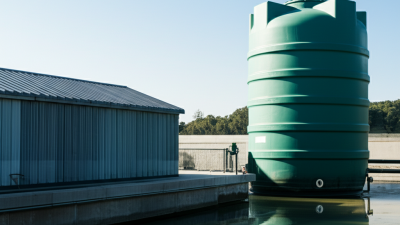
Match Tank Materials: Compare HDPE Density at 0.94–0.97 g/cm³

When comparing HDPE water tanks, density is a useful material checkpoint, not a complete buying decision. Industry testing methods ASTM D1505 and ISO 1183-1 commonly place tank-grade HDPE near 0.94–0.97 g/cm³. This equals roughly 94–97 kilograms for every 100 liters of solid polymer. The finished tank weighs less than this calculation suggests, because its walls are hollow.

Check the material certificate.

A 1,000-liter tank may have different wall thicknesses, ribs, and base designs. Therefore, two tanks with similar density can perform differently under outdoor loads. During inspections, I look for consistent color, smooth rotational-molded surfaces, and no thin corners around the outlet. Density can also reveal formulation changes, but it cannot confirm UV resistance by itself. The PlasticsEurope Plastics—The Facts 2023 report highlights polyethylene’s large role in global plastics production, yet market volume does not guarantee tank quality. Ask for density results, wall-thickness measurements, UV-stabilizer information, and hydrostatic test records. A supplier avoiding these details deserves closer review. One practical weakness remains: buyers often compare density values while ignoring installation conditions, such as uneven concrete, high heat, or repeated emptying. That mistake can shorten service life, even when the polymer specification looks correct.

Verify Potable-Water Safety with NSF/ANSI/CAN 61 or AS/NZS 4020

For global buyers, potable-water safety begins with the tank’s contact materials, not its advertised capacity. NSF/ANSI/CAN 61 evaluates materials and components that contact drinking water, including liners, coatings, fittings, and gaskets. AS/NZS 4020 addresses similar risks for products used with drinking water, including taste, odour, microbial growth, and chemical transfer. The correct standard depends on the installation market and the tank’s intended use.

The WHO and UNICEF Joint Monitoring Programme reported that 2.2 billion people lacked safely managed drinking water in 2022. That figure makes contamination control more than a purchasing detail. Ask suppliers for a current certificate, test report, and exact product scope. Check whether the approval covers the complete tank or only selected components. A certificate for a gasket cannot validate an entire storage system.

Look closely at resin types, pigments, release agents, sealants, and internal coatings. These details can change between production batches. Request material traceability and confirmation that drinking-water contact parts remain unchanged. Keep records.

Short documents deserve scrutiny.

In my experience, buyers sometimes accept a familiar test logo without checking its certificate number, manufacturing site, or validity date. That shortcut is risky. Certification supports a decision, but it does not replace installation hygiene, cleaning procedures, or local water-quality testing. Even a compliant tank may perform poorly when exposed to heat, sunlight, stagnant water, or unsuitable disinfectants. The uncomfortable part is simple: paperwork can be complete while the real supply chain remains unclear.

10 Water Tank Buying Tips for Global Buyers: Plan Capacity and Verify Potable-Water Safety

Use these internationally recognized water-supply benchmarks as an initial guide when estimating tank capacity. Before purchase, confirm that wetted materials, coatings, liners, fittings, and manufacturing processes are suitable for drinking water and comply with NSF/ANSI/CAN 61 or AS/NZS 4020, as applicable to the destination market.

How to read the chart: The 15 L/person/day figure is widely used as a humanitarian planning benchmark, while 20, 50, and 100 L/person/day represent commonly cited WHO/UNICEF service-level benchmarks from basic to higher service levels. These figures are planning references rather than universal legal requirements. Tank selection should also account for household size, refill reliability, climate, usage patterns, local plumbing rules, and certified potable-water safety.

Assess Site Conditions Using Wind, Seismic, UV, and Temperature Ratings

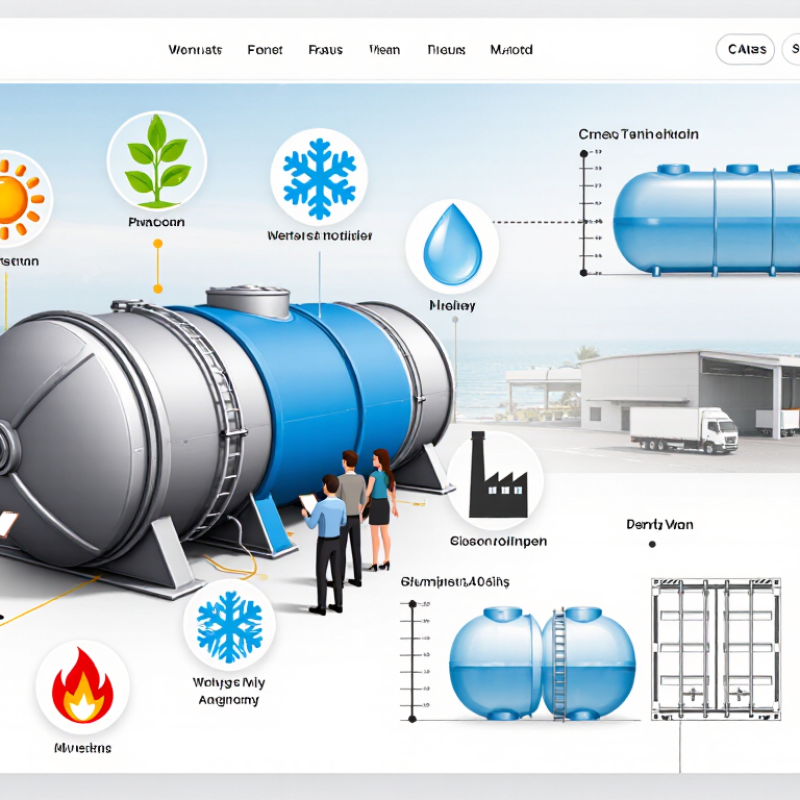
Site conditions can change a suitable water tank into a costly problem. Check wind exposure, seismic activity, ultraviolet radiation, and seasonal temperatures before comparing prices.

A tank on an open coastal site may face stronger gusts than a sheltered urban installation. Review local wind speeds, tank height, foundation design, and anchoring requirements. An empty tank can be more vulnerable because stored water provides less stabilizing weight. I have seen installations where the tank was sound, but the concrete base was too narrow.

Seismic zones require flexible connections and carefully designed restraints. Rigid pipes may crack when the tank and foundation move differently. Ask a qualified engineer to review soil conditions, earthquake loads, and outlet locations. Do not rely only on a supplier’s general rating. Local building rules may require specific calculations and inspection records.

UV exposure can weaken some plastics over time, especially on rooftops with direct afternoon sunlight. Look for documented UV resistance, not vague claims. Temperature ratings also matter. Outdoor tanks may experience freezing nights, intense heat, or rapid daily changes. Allow space for expansion, insulation, drainage, and maintenance access. Small details matter.

Measure the real site, not an ideal drawing. A careful assessment prevents expensive surprises, although it may still miss unusual weather or future construction nearby. Recheck the design when site conditions change.

10 Water Tank Buying Tips for Global Buyers - Assess Site Conditions Using Wind, Seismic, UV, and Temperature Ratings

No. Buying Tip Site Condition to Assess Relevant Data or Rating Practical Selection Criterion Recommended Buyer Action
1 Confirm the design wind speed Exposure category, terrain roughness, topographic effects, tank height, roof geometry, and whether the tank is empty or full during a storm. Use the governing local building code and the site-specific basic wind speed. For reference, wind pressure is approximately 0.98 kPa at 40 m/s, 1.53 kPa at 50 m/s, and 2.21 kPa at 60 m/s before code-specific factors. Tank and anchorage must be designed for the calculated site wind load Provide the supplier with coordinates, elevation, terrain description, installation height, and the required operating condition. Do not select a tank using wind speed alone.
2 Check empty-tank stability High-wind regions, seasonal use, low water levels, exposed rooftops, and locations where the tank may be drained. Compare overturning moment, sliding resistance, anchor capacity, tank self-weight, and the ballast or foundation weight under the empty-tank case. The empty condition is often more critical than the full condition Request calculations for empty, partially filled, and full conditions. Specify hold-downs, straps, skirts, or seismic anchors where required.
3 Identify the seismic design category Regional earthquake hazard, soil profile, site class, tank importance, installation elevation, and liquid sloshing risk. Use the locally adopted seismic code and site-specific parameters such as spectral response values, soil classification, and design acceleration. A generic “earthquake-proof” label is not a design value. Tank shell, connections, foundation, and anchorage must be checked as one system Obtain a seismic design statement covering impulsive and convective liquid forces, freeboard, nozzle flexibility, and anchor-bolt loads.
4 Evaluate foundation and soil conditions Allowable soil bearing pressure, settlement, groundwater, slope stability, drainage, and foundation flatness. Verify allowable bearing pressure and settlement limits through a qualified engineer. The foundation should be level, adequately reinforced, and capable of supporting the operating weight. No soft spots, uncontrolled fill, standing water, or differential settlement Submit a foundation drawing and load schedule. Use a concrete slab, ring beam, or engineered foundation appropriate to the tank type and capacity.
5 Compare UV-resistance requirements Solar radiation, altitude, tropical exposure, desert conditions, surface temperature, and expected outdoor service life. For polymer tanks, confirm UV-stabilized material and documented weathering performance using an applicable accelerated-weathering method, such as fluorescent UV or xenon-arc testing. Material formulation and test method must match the intended outdoor application Ask for the material specification, UV stabilizer confirmation, wall-color specification, and weathering test report. Treat “UV resistant” without documentation as insufficient.
6 Set the operating temperature range Lowest ambient temperature, direct-sun surface heating, hot-water service, freeze-thaw cycles, and temperature changes during filling. Common polyethylene tank grades may have approximate service ranges near -40°C to 60°C, but the actual limit depends on resin, wall thickness, design stress, liquid, and manufacturer data. Do not apply a material temperature range to every tank design Specify minimum and maximum liquid temperatures, not only ambient temperatures. Confirm derating, impact resistance, expansion allowance, and connection compatibility.
7 Allow for thermal expansion Large day-night temperature changes, dark-colored tanks, long pipe runs, rigid connections, and rooftop installations. For isotropic materials, linear expansion can be estimated with ΔL = α × L × ΔT. Polyethylene has a relatively high thermal expansion coefficient compared with steel or concrete. Piping and supports must accommodate movement without stressing the tank nozzles Use flexible connectors, expansion loops, slotted supports, and properly guided piping. Never use rigid pipework to restrain a flexible tank wall.
8 Match the tank material to the water chemistry Potable water, rainwater, wastewater, saltwater, acidic or alkaline liquids, disinfectants, and cleaning chemicals. Check chemical compatibility, potable-water approval where applicable, liner or coating resistance, corrosion allowance, and temperature-adjusted chemical resistance. The tank, gasket, valve, fitting, liner, and coating must all be compatible Provide a complete liquid analysis, including pH, temperature, disinfectant concentration, salinity, and contaminants. Obtain written compatibility confirmation before ordering.
9 Verify hygienic and inspection features Potable-water regulations, cleaning frequency, internal access, sediment accumulation, ventilation, overflow routing, and mosquito or contamination control. Confirm suitable food-contact or drinking-water compliance for the destination market, a sealed access cover, screened venting, drain arrangement, overflow protection, and cleanable internal surfaces. Design must prevent contamination while allowing safe inspection and maintenance Specify access openings, screened vents, level indicators, overflow discharge, drain valves, and inspection requirements in the purchase documents.
10 Review transport, installation, and lifecycle requirements Container dimensions, road access, lifting equipment, local labor, spare parts, replacement components, and inspection intervals. Check shipping dimensions, gross weight, lifting points, installation tolerances, warranty exclusions, expected service life, and availability of seals, fittings, coatings, and repair materials. The lowest purchase price should not create higher installation or maintenance costs Request packing dimensions, unloading instructions, installation drawings, commissioning procedures, maintenance schedules, and a complete spare-parts list.
Important: Wind, seismic, foundation, and temperature values are site- and material-dependent. Final tank sizing, anchorage, foundation design, and code compliance should be verified by a qualified local engineer using the regulations applicable to the installation location.

Compare Lifecycle Costs, Testing, Warranties, Freight, and Installation Standards

10 Water Tank Buying Tips for Global Buyers

A low purchase price rarely shows the full cost of ownership. Compare the tank, fittings, foundation, cleaning access, repairs, and expected service life. A durable tank may cost more initially but reduce replacement risks. Ask for a written lifecycle estimate, not only a product quotation. Include local labor, water treatment, spare parts, and disposal costs.

Tip: Request material certificates, weld or molding records, pressure results, and leakage test reports. Testing should match the tank design and local regulations. An independent inspection can confirm dimensions, coatings, valves, and internal cleanliness before shipment. Do not accept vague claims such as “international quality.” Define the exact standard and acceptance limits. Small details matter.

Tip: Read the warranty carefully. Check coverage periods, exclusions, installation conditions, and response times.

Freight planning also deserves attention. Confirm packed dimensions, lifting points, delivery access, import documents, and damage procedures. A tank can arrive safely yet remain unusable if the site crane cannot reach it.

Installation should follow approved drawings, foundation requirements, anchoring methods, and local building codes. Regional standards can differ sharply, so local engineering review is wise.

One overlooked issue is future maintenance. Leave safe clearance around access ports and fittings. Record serial details and inspection dates.

I would recheck every assumption before ordering, especially freight costs and foundation capacity. Some quotations appear complete, but hidden site work changes the final budget.

Reliable buying means comparing evidence, not promises.

We will help turn your vision into reality

Contact Us