Top 10 Types of Large Plastic Water Tanks

Large plastic water tanks come in more forms than their familiar rounded silhouette suggests. A large plastic water tank may stand upright beside a workshop, lie horizontally on a trailer, or fit beneath a narrow eave. Each shape solves a different space and access problem. Some models collect rainwater; others store drinking water, process water, or emergency reserves. The material is often UV-stabilized polyethylene, but construction and ratings vary by manufacturer. Details matter. A tank labeled for water storage is not automatically approved for potable use. Check its documentation, fittings, capacity, and installation instructions before comparing prices.

This guide surveys ten common types, including vertical, horizontal, slimline, underground, and transport tanks. It also considers designs for rainwater harvesting and larger commercial storage. Capacities can look impressive on a product page, yet a full tank is extremely heavy. The base must be level and suitably supported, while delivery and cleaning access should be planned early. In practice, the best choice is not always the biggest one. Outlet placement, climate exposure, intended use, and maintenance access can change the decision. Even experienced buyers sometimes overlook one small fitting. We compare practical differences, typical applications, and selection points, while noting where specifications need confirmation. There is no universal winner—only a tank that fits the site and the job.
Top 10 Types of Large Plastic Water Tanks

How Large Plastic Water Tanks Are Classified

Large plastic water tanks are commonly classified by installation, shape, material, and intended use. Aboveground vertical tanks suit fixed sites, while horizontal tanks fit low-clearance spaces or transport frames. Underground models save surface area but require careful attention to soil pressure and access for inspection. Shape matters. Rectangular tanks can fit narrow utility rooms, though their flat walls may need reinforcement.

Material and service use further distinguish tank types. Polyethylene is widely used for general water storage; fiberglass-reinforced plastic serves some larger or specialized installations.

ASTM D1998 sets design requirements for vertical polyethylene storage tanks, giving buyers a technical reference beyond advertised capacity. For drinking water, check that the tank and its fittings meet applicable potable-water health requirements.

Capacity labels alone can mislead: usable volume may be lower than nominal volume because of freeboard, outlets, and operating limits.

Plastics Europe’s 2024 report estimates global plastics production at 413.8 million tonnes in 2023. That figure describes the wider materials sector, not water-tank output.

A site assessment still matters, and even a well-rated tank can be a poor choice if its foundation or access route is overlooked.

Ten Common Types of Large Plastic Water Tanks

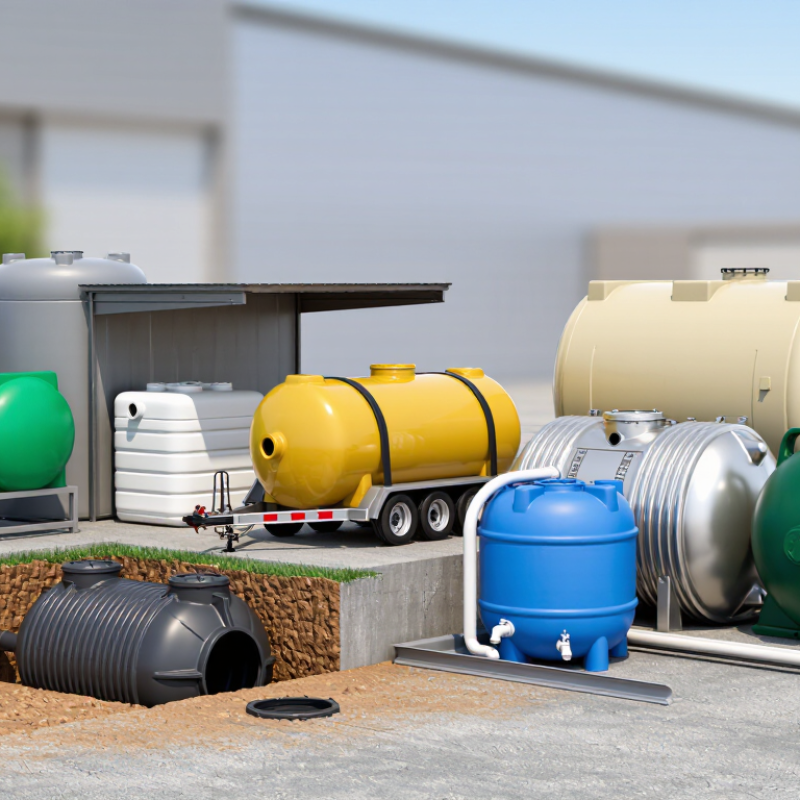
Large plastic water tanks come in several forms, and shape often matters as much as capacity. Vertical cylindrical tanks store substantial volumes while using limited ground space. Horizontal tanks sit lower and suit sites with height restrictions. Slimline tanks fit narrow spaces beside buildings, while low-profile designs slide under low overhangs. Underground tanks preserve surface space, but installation requires suitable access and stable ground. Digging matters.

Rainwater tanks collect roof runoff and often include screened inlets to reduce leaves and debris. Potable-water tanks are made for drinking-water storage; confirm the material and fittings are suitable for that purpose. Non-potable tanks hold water for uses such as irrigation, where drinking-water specifications may not be needed. Baffled tanks reduce water movement during transport, and transport tanks are shaped for secure vehicle mounting. These categories can overlap: a transport tank may also be baffled. In practice, a tank that fits the site may still be awkward to clean or inspect. Check outlet position, access openings, UV exposure, and the support surface before choosing capacity. A small oversight can complicate routine maintenance.

Tank Shapes and Structural Designs

Large plastic water tanks come in shapes designed for different sites and support conditions. Vertical cylindrical tanks use a compact footprint and distribute water pressure around curved walls. Horizontal cylinders sit lower, which can help with transport or limited headroom. Rectangular and slimline tanks fit narrow spaces, though flat panels may need reinforcement against bulging. Shape matters.

Cone-bottom tanks direct liquid toward a low outlet, while flat-bottom tanks rest on a level base and suit many stationary installations. Leg-supported designs lift the tank for gravity-fed discharge, but the frame and ground beneath it must carry the full operating load. Baffled tanks add internal partitions that reduce water movement during transport. They are not always necessary for fixed storage.

Underground tanks use reinforced profiles to resist surrounding soil pressure; installation details and groundwater conditions matter. Modular tanks connect sections to increase capacity where a single large vessel cannot fit. Open-top designs allow access for inspection, while closed-top versions help limit debris entry. A small hatch can still make cleaning awkward. Check the tank’s stated capacity, material, outlet position, and support requirements against the actual site. A neat-looking shape is not proof that a tank suits every use.

Top 10 Types of Large Plastic Water Tanks - Tank Shapes and Structural Designs
Tank Type Shape and Structural Design Indicative Capacity Range Typical Footprint or Profile Support and Installation Common Uses Key Design Considerations
Vertical Cylindrical, Flat-Bottom Upright, seamless or rotationally molded polyethylene shell with a broad, flat base and a top access opening. About 1,000–50,000 L Tall, circular footprint; height and diameter vary by capacity. Requires a level, smooth, fully supported concrete pad or engineered base. Rainwater storage, farm water supplies, and general-purpose bulk storage. Check the filled weight, base support, access clearance, and whether the tank is rated for potable water.
Horizontal Cylindrical Low-profile cylindrical shell, commonly with molded ribs or reinforcing bands to help resist deformation. About 500–20,000 L Long and low, with a horizontal axis. Use the specified cradle, saddle, or full-length support; secure against movement where required. Vehicle or trailer transport, low-clearance sites, and temporary water storage. Support spacing and restraint should follow the tank design; avoid point loads and unsupported sections.
Rectangular or Box-Shaped Rectangular molded body, often with reinforced corners, ribs, and panelled or stiffened walls. About 100–10,000 L Space-efficient, straight-sided footprint that can fit against walls or within utility areas. Install on a flat, continuous base designed to carry the full water load. Indoor storage, plant rooms, service areas, and locations where a compact footprint is useful. Flat walls can experience substantial water pressure; use only within the stated fill and support requirements.
Slimline Rectangular Narrow, elongated rectangular tank with molded wall ribs and a relatively small front-to-back depth. About 500–10,000 L Long and narrow; designed to fit alongside buildings or within restricted spaces. Needs a level, fully supporting base and adequate clearance for fittings and inspection. Residential rainwater harvesting and sites with limited yard width. Confirm the tank’s dimensions when full, wall clearance, inlet and outlet positions, and overflow routing.
Underground Cistern Buried tank with a low-profile body and structural ribs or contours intended to strengthen the shell against soil loads. About 1,000–20,000 L Below-ground profile; access is usually through one or more inspection risers. Requires excavation, a prepared bedding layer, and installation in accordance with the specified backfill method. Rainwater collection, landscape irrigation, and sites where above-ground storage is unsuitable. Groundwater, vehicle traffic, burial depth, and backfill conditions can affect suitability; use only a tank designed for burial.
Conical-Bottom Tank Vertical cylindrical body that tapers to a cone-shaped base, allowing contents to drain toward a bottom outlet. About 500–20,000 L Tall vessel with a smaller lower outlet area; often needs elevated support or a purpose-built stand. Support must be engineered for the filled weight and the tank’s concentrated load at its legs or frame. Water treatment, process water, and applications where near-complete drainage is useful. Confirm outlet size, support-frame capacity, and compatibility with the intended water quality and cleaning method.
Sectional Panel Tank Built from joined panels, usually with an internal or external support framework and sealed joints. About 5,000–500,000 L or more, depending on design Rectangular or square plan; dimensions can be configured to suit the site. Typically assembled on a level engineered base; larger systems may require specialist installation. Commercial, agricultural, industrial, and community-scale water storage. Panel material, joint sealing, bracing, access, and maintenance requirements vary by system; follow the engineering specification.
Double-Wall Containment Tank Inner storage vessel enclosed by a secondary outer wall or containment layer. About 1,000–30,000 L Usually cylindrical or rectangular, with a larger outer profile than a single-wall tank. Install on a stable, level surface with access for inspection of the containment space. Water storage where secondary containment or leak monitoring is required by the site design. Verify that the secondary wall is intended for the application; a double wall does not replace required inspection or site-specific safety measures.
Oval Horizontal Tank Horizontal tank with an oval or elliptical cross-section, sometimes reinforced with molded ribs. About 500–15,000 L Low and elongated, with a shallower profile than many round horizontal tanks. Use the manufacturer-specified cradle or continuous support and secure the tank if movement is possible. Low-clearance storage, transport, and locations where a reduced tank height is useful. Confirm that the support matches the tank’s cross-section and that the tank is suitable for the intended transport or stationary use.
Open-Top Cylindrical Tank Upright cylindrical vessel with an open or removable-cover top and a flat or sloped base. About 500–30,000 L Vertical circular footprint with unrestricted or wide top access. Requires a level, fully supporting base; provide a suitable cover where contamination or debris is a concern. Non-potable water storage, treatment processes, and applications requiring frequent access. For drinking water, use an appropriate closed, protected design; manage access, debris, insects, and overflow.
Note: Capacity ranges are indicative examples, not universal limits. Actual capacity, dimensions, wall reinforcement, support requirements, and suitability for potable water vary by tank design and installation conditions. Always follow the tank’s technical specifications and applicable local requirements.

Materials, Installation Methods, and Typical Uses

Large plastic water tanks come in several forms, each suited to a different site. Common types include vertical, horizontal, slimline, rectangular, underground, transport, baffled, cone-bottom, open-top, and modular tanks. Most are made from high-density polyethylene, which is lightweight and resists corrosion. Polypropylene appears in some specialized designs. Material choice still matters: sunlight, stored-water quality, and temperature can affect service life.

Installation depends on shape and purpose. A vertical tank usually needs a level, firm base with support beneath its full footprint. Horizontal tanks may use saddles or a prepared platform, especially during transport. Underground models require excavation, suitable backfill, and careful attention to groundwater pressure. Modular tanks can fit tight spaces, but their joints need proper assembly. Small details count. A slightly uneven base can create stress over time.

Typical uses range from household rainwater storage to farm irrigation, construction supply, and emergency reserves. Baffled tanks help limit water movement in vehicles; cone-bottom models make draining sediment easier. Open-top designs suit processes where frequent access is needed, though they are less protective from debris. Match tank capacity to actual demand, not a hopeful guess. I have seen plans change after measuring the access path, so check delivery clearance before ordering. A tank that fits on paper may not fit through a gate.

How to Choose a Tank for Your Storage Needs

Choosing among large plastic water tanks starts with the job: drinking water, rainwater, irrigation, or process storage. Estimate daily demand, then multiply by the number of days you need supply without a refill. EPA WaterSense says an average family uses more than 300 gallons of water at home each day; treat that figure as a starting point, not a personal estimate. A small household and a garden with drip lines have very different demands.

Match the tank shape and installation to the site. Vertical tanks save floor space, while horizontal tanks can suit low-clearance areas. Underground models need suitable excavation and access for inspection. Check that the tank material is intended for your water type, and confirm potable-water certification if people will drink from it. Sun exposure matters, too: UV-rated polyethylene can help resist outdoor weathering. It is easy to focus on capacity and miss the inlet, outlet, or delivery-truck access.

Tips: Measure the footprint, doorway, and filled-tank support before ordering. Add a modest reserve for dry spells, but avoid oversizing without a clear need. Stagnant water is no advantage. Keep lids secure, provide overflow drainage, and follow the manufacturer’s inspection guidance. Recheck your demand after a season; estimates can be wrong. EPA WaterSense’s household-use figure is available in its “How We Use Water” guidance.

We will help turn your vision into reality

Contact Us