
Top 10 Heavy Duty Sliding Folding Doors for Global Buyers

Choosing the right Heavy-Duty Sliding & Folding Doors is not simply a matter of comparing prices or polished product images. Global buyers must examine load capacity, panel alignment, hardware quality, thermal performance, drainage, and service support. A door may look impressive in a showroom, yet struggle with wind, dust, humidity, or constant warehouse traffic.

Building-science expert Joseph Lstiburek offers a useful warning: “Water is the most destructive force in buildings.” That principle matters here. Poor thresholds, blocked drainage channels, or weak seals can damage floors, stored goods, and door mechanisms over time. The best systems should open smoothly, close tightly, and remain stable after repeated daily use.

This guide reviews ten Heavy-Duty Sliding & Folding Doors for different commercial and industrial applications. The selection considers opening width, structural strength, operating method, maintenance access, and installation conditions. Some doors suit aircraft hangars, logistics centers, workshops, and large agricultural buildings. Others perform better in retail, hospitality, or high-end residential projects.

No ranking can fit every site. That is the uncomfortable part. A technically strong door can still fail when the supporting wall is under-designed, the floor is uneven, or local climate conditions are ignored. Buyers should request verified specifications, installation drawings, warranty terms, and realistic maintenance requirements before ordering.

Small details matter. A reinforced bottom guide, stainless-steel roller, or replaceable seal may prevent expensive downtime. This comparison aims to make those details easier to see, while recognizing that product data should always be checked with qualified suppliers and engineers.
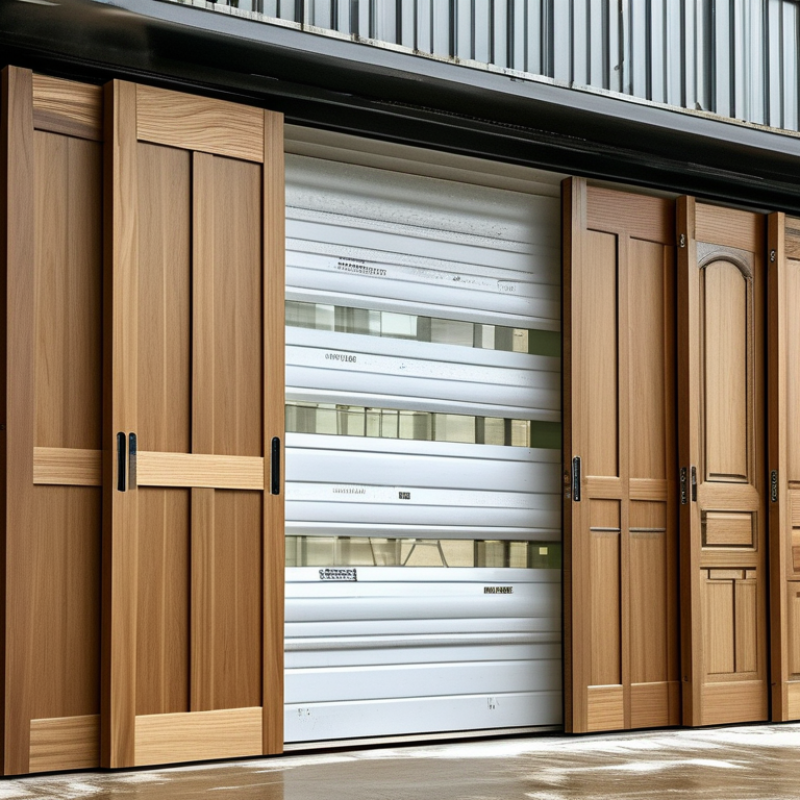
Top 10 Heavy Duty Sliding Folding Doors for Global Buyers

What Heavy-Duty Sliding Folding Doors Are and How They Work

Heavy-duty sliding folding doors combine two movements: panels slide along a track and fold at connected hinges. This design opens wide spaces without requiring a large swing area. Each panel usually carries rollers, hinges, seals, and locking hardware. The rollers transfer weight to the upper or lower track. Hinges guide the panels into a compact stack.

Operation depends on accurate alignment. When an operator releases the lock, the lead panel moves first. The remaining panels follow through linked hinges and guided rollers. Strong frames resist wind pressure and repeated daily use. However, “heavy-duty” does not mean maintenance-free. Dust, uneven floors, and poor drainage can affect movement. A small obstruction may create noticeable resistance.

Reliable performance begins with site inspection. Installers should check opening dimensions, structural support, track level, and expected traffic. A warehouse entrance may need different rollers than a coastal service area. Stainless or protected components can reduce corrosion risks, but material selection still requires judgment. Safety edges, controlled closing speed, and visible warning areas improve everyday operation. Local building and accessibility requirements must also be verified. One practical lesson is easy to overlook: a precise door installed on a weak structure will still fail early. Regular cleaning and hardware checks remain necessary, even when the system feels smooth.

Top 10 Heavy-Duty Sliding Folding Door Types for Global Buyers

Heavy-duty sliding folding doors serve warehouses, aircraft hangars, logistics halls, retail spaces, and large residential openings. Global buyers can compare ten practical types: top-hung, bottom-rolling, telescopic, bi-fold, multi-fold, stacking, steel-framed, thermally broken aluminum, insulated-glass, and impact-resistant systems.

Top-hung doors reduce floor obstruction and suit clean interior surfaces. Bottom-rolling doors carry heavier panels through reinforced tracks and adjustable wheels. Telescopic designs save space when several panels gather beside one opening. Bi-fold and multi-fold systems provide wide access with fewer operating movements. Stacking doors work well where panels can rest along a side wall. However, their parked position needs careful planning.

Steel-framed doors tolerate frequent industrial use and large panel weights. Thermally broken aluminum improves insulation while limiting frame corrosion in humid regions. Insulated-glass systems help control temperature, noise, and daylight. Impact-resistant designs add protection in busy loading areas, but they may increase weight and maintenance demands.

Experience shows that door width alone does not determine performance. Buyers should check panel weight, wind pressure, drainage, threshold height, hardware cycles, and replacement-part availability. Coastal sites need corrosion-resistant fittings. Cold climates need reliable seals and thermal breaks. Ask for tested load data, installation drawings, and service procedures. One detail is often missed: operators require stable power and accurate alignment. A cheaper system can become expensive after repeated adjustment. Local building and safety requirements must also be verified before purchase.

Top 10 Heavy-Duty Sliding Folding Doors for Global Buyers - Top 10 Heavy-Duty Sliding Folding Door Types for Global Buyers

Rank Door Type Typical Opening Size Typical Panel Configuration Common Load Capacity Recommended Operating Mode Typical Applications Main Advantages Key Limitations Important Specification Checks
1 Top-Hung Sliding Folding Door Low-Floor Preferred Width: 3–15 m
Height: 2.5–6 m
2–12 panels; panels fold and park to one or both sides Usually 100–500 kg per panel, depending on the overhead track and carrier system Manual, assisted manual, or motorized Aircraft hangars, logistics buildings, workshops, exhibition halls, agricultural buildings Clear floor area; suitable for uneven or frequently trafficked floors; good opening flexibility Requires a strong structural header; overhead loads must be checked during building design Header strength, track deflection, carrier rating, wind pressure, emergency release, and parking geometry
2 Bottom-Rolling Sliding Folding Door Very Large Openings Width: 5–30 m
Height: 3–12 m
2–20 panels; panels roll on a floor rail and fold at hinged joints Approximately 300–1,500 kg per panel in heavy industrial designs Manual with pull handles, chain drive, or electric drive Factories, shipyards, maintenance depots, industrial storage facilities Handles large and heavy panels without transferring the full load to the roof structure Floor rails can collect dirt, affect vehicle traffic, and require accurate floor alignment Rail drainage, wheel and bearing rating, floor settlement, anti-derailment protection, and safety stops
3 Telescopic Sliding Folding Door Space Saving Width: 4–20 m
Height: 2.5–8 m
3–10 sliding panels, often combined with folding leaves Typically 150–800 kg per panel Manual, semi-automatic, or fully motorized Industrial halls, commercial entrances, transport facilities, large workshops Compact parking depth; provides a wide clear opening where side space is limited More rollers, guides, and moving parts increase maintenance requirements Panel sequencing, synchronization, guide tolerances, maintenance access, and available stacking space
4 Industrial Bi-Fold Door Fast Deployment Width: 3–18 m
Height: 3–10 m
Two large leaves, each made of two or more vertically hinged sections Commonly 200–1,000 kg per leaf Hydraulic, electric, or manual-assisted operation Fire stations, aircraft facilities, emergency service buildings, industrial plants Rapid opening; limited side-room requirement; good for high-frequency access Needs accurate alignment and protected hinges; wind can affect large exposed leaves Opening speed, wind load, hinge protection, drive duty cycle, emergency operation, and control safety
5 Thermally Broken Sliding Folding Door Energy Efficient Width: 2–12 m
Height: 2.2–5 m
2–10 insulated panels with thermal separators and sealed glazing or infill Approximately 100–400 kg per panel Manual, automatic, or motor-assisted Climate-controlled warehouses, commercial buildings, public facilities, production areas Reduces thermal bridging and air leakage compared with basic uninsulated metal doors Higher purchase cost; seals and thermal details require careful installation U-value, air permeability, water tightness, thermal break design, glazing specification, and local energy code
6 Insulated Cold-Storage Sliding Folding Door Temperature Control Width: 2–10 m
Height: 2–5 m
2–8 insulated panels, normally with sealed joints and hygienic surfaces Usually 100–500 kg per panel Manual, powered, or automatic with safety sensors Cold rooms, food-processing plants, distribution centers, pharmaceutical storage Supports temperature separation and reduces infiltration when properly sealed Thresholds, seals, frost, and condensation can affect operation and service life Operating temperature, insulation core, vapor sealing, heated or protected thresholds, cleanability, and washdown resistance
7 Fire-Rated Sliding Folding Door Compartmentation Width: 2–15 m
Height: 2–8 m
2–12 tested fire-resistant panels with rated joints and closing equipment Commonly 150–700 kg per panel Normally automatic closing with manual reset and emergency release Industrial buildings, shopping centers, parking structures, infrastructure projects Can help limit fire and smoke spread when installed as part of a certified fire compartment Fire performance is product- and configuration-specific; modifications may invalidate certification Test standard, fire-resistance period, smoke-control rating, wall compatibility, self-closing system, and inspection requirements
8 Acoustic Sliding Folding Door Noise Reduction Width: 2–12 m
Height: 2–6 m
2–10 dense-core panels with interlocking seals and perimeter compression seals Approximately 100–450 kg per panel Manual or assisted manual; powered systems are available for larger openings Factories, studios, conference venues, training centers, multipurpose halls Improves sound separation while allowing a large opening to be closed when required Acoustic performance depends heavily on seals, adjacent walls, floor joints, and installation quality Weighted sound reduction index, laboratory test configuration, seal continuity, panel alignment, and reverberation conditions
9 High-Wind Industrial Sliding Folding Door Exterior Use Width: 4–25 m
Height: 3–12 m
2–16 reinforced panels with wind-resistant frames, guides, and locking points Typically 250–1,200 kg per panel Manual, electric, hydraulic, or hybrid operation Coastal facilities, hangars, warehouses, power plants, agricultural and marine buildings Designed for exposed locations where wind pressure and frequent weather changes are concerns Requires engineered anchorage and may need to remain closed or secured during severe weather Design wind speed, exposure category, panel deflection, anchorage, wind locks, drainage, corrosion protection, and local structural code
10 Security-Grille Sliding Folding Door Visibility and Security Width: 2–15 m
Height: 2–6 m
2–12 perforated, expanded-metal, or bar-grille panels Usually 80–350 kg per panel Manual, chain-operated, or motorized Retail loading areas, parking facilities, warehouses, utility rooms, service corridors Provides controlled access, ventilation, and visibility while occupying limited parking space Offers less weather sealing and thermal insulation than solid insulated doors Security classification, mesh or bar spacing, locking points, corrosion resistance, escape routes, and impact protection

Key Materials, Hardware, Safety, and Performance Features

Heavy-duty sliding folding doors start with the frame. For large openings, galvanized steel or thermally broken aluminum offers useful structural stability. Steel handles higher loads, while aluminum resists corrosion with less weight. Stainless steel components suit humid areas, but quality varies. Check alloy grades, coating thickness, weld quality, and drainage paths before ordering.

Hardware determines daily performance. Load-rated rollers should move smoothly without flat spots or grinding noise. Sealed bearings reduce dust entry. Multi-point locks improve resistance to forced movement and reduce panel vibration. Hinges need reinforced fixing plates, not thin decorative metal. Adjustable guides help installers correct small alignment errors. Small errors become expensive later.

Safety deserves equal attention. Panels should include finger guards, controlled closing, and secure stops at both ends. Tempered or laminated safety glass can reduce injury risks when glazing breaks. Clear opening measurements must include floor tolerance and installation gaps. A door may pass a factory test yet perform poorly on an uneven site. This is often overlooked. Ask for cycle testing, load data, corrosion testing, and maintenance instructions. Performance also depends on cleaning schedules, drainage, and trained installation. No door is maintenance-free. A realistic specification should state limits, not only impressive numbers.

How to Compare Door Capacity, Design, Weather Resistance, and Durability

Top 10 Heavy Duty Sliding Folding Doors for Global Buyers

Comparing heavy duty sliding folding doors requires more than checking maximum panel weight. Capacity should match panel size, glass weight, hardware cycles, and site exposure. A door rated for 500 kilograms may perform poorly if its rollers face dust, slope, or repeated impact. I have seen impressive specifications fail because installers ignored floor tolerance. Capacity is not the whole story.

Design should support smooth movement, clear sightlines, and practical maintenance. Thermal breaks, multi-point locks, and replaceable seals matter in changing climates. The U.S. Department of Energy reports that windows can cause 25–30% of residential heating and cooling energy use. This figure highlights the value of insulated glazing and tight weather seals. For buyers comparing global products, request tested air leakage, water penetration, and wind-load results. EN 12207, EN 12208, EN 12210, and ASTM E330 provide useful testing references. Standards help, but certificates still require careful checking.

Tips: Ask for cycle-test results, not only load ratings. Confirm drainage paths before installation. Check whether rollers and seals are replaceable locally. Review corrosion protection for coastal projects. A beautiful door can become expensive when spare parts are unavailable. Also, weather resistance may decrease after years of poor adjustment. This point is easy to overlook. The 2024 Global Status Report for Buildings and Construction identifies buildings as responsible for about 32% of global energy use, making durable, efficient openings increasingly important.

Top 10 Heavy-Duty Sliding and Folding Door Configurations

Comparative index for global buyers. Each criterion is rated from 1 to 10 using common engineering considerations: load capacity, design flexibility, weather resistance, and expected durability. Actual performance depends on materials, hardware, installation, size, and project conditions.

Higher scores indicate stronger suitability for demanding commercial, industrial, agricultural, or transportation applications. Buyers should verify structural calculations, wind-load results, water and air performance, corrosion protection, cycle testing, and applicable local standards before selecting a door system.

Global Buying Guide for Sizing, Compliance, Installation, and Maintenance

When comparing the top 10 heavy duty sliding folding doors, global buyers should begin with the opening, not the catalogue image. Measure width, height, headroom, and finished floor levels at several points. Measure twice. Include panel thickness, stacking direction, traffic flow, and the required clear opening. A door may fit the rough opening but still restrict equipment movement. Confirm structural loads, wind exposure, drainage, and nearby columns with a qualified installer.

Compliance varies by project location. Request current test reports for air, water, wind, impact, thermal performance, and safety glazing. Check local requirements for fire separation, accessibility, emergency egress, and energy efficiency before purchase. Product paperwork should identify materials, hardware ratings, maximum panel size, and installation limits. Do not rely on a generic certificate. Its scope may not match your building or climate.

Installation quality often decides long-term performance. Use trained technicians, verified anchors, level tracks, correct joint gaps, and movement allowances for temperature changes. Protect thresholds from standing water. Keep records. After handover, inspect rollers, hinges, seals, locks, drainage channels, and fasteners on a planned schedule. Clean salt, dust, and construction residue with compatible products. Lubrication is not always helpful; some systems require dry maintenance. One practical weakness remains: many buying teams compare price before service access. That choice can create difficult repairs later, especially where replacement parts travel across borders.

We will help turn your vision into reality

Contact Us