
Automotive Stamping Tooling sits behind the body panels, brackets, and structural parts that define a modern vehicle. Its presses and dies must turn sheet metal into repeatable components, often at high speed and with tight dimensional control. The scale is substantial: OICA reported approximately 93.5 million motor vehicles produced worldwide in 2023. Each production program depends on tooling that can meet part specifications, support stable output, and withstand demanding production cycles.
The market is also changing. The IEA’s Global EV Outlook 2024 reported nearly 14 million electric cars sold in 2023, around 18% of global car sales. Electrification is reshaping vehicle platforms and component requirements, while automakers continue to seek lighter structures and efficient production. That matters. A die designed for a conventional body-in-white part may not transfer neatly to a new platform, material, or press line.
This overview examines leading Automotive Stamping Tooling manufacturers worldwide and the capabilities that distinguish them. It considers engineering depth, die design and build, global production support, automation compatibility, and experience with high-strength steels and aluminum. These factors offer a practical way to assess suppliers, beyond headline capacity or a polished factory tour. Still, no ranking fits every buyer. Program volume, regional service, and in-house expertise can change the best choice, and published company claims deserve careful verification.
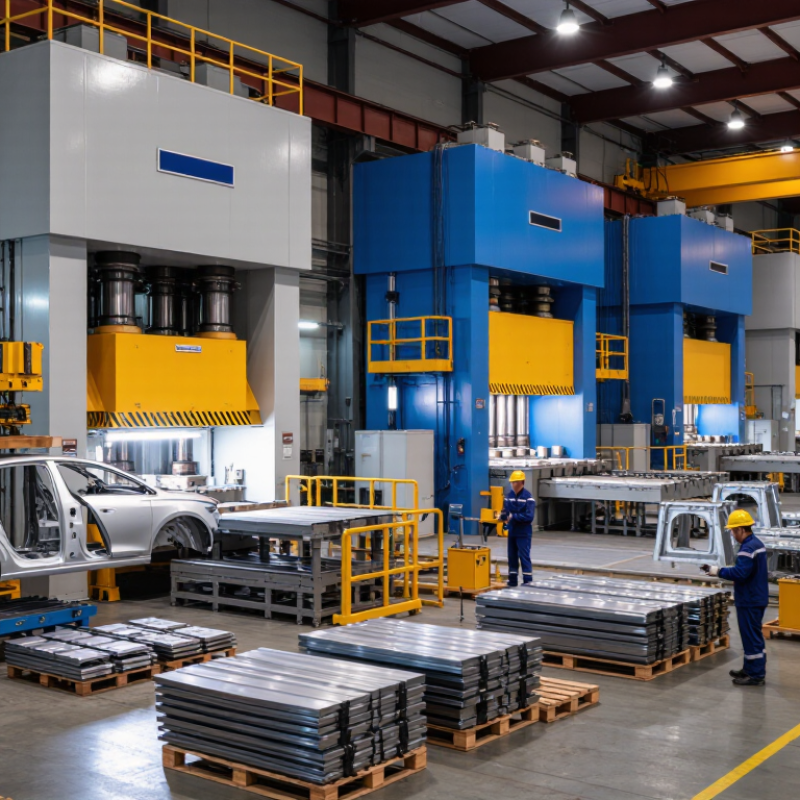
Automotive stamping tooling turns flat metal coil into doors, hoods, floor panels, and structural parts. A press feeds sheet metal through dies that blank, form, pierce, and trim each component. The tooling must control shape and repeatability across thousands of cycles. A crease in a panel or a misplaced hole can disrupt assembly downstream. Small errors travel.
The scale is substantial. OICA’s 2023 production statistics report approximately 93.5 million motor vehicles produced worldwide. That volume makes reliable stamping tools central to vehicle production, from high-rate body panels to complex structural components. Tool design also affects material use, part quality, and press downtime. Yet no die works in isolation: steel properties, lubrication, press settings, and maintenance all influence the result. A sophisticated tool cannot compensate for every process weakness.
Tips: Check forming simulations against real press trials, and inspect parts after tool changes. Track scrap, dimensional variation, and maintenance intervals together. One overlooked detail: a tool that runs quickly but needs frequent correction may reduce overall output. The best setup is not always the fastest one. It is the one that produces consistent parts without hiding problems.
Worldwide motor vehicle production, 2019–2023 (millions of vehicles)
Stamping tools form sheet metal into vehicle body and structural components. Global vehicle production provides context for the scale of manufacturing activity that stamping-tool suppliers serve; it is not a ranking or market-share chart of tooling manufacturers. Source: OICA.
Top Automotive Stamping Tooling Manufacturers worldwide
How Automotive Stamping Tooling Manufacturers Are Evaluated
Evaluation should start with measurable part quality, not a polished presentation. Check stamped panels for dimensional repeatability, springback, burrs, and surface marks under production conditions. Ask for trial data across the intended steel grades and thicknesses. A clean first-off sample is useful, but it cannot prove stable performance after thousands of cycles.
Production readiness matters. The International Organization of Motor Vehicle Manufacturers reported 93.5 million vehicles produced worldwide in 2023. That scale makes tooling uptime, changeover time, maintenance access, and spare-part planning practical evaluation points. Review press-line compatibility, die-life assumptions, simulation methods, and the supplier’s process for handling engineering changes. Request documented trial results and clarify who investigates defects. Some scorecards overvalue initial cycle speed; the trade-off with tool wear deserves closer review.
Tips: Ask to observe a tool tryout. Look for repeatable measurements, clear revision records, and technicians who can explain corrective actions. A small gap remains: even strong test results may not predict every plant’s operating conditions.
| Evaluation dimension | Suggested weight | What to assess | Evidence to review |
|---|---|---|---|
| Tooling and process capability | 16% | Experience with the required die types and operations, such as progressive, transfer, tandem, blanking, forming, and trimming. | Relevant completed programs, process plans, die layouts, and references for comparable part families. |
| Part and material complexity | 14% | Ability to address part geometry, tolerances, springback, draw depth, material grade, thickness, and forming risk. | Technical reviews, forming analyses, sample parts, and documented resolution of comparable quality issues. |
| Engineering and simulation | 12% | Design-for-manufacturing capability, process planning, forming simulation, die design, and engineering-change management. | Design reviews, simulation reports, revision controls, and documented responses to design changes. |
| Press and production compatibility | 10% | Fit with the intended press line, including bed and bolster dimensions, shut height, stroke, tonnage, feed, and transfer requirements. | Verified press specifications, tooling interface drawings, and a documented press-fit review. |
| Build quality and dimensional control | 14% | Machining and assembly controls, die alignment, component traceability, and conformance to agreed part and tool specifications. | Inspection plans, measurement reports, calibration records, and dimensional results from tool tryout. |
| Tryout and launch support | 12% | Availability of skilled personnel for die spotting, press trials, part correction, runoff, and production ramp-up. | Tryout plans, issue logs, runoff records, staffing plans, and agreed acceptance criteria. |
| Delivery and project management | 8% | Schedule planning, milestone visibility, risk escalation, communication, and coordination across engineering, build, and tryout. | Project schedules, milestone reporting, capacity plans, and historical delivery data where available. |
| Maintenance and lifecycle support | 6% | Ease of maintenance, spare-part availability, repair documentation, technical support, and accommodation of future engineering changes. | Maintenance manuals, spare-parts lists, service-response terms, and repair or modification procedures. |
| Quality and change-control systems | 5% | Document control, nonconformance handling, corrective action, supplier controls, and management of design and process changes. | Audits, quality procedures, corrective-action records, and applicable certifications verified for the relevant facility. |
| Total cost and commercial clarity | 3% | Transparency of tooling scope, assumptions, exclusions, payment milestones, warranty terms, and foreseeable lifecycle costs. | Comparable quotations, scope matrices, commercial terms, and documented change-order procedures. |
| Total | 100% | Use consistent evidence requirements and project-specific acceptance criteria when comparing suppliers. | |
Suggested scoring: rate each dimension from 0 to 5 using documented evidence, then multiply the rating by its assigned weight. Confirm that all requirements match the specific part, press line, production volume, and program schedule.
Leading automotive stamping tooling manufacturers worldwide serve production plants with different vehicle programs, press capacities, and quality targets. Strong suppliers combine die design, machining, tryout, and production support. Their teams study part geometry, steel grade, and press conditions before cutting tool steel. Small details matter. A poorly placed draw bead can cause wrinkles, while uneven clearance may create rough edges or excessive wear.
Experienced manufacturers use simulation to identify forming risks before a die reaches the press. They then check trial parts with gauges, scan data, and careful visual inspection. Practical feedback from operators matters too; a tool that performs well in a model may behave differently on a busy production line. Regional suppliers may offer closer support, while international projects can require careful coordination of drawings, standards, and delivery schedules.
The best fit depends on more than price or equipment lists. Buyers can ask for examples of comparable parts, documented tryout results, maintenance guidance, and a realistic plan for design changes. Yet supplier claims still need verification. A polished presentation is not proof of stable output. Even a capable team can miss a detail, so clear review points and open communication remain essential throughout development.
Global automotive stamping suppliers compete through more than press tonnage. Their capabilities include high-strength steel forming, aluminum die design, simulation, precision machining, and production-line integration. These tools must control springback and thinning while keeping panels consistent across long runs. Small tolerances matter. A slight mismatch at a door opening can create costly rework downstream.
The International Energy Agency’s Global EV Outlook 2024 reports that electric car sales approached 14 million in 2023, about 18% of worldwide car sales. This shift raises demand for tooling that can handle changing body structures, lightweight materials, and faster model updates. Strong suppliers connect forming simulations with tryout measurements, then adjust dies using real production data. Digital tools help, but they do not replace skilled die makers. The handoff between design and shop floor can still be imperfect.
Tips: Ask suppliers how they validate springback, manage engineering changes, and track die performance after launch. Request sample inspection data, not only simulation images. Confirm their process for spare inserts and maintenance; a press-ready tool is not automatically easy to keep running.
Selecting an automotive stamping tooling manufacturer starts with the part, not the brochure. Share material grade, thickness range, annual volume, press tonnage, and critical tolerances before comparing quotes. Ask for evidence from similar draw depths, springback control, and transfer timing. Fit matters. A polished simulation can still miss a stubborn wrinkle near a draw bead; request tryout data and measured parts, not only digital renders.
Check engineering depth and production readiness. The International Federation of Robotics reported 135,000 robot installations in automotive manufacturing worldwide in 2023, up 14% year on year (World Robotics 2024). That shift makes robot access, end-of-arm clearance, sensor strategy, and die-changeover planning practical selection criteria. Ask how the tool will integrate with your line, including maintenance access and spare inserts. Automation is not plug-and-play.
Compare total cost across tool life: machining, coatings, planned maintenance, scrap risk, and changeover downtime. Deloitte and the Manufacturing Institute projected that U.S. manufacturing could face 2.1 million unfilled jobs by 2030 (2021 workforce study). Supplier staffing matters too; confirm who supports launch, production shifts, and corrective actions. Request a clear repair-response window and ownership for design changes. A useful quote should expose its assumptions. Too often, it doesn’t.