
Choosing a Deep Hole Honing machine is not just a matter of comparing spindle speeds or brochure specifications. Buyers need to know how consistently a machine can hold bore geometry, surface finish, and size across real production runs. A bore several meters long may look excellent at its opening yet vary deeper inside. That matters. Ask how each manufacturer verifies straightness, roundness, and repeatability, and request test data from a part similar to yours.
Quality expert W. Edwards Deming offered a useful reminder: “Quality comes not from inspection, but from improvement of the production process.” His observation is not specific to honing, but it fits the buying decision: reliable results depend on the machine, process controls, tooling, and support working together. This guide compares ten manufacturers through practical buyer concerns, including machine range, automation options, application expertise, service access, and the clarity of technical documentation. Ask for proof. A polished demonstration is useful, but it cannot replace production evidence. No shortlist is perfect, and a ranking may overlook a strong regional supplier or an unusual application. Treat it as a starting point, then verify claims with sample parts, references, and a clear discussion of tolerances. The best choice is the one that meets your bore requirements reliably—not simply the one with the longest feature list.
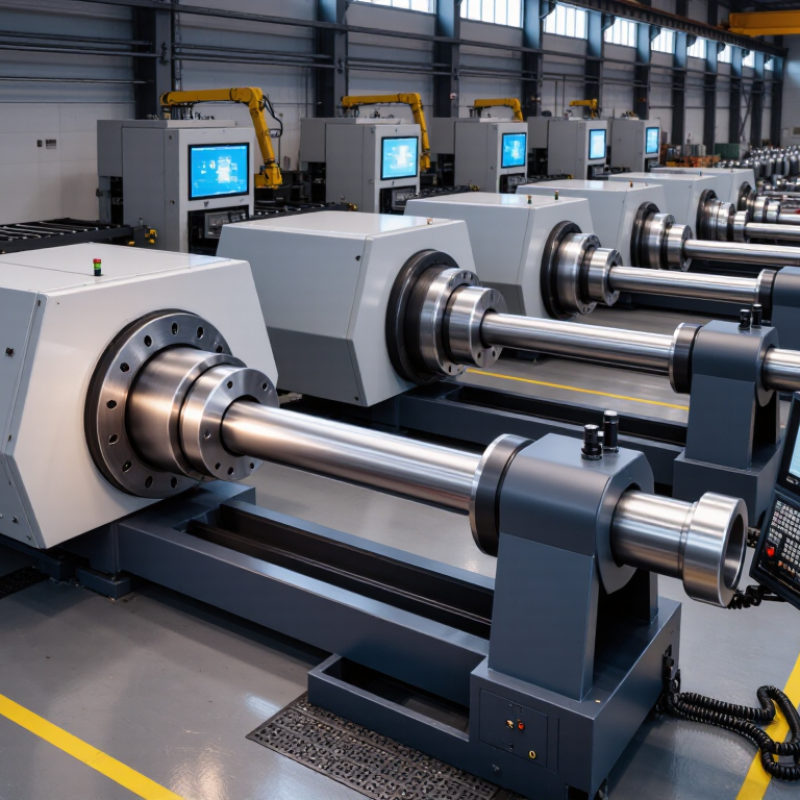
Deep hole honing machines improve the internal finish and geometry of long, narrow bores. A tool carrying expandable abrasive stones rotates and moves back and forth inside the workpiece. This controlled motion removes a small amount of material, helping correct taper, ovality, and surface roughness. That distinction matters. Honing is usually a finishing operation, not a substitute for removing large amounts of stock through drilling or boring.
These machines are used for hydraulic cylinders, engine components, industrial pump sleeves, and other parts with precision internal passages. In a hydraulic cylinder, for example, a smooth, accurately sized bore helps seals travel evenly and limits premature wear. Operators select stones and coolant to suit the material, bore diameter, and required finish. They also check alignment and measure the bore at several points; a single reading can miss local variation. Not always. A poorly prepared bore may need more than honing, and setup choices can affect the result. Buyers should consider the workpiece’s length, diameter, material, tolerances, and production volume when evaluating a machine. Real-world results depend on process control as much as machine capability.
This buyer-focused comparison covers ten common machine configurations and capability areas, rather than ranking or naming individual manufacturers. Deep hole honing machines finish the inside surface of long bores to improve bore size, geometry, and surface finish; the right setup depends on the workpiece, material, production volume, and required tolerances.
| No. | Machine Configuration or Capability | What It Does | Typical Applications | What Buyers Should Check |
|---|---|---|---|---|
| 1 | Horizontal deep hole honing machine | Supports long workpieces horizontally while a honing tool works the internal bore. This layout is commonly used for long, relatively slender parts. | Hydraulic cylinders, tubular components, and long precision bores. | Confirm the usable workpiece length, support arrangement, bore-diameter range, and workholding method. |
| 2 | Vertical honing machine | Positions the workpiece or honing spindle vertically. The arrangement can suit shorter or heavier components that are easier to load upright. | Valve bodies, sleeves, and other components with accessible internal bores. | Check table capacity, loading access, spindle travel, and whether the machine can hold the part securely. |
| 3 | CNC-controlled honing machine | Uses programmed controls to manage machine movements and process settings, helping make repeat production cycles more consistent. | Production work requiring repeatable bore finishing across multiple parts or batches. | Ask which axes and process settings are programmable, how recipes are stored, and what inspection data can be recorded. |
| 4 | Single-spindle machine | Hones one bore at a time. It is a straightforward arrangement for a broad range of job-shop and production tasks. | Prototype work, repair work, and low-to-medium-volume component production. | Compare setup time, tooling changes, operator requirements, and suitability for the expected production mix. |
| 5 | Multi-spindle or multi-station machine | Can process more than one bore or workpiece within a cycle, depending on the machine layout and process sequence. | Repeat production of components with multiple bores or higher throughput requirements. | Verify which operations run simultaneously, the workpiece loading method, and whether each bore can meet its own process requirements. |
| 6 | Through-honing capability | Allows the honing tool to travel through a continuous bore where the workpiece and tool arrangement permit it. | Through-bores in tubes, sleeves, and other components with openings at both ends. | Confirm bore access at both ends, tool travel clearance, workpiece support, and the required allowance for material removal. |
| 7 | Blind-bore honing capability | Finishes a bore that terminates inside the workpiece. Tool geometry and process control must account for the bore bottom. | Hydraulic and pneumatic components, valve bodies, and other parts with closed-end bores. | Check the minimum bore depth, bottom geometry limits, tool clearance, and how the process avoids damage at the bore end. |
| 8 | Expandable honing tooling | Uses an adjustable honing tool to bring abrasive stones into contact with the bore. Tool expansion and stroke are controlled according to the process design. | Applications where bore size and finishing requirements call for controlled tool adjustment. | Confirm compatible tool sizes, abrasive options, adjustment method, and availability of suitable tooling for the workpiece material. |
| 9 | Automated loading and unloading | Integrates handling equipment or fixtures to reduce manual part transfer and support repeatable production workflows. | Repetitive production cells and parts that are suitable for consistent automated handling. | Assess part weight and variation, fixture design, cycle-time balance, guarding, and how the cell handles inspection or rejected parts. |
| 10 | In-process measurement and process monitoring | Uses measurement or monitoring features to help check bore condition and track process performance during or between operations. | Precision production where bore consistency and process traceability are important. | Ask what is measured, how measurement results are validated, what records are retained, and whether separate final inspection is still required. |