7 Tips for Choosing a Rotary Pouch Packing Machine
Selecting a rotary pouch packing machine is a production decision, not merely an equipment purchase. The right system must match pouch dimensions, product behavior, filling accuracy, sealing requirements, and expected output. A machine running smoothly during a demonstration may behave differently with dusty powder, sticky sauces, or lightweight snacks. Small details matter.
Industry reports support this careful approach. PMMI’s packaging automation research identifies labor availability, equipment flexibility, and operational efficiency as major investment drivers. Smithers’ report, The Future of Global Flexible Packaging to 2028, also highlights continued demand for lightweight, convenient, and resource-efficient pouch formats. These trends explain why manufacturers are comparing servo control, changeover time, inspection systems, and sealing performance more closely. Speed alone is not enough.
A reliable rotary pouch packing machine should deliver repeatable seals, stable dosing, accessible maintenance points, and clear operator controls. It should also provide practical evidence, including test-run data, spare-parts support, and documented safety procedures. Experienced teams usually inspect the complete workflow, from film unwinding to finished-pouch discharge. That wider view can reveal hidden costs.
There is no perfect machine for every product. That assumption deserves reconsideration. A compact model may save floor space but limit future expansion. A high-speed model may create more waste when feeding accuracy is inconsistent. The following seven tips offer a practical framework for comparing suppliers, verifying performance, and choosing equipment that supports dependable production rather than impressive specifications alone.
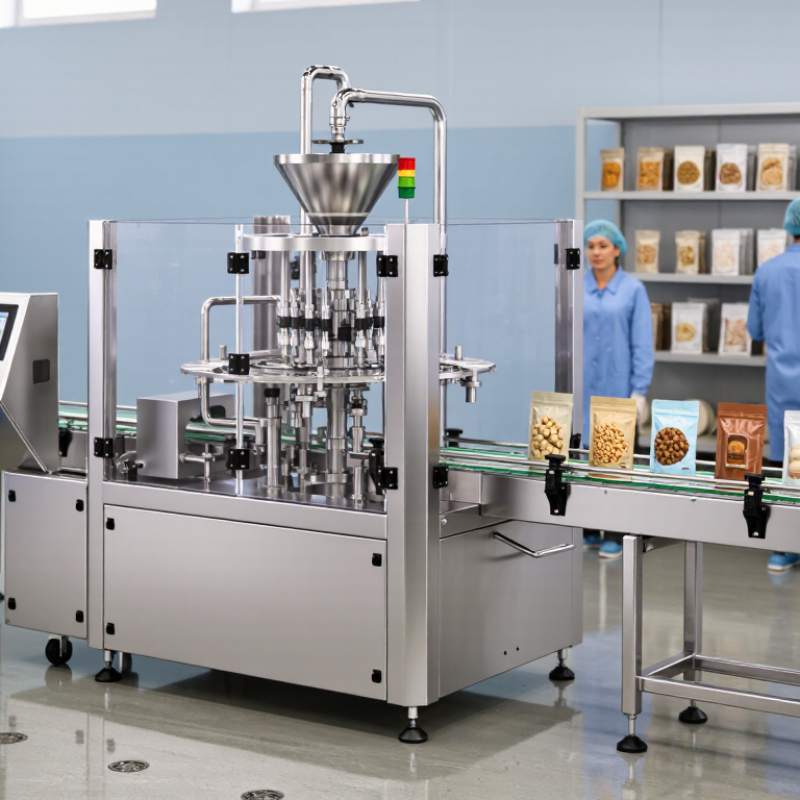
Define Your Packaging Requirements and Production Goals
Choosing a rotary pouch packing machine starts with clear packaging requirements, not machine speed. Define pouch width, height, fill volume, seal type, zipper use, and film structure. Record the actual product behavior too. Powder, liquid, granules, and fragile snacks need different dosing systems.
Set a realistic production goal. Calculate packs per minute from daily demand, operating hours, planned changeovers, and expected rejects. PMMI’s 2024 State of the Industry report highlights continued automation investment as manufacturers face labor shortages. However, higher speed is not always better. A machine running at 80 packs per minute may outperform a 120-pack machine if it creates fewer seal failures. Smithers valued the global flexible packaging market at approximately 275 billion US dollars in 2023, showing strong demand for efficient pouch production.
Tip: Build a simple requirement sheet before requesting quotations. Include target output, pouch dimensions, product density, film thickness, compressed air, power supply, and cleaning needs. Add a tolerance range. Real production rarely matches laboratory conditions.
Tip: Test your actual product and film. Ask for data from a witnessed factory acceptance test, including speed, weight accuracy, seal integrity, and reject rate. A small sample can mislead. Product dust may increase during a long shift, and film curl may worsen after repeated roll changes. Plan for changeovers as well. If operators need 45 minutes to switch pouch sizes, theoretical capacity becomes a weak promise. The specification may need revision after testing; that is normal, and ignoring it is costly.
Compare Machine Configurations and Pouch Compatibility
7 Tips for Choosing a Rotary Pouch Packing Machine
Machine configuration should match your production rhythm, not just your target speed. An eight-station rotary machine may suit moderate output and simpler filling systems. A twelve-station configuration can support more operations, such as zipper opening, nitrogen flushing, and inspection. However, additional stations increase adjustment points, cleaning time, and maintenance demands. More stations are not always better.
Pouch compatibility needs closer attention. Check pouch width, height, gusset depth, zipper position, and sealable material before requesting a quotation. A stand-up pouch may run smoothly during trials but wrinkle near the top seal during full-speed production. Flat pouches, spouted pouches, and zipper pouches often require different grippers or opening mechanisms. Confirm the filling range too. A powder, liquid, and irregular solid can behave very differently inside the same pouch. Small details matter.
Ask for sample testing with your actual pouches and product. Watch the pouch transfer, opening, filling, sealing, and discharge stages. Measure seal width and inspect corners after cooling. Record rejected pouches, not only the best-running minutes. This exposes unstable settings. I have seen teams choose a fast machine, then discover their narrow pouches slipped during transfer. That mistake was avoidable. Test several pouch batches, because film stiffness and zipper quality can vary. Leave room for future pouch sizes, but do not overbuild the machine without a clear production need.
7 Tips for Choosing a Rotary Pouch Packing Machine
Compare the machine's adjustable pouch range with the dimensions of your target formats. The chart shows representative commercial pouch dimensions commonly used when evaluating rotary machine compatibility; actual limits depend on the sealing tooling, zipper or spout options, film structure, and filling application.
Selection tip: choose a rotary machine whose pouch-width and pouch-height adjustment ranges cover every planned format, while confirming whether the configuration supports three-side sealing, stand-up pouches, quad-seal bags, or spouted pouches.
Evaluate Filling Accuracy, Speed, and Machine Capacity
7 Tips for Choosing a Rotary Pouch Packing Machine
Choosing a rotary pouch packing machine starts with your actual product, not a brochure. Test the machine with your product, pouch film, and target fill weight. Filling accuracy should remain stable during long production runs. Small errors become expensive when thousands of pouches are packed. Check the weighing system, dosing method, calibration process, and automatic rejection rate. Record results from several batches.
1.
Compare average fill accuracy with the permitted tolerance.
2.
Measure speed during normal operation, not an empty-machine demonstration.
3.
Check whether accuracy drops at maximum speed. A faster machine is not always better.
4.
Calculate usable capacity, including hopper size, pouch dimensions, and product density. Leave operating headroom for heavier products.
5.
Ask for a real material trial. Powders, granules, and irregular pieces behave differently.
6.
Review changeover time and cleaning access. These details affect daily output more than advertised speed.
7.
Request production data, maintenance records, and test conditions before purchasing.
Capacity should match both current demand and realistic growth. An oversized machine may increase cost, energy use, and adjustment time. An undersized machine can force constant high-speed operation, reducing reliability.
In practical evaluations, operators often notice issues that specifications miss. Listen to them. I have seen filling accuracy improve after slowing the machine slightly, although the initial target looked impressive. Leave room for imperfect materials, seasonal changes, and human adjustment. Test twice.