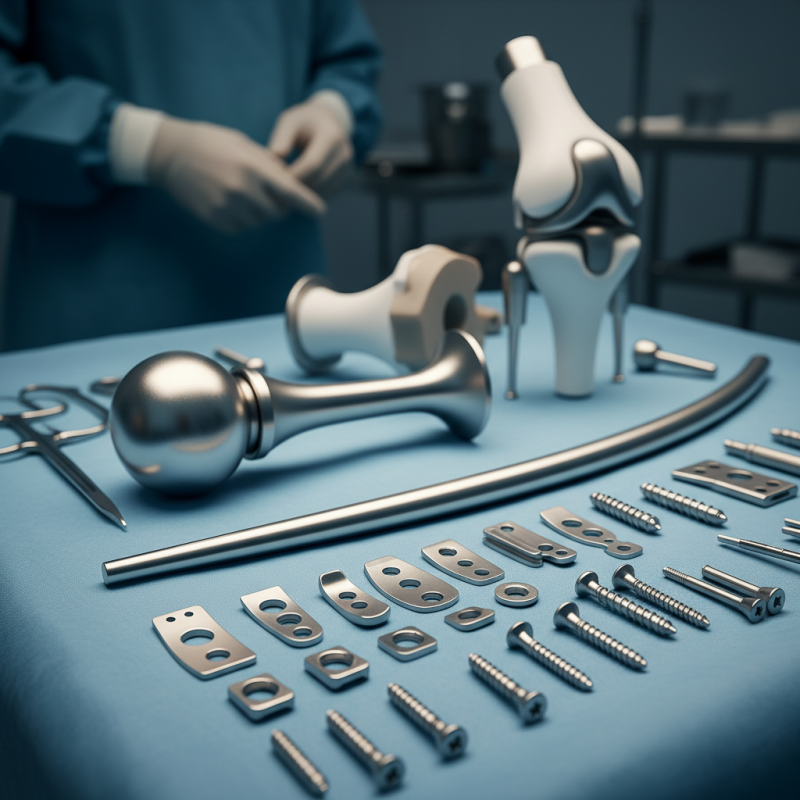
What Are the Different Types of Orthopedic Implants?
orthopedic implants play a crucial role in modern medicine. These devices aid in the repair and stabilization of bones and joints. They can vary widely in design, materials, and function.
From screws to plates, implants serve different purposes. Some help in fracture fixation, while others support joint replacement surgeries. Understanding the types of orthopedic implants is vital for both patients and healthcare providers.
Yet, challenges exist. Not all implants fit every patient. Reactions to materials can happen, leading to discomfort. This complexity makes it essential to choose the right implant for successful outcomes. Each case is unique, highlighting the need for careful selection and personalized treatment.
Types of Orthopedic Implants: An Overview
Orthopedic implants play a crucial role in modern medicine. These devices support weakened bones, aid healing, and restore mobility. Common types include screws, plates, rods, and joint replacements. Each type serves a unique purpose in orthopedic surgery. For instance, screws are often used to secure bone fragments. Plates provide surface support, especially for fractures.
We also see the use of rods in spinal surgery. They stabilize vertebrae and help maintain alignment. Joint replacements are designed for patients with severe arthritis. They can greatly improve quality of life. However, choosing the right implant isn’t always straightforward. Different patients have different needs. What works for one may not work for another.
Surgeons must consider various factors. Age, activity level, and overall health are essential. Sometimes, complications arise. Infections or implant rejection can occur. Recovery may not go as planned. It's vital to monitor patient progress closely. Continuous feedback is necessary. Every implant decision impacts long-term outcomes. Balancing effectiveness and safety is a constant challenge in orthopedic care.
Overview of Different Types of Orthopedic Implants
Role of Bone Plates and Screws in Orthopedic Surgery
Bone plates and screws are vital in orthopedic surgery. They provide stability to fractured bones during the healing process. Studies show that approximately 60% of orthopedic surgeries involve these implants. The strength of these devices allows for early mobilization, which is crucial for recovery.
Surgeons often face challenges with implant selection. Different fractures require specific types of plates and screws. An incorrectly sized plate may lead to inadequate fixation. This can result in complications, such as nonunion or malunion of the bone. Data indicates that 15% of patients experience such issues, underscoring the importance of careful planning.
In recent reports, the demand for innovative designs in bone plates has risen. Surgeons seek materials and shapes that promote better integration with bone. Research shows that titanium and its alloys are the most favored due to their lightweight nature. However, the price point can be a barrier for some facilities. Balancing cost and effectiveness remains a key challenge. Ultimately, advancements in orthopedic implants continue to evolve, but not without hurdles.
Understanding Joint Prostheses: Types and Applications
Joint prostheses play a critical role in orthopedic surgery. These implants replace damaged joints, alleviating pain and restoring function. The most common types include total joint replacements for hips, knees, and shoulders. According to a recent study, nearly 1 million hip and knee replacements occur annually in the United States alone.
Knee prostheses are vital for patients with osteoarthritis. They can significantly improve mobility. However, not every patient experiences optimal results. Some face complications, such as infection or implant failure. A report from the American Academy of Orthopaedic Surgeons highlighted that up to 20% of patients may need a revision surgery within two years of the initial procedure.
Shoulder prostheses are less discussed but equally important. These are crucial for patients with severe arthritis or rotator cuff injuries. The success rate can vary, and complications remain a concern. Studies show that not all implants fit every patient’s anatomy perfectly. Personalization in design could address this issue, but challenges remain in successful adaptation. As the field evolves, understanding the nuances of these joint prostheses becomes essential for both patients and healthcare providers.
Exploring Intramedullary Nails for Fracture Fixation
Intramedullary nails play a pivotal role in fracture fixation. They are designed to stabilize broken bones. These nails are often inserted into the central canal of a long bone, promoting efficient healing. According to the American Academy of Orthopaedic Surgeons, about 3 million fractures occur annually in the U.S. alone. Many of these injuries can benefit greatly from intramedullary nailing.
The procedure provides several advantages. It allows for early mobilization. Patients can return to their daily activities faster. The nails distribute weight along the bone, reducing the risks of complications associated with external fixation. However, there are limitations to consider. For instance, not all fractures are suitable for this method. Some may require additional hardware or surgical techniques.
It's essential to recognize the importance of proper surgical technique. Malalignment can occur if the nail is not correctly placed. Research indicates that up to 15% of patients may experience complications post-surgery, including infection or non-union of the fracture. Ongoing studies further explore optimizing these procedures to enhance patient outcomes. Understanding these aspects is crucial for healthcare providers and patients alike.
The Function of Spinal Implants in Stabilizing the Spine
Spinal implants play a crucial role in stabilizing the spine after injuries or surgeries. They help to align the vertebrae, supporting the natural curvature of the spine. These implants can be plates, screws, or rods made from durable materials. Each component is designed to endure significant stress while facilitating healing.
Stabilization is essential for proper movement and pain management. When the spine is unstable, everyday activities can become difficult. Patients often experience discomfort or worsening symptoms. The right implant can make a significant difference, allowing for better recovery and mobility. However, the choice of implant isn't always straightforward. Surgeons must consider multiple factors, including the patient's anatomy and activity level.
In some cases, the implants may not work as intended. Complications can arise, leading to further interventions. This unpredictability highlights the importance of continuous evaluation and adaptation in treatment plans. Spinal implants are not always a guaranteed fix. Understanding this can help patients set realistic expectations and engage in their recovery process.