What is CNC Machining and How Does It Benefit Your Business?
CNC machining has transformed the landscape of manufacturing. According to a report by Grand View Research, the global CNC machining market is projected to reach $100 billion by 2025. This surge highlights the growing reliance on precision engineering in various industries.
Expert Mark Johnson, a leading figure in the CNC machining field, stated, “Efficiency and accuracy are crucial in modern manufacturing.” His insights reflect the demand for high-quality machining processes. Companies that invest in CNC machining often see enhanced productivity and reduced operational costs.
However, challenges persist. Many businesses struggle with initial capital investment and machine maintenance. The transition to CNC machining requires careful planning. Understanding both the advantages and potential pitfalls can guide organizations through the complexities of this technology. Embracing CNC machining may not be an easy journey, but the rewards often justify the efforts.
What is CNC Machining?
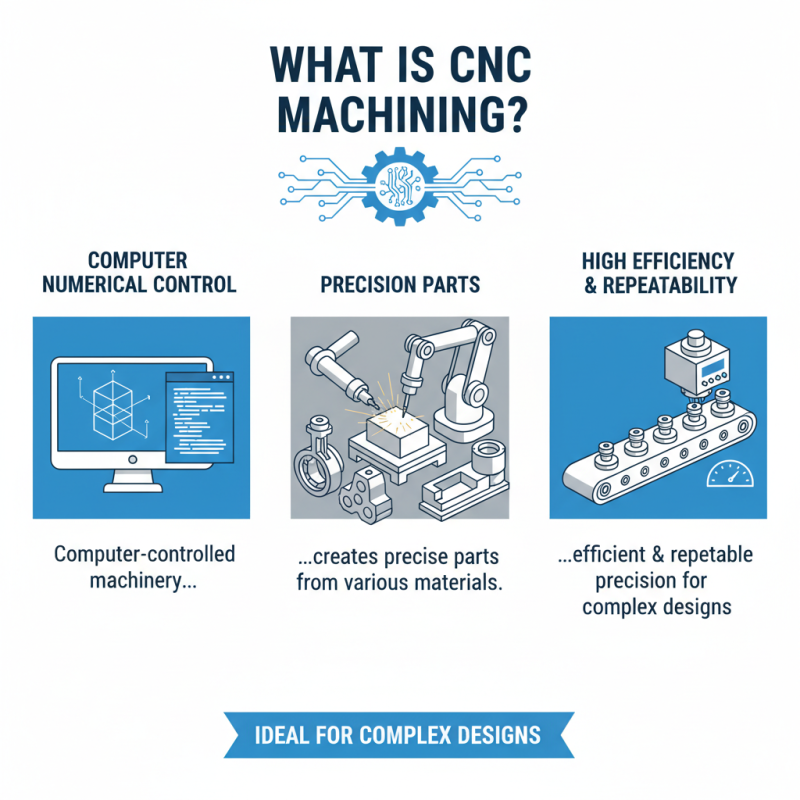
CNC machining is a process that utilizes computer-controlled machinery to create precise parts from various materials. It stands for Computer Numerical Control. The process is highly efficient and allows for repeatable precision, making it ideal for complex designs.
When exploring CNC machining, it’s vital to understand its capabilities and limitations. It can handle various materials, including metals, plastics, and wood. However, not every design suits this technology. Complex geometries might be challenging, especially with intricate details.
**Tips:** Ensure your designs are optimized for CNC cutting. Avoid excessive undercuts and overhangs that can complicate machining. Also, consider material choice; some materials are easier to machine than others.
The benefits for businesses are numerous. CNC machining significantly reduces manufacturing lead times. It improves accuracy, leading to less material waste. However, initial setup costs can be high. Balancing quality and cost is essential for any project.
**Tips:** Always run test simulations before full-scale production. This helps identify potential issues early. Adjusting designs based on these tests can save money and time.
The History and Evolution of CNC Machining
CNC machining has undergone significant changes since its inception. The journey began in the 1940s, with early systems using punched tape. This method paved the way for more sophisticated technologies. By the 1960s, the introduction of computerized controls revolutionized the manufacturing industry. It allowed for higher precision and efficiency, making it a game-changer.
In the 1980s, the first computer numerical control (CNC) machines became widely available. They offered reliability and repeatability. Today’s CNC machines are incredibly versatile. They can work with various materials, including metal, plastic, and wood. This evolution highlights the importance of technology in manufacturing.
Tips: Stay updated on the latest CNC technologies. Continuous learning ensures your business remains competitive. Embrace automation, but consider potential challenges. Managing a CNC machine requires skill, and operator training is crucial. Mistakes can lead to waste and financial loss. Prioritizing education in CNC operations will provide long-term benefits.
Key Processes and Technologies Involved in CNC Machining
CNC machining involves several key processes and technologies that greatly enhance manufacturing efficiency. It primarily utilizes computer numerical control to automate tool movement. This automation allows for precise cutting, drilling, and milling of materials like metal, plastic, and wood. Quality control is essential throughout these processes, as minor errors can lead to significant product defects.
The core technologies include CAD (Computer-Aided Design) and CAM (Computer-Aided Manufacturing). CAD helps design detailed 3D models of parts. CAM then turns these designs into instructions for CNC machines. A mix of human oversight and technology creates a balance between precision and creativity. Sometimes, insufficient understanding of machine capabilities can lead to flawed designs or production delays. It's crucial to regularly adapt designs based on batch performance insights.
Moreover, not all CNC machines are created equal. Each type offers different advantages for specific tasks. Some machines excel at high-volume production, while others are better suited for custom projects. As manufacturers explore these options, they may find that their initial choices need adjustments. Engaging with experts to evaluate machinery and processes can help refine operations and increase production value.
CNC Machining Processes and Their Benefits
This bar chart illustrates the average cycle times for various CNC machining processes. Understanding these times can help businesses optimize their operations, reduce lead times, and improve overall efficiency.
Benefits of CNC Machining for Various Industries
CNC machining has revolutionized manufacturing across multiple industries. Its precision and efficiency lead to superior quality in products like automotive parts and medical devices. A report by Grand View Research indicated that the global CNC machining market was valued at $66.2 billion in 2021, with expectations to grow by 7.5% annually.
Industries benefit significantly from CNC machining. In aerospace, it allows for the creation of complex geometries crucial for flight components. Medical manufacturing takes advantage of precise machining to produce implants with tight tolerances. The electronics sector relies on CNC for producing intricate housing and circuit boards. These benefits help businesses streamline operations and reduce production timelines.
Tip: Regular maintenance of CNC machines ensures accuracy and longevity. Training operators effectively can prevent errors. Additionally, consider leveraging advanced software for improved design and simulation capabilities. Properly assessing these factors is essential for maximizing the benefits of CNC machining.
Future Trends in CNC Machining and Its Impact on Business
The future of CNC machining is shaping up to be one of remarkable evolution. According to a recent report from the Global CNC Machining Market, the industry is expected to grow at a CAGR of 6.5%, reaching approximately $100 billion by 2026. This growth can be attributed to advancements in automation and artificial intelligence. Businesses that invest in smart CNC machines can enhance productivity. They reduce operational costs significantly while improving precision.
Another trend to note is the rising demand for personalized solutions. More manufacturers are incorporating additive manufacturing techniques in CNC. This hybrid approach allows for customization without sacrificing efficiency. Reports indicate that around 70% of businesses are shifting toward these integrated solutions, reflecting a broader industry trend. Moreover, data from industry analysts reveal that firms utilizing advanced CNC technologies report up to 30% higher operational efficiency.
However, with these advances come challenges. Many companies struggle with the initial investment costs and the required training for skilled labor. The gap in technical expertise can hinder growth. As businesses look to embrace these innovations, a balance must be found between technology and workforce readiness. The future of CNC machining is bright, but it necessitates careful planning and adaptation.
What is CNC Machining and How Does It Benefit Your Business? - Future Trends in CNC Machining and Its Impact on Business
| Dimension |
Description |
Benefit |
Future Trend |
| Precision |
CNC machining allows for incredibly accurate production. |
Reduces waste and ensures high-quality products. |
Increased automation and AI integration will enhance precision further. |
| Customization |
CNC technology allows for custom designs and manufacturing. |
Helps businesses meet specific customer needs. |
Growing demand for personalized products leads to more customized solutions. |
| Production Speed |
CNC machining can operate continuously and produce parts quickly. |
Improves turnaround time for manufacturing processes. |
Integration of IoT can optimize production schedules and performance. |
| Material Variety |
CNC machining can work with different materials such as metals, plastics, and composites. |
Allows businesses to manufacture a wide range of products. |
New materials and technologies are expected, expanding CNC applications. |
| Cost Efficiency |
CNC machining reduces labor costs and waste material. |
Decreases overall production costs for businesses. |
Advances in technology may lead to further cost reductions. |