How to Choose the Right FRP Pipe Machine for Your Needs?
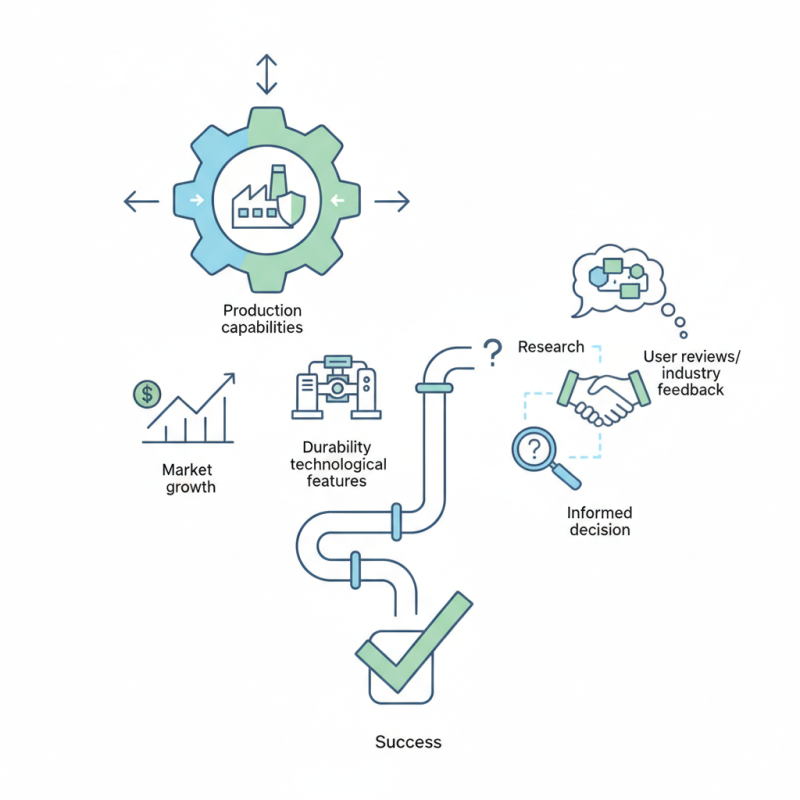
Choosing the right frp pipe machine is crucial for success in various industries. A recent report by Market Insights indicates that the global FRP market is expected to grow significantly, reaching USD 144.4 billion by 2025. This growth underlines the importance of selecting a suitable machine that meets your specific requirements.
When considering an frp pipe machine, evaluating production capabilities is essential. Different machines offer varying outputs, which can impact efficiency. For example, some machines are designed for high-volume production, while others cater to smaller, specialized needs. This diversity can create confusion but also offers opportunities for customization.
Moreover, a machine's durability and technological features significantly influence its performance and maintenance. Many buyers overlook the long-term cost of ownership, focusing only on the initial purchase price. The wrong choice could lead to downtime and decreased productivity. Analyzing user reviews and industry feedback can provide deeper insights into machine reliability and support. Understanding these factors will help in making an informed decision.
Identifying Your Specific FRP Pipe Manufacturing Requirements
When selecting an FRP (Fiber Reinforced Polymer) pipe machine, you must identify your manufacturing needs. The type of pipes, their diameter, and production volume are critical factors. According to industry reports, the demand for FRP pipes is expected to grow by 7.5% annually through 2026. This growth signals a need for efficient and adaptable machinery.
Your specific requirements influence the machine's design and capabilities. Are you focusing on corrosion resistance or structural integrity? Understanding your product specifications will guide your decision. For instance, a low production volume may not justify a large, high-speed machine. Alternatively, high-demand projects may require faster, more complex systems.
Tips: Always assess the technical support offered by manufacturers. Machinery can break down unexpectedly, and quick assistance is vital. Moreover, consider the energy efficiency of the machine. While an initial investment might seem higher for energy-efficient machines, long-term savings can be significant.
Evaluating your needs is crucial, but the process can be complex. Reflect on your current production and future goals. Are your specifications too narrow? Being flexible might bring better solutions. Understanding your capacity constraints is equally important as it impacts the long-term viability of your operations.
Understanding the Types of FRP Pipe Machines Available in the Market
When selecting the right FRP (Fiberglass Reinforced Plastic) pipe machine, understanding the types available is crucial. There are several main categories of FRP pipe machines. Each serves different manufacturing needs and can vary greatly in features. One common type is the winding machine. It creates pipes by winding fiberglass around a mandrel or core, allowing for efficient production of strong and lightweight pipes.
Another type is the pultrusion machine. This machine continuously pulls materials through a fixed cross-section die. It’s ideal for producing consistent shapes and sizes of pipes. Think about your production goals. Consider the diameter and length of the pipes you need. The output speed of the machine is another essential factor. A higher speed can significantly increase productivity.
**Tip:** Assess your production volume before choosing a machine. If you expect high demand, a machine with greater capability may be necessary.
Some machines offer advanced automation features. This can simplify the operation and reduce labor costs. However, these machines may come with a higher price tag. Ensure a balance between your budget and your production needs.
**Tip:** Research the technical specifications of different machines. Check for reviews, and reflect on what fits your unique requirements best. Understanding each machine's strengths and weaknesses can guide you in making a sound decision.
How to Choose the Right FRP Pipe Machine for Your Needs?
| Type of FRP Pipe Machine | Material Capability | Production Speed (m/min) | Pipe Diameter Range (mm) | Key Features |
| Pull Winding Machine | Glass Fiber Reinforced Plastic | 5-15 | 50-500 | High Precision, Automated Control |
| Filament Winding Machine | Carbon Fiber, Glass Fiber | 10-20 | 100-600 | Multi-Axis Control, Customizable Patterns |
| Centrifugal Casting Machine | Polyester, Vinylester | 15-30 | 80-800 | High-Strength, Uniform Thickness |
| RTM (Resin Transfer Molding) Machine | Glass Fiber, Kevlar | 5-25 | 50-500 | Reduced Waste, High-Quality Finish |
| Extrusion Machine for FRP Pipes | Polymer Reinforcements | 10-40 | 20-300 | Continuous Production, High Output |
Evaluating the Technical Specifications of FRP Pipe Machines
When selecting an FRP pipe machine, focus on its technical specifications. Key factors include production capacity, material compatibility, and automation features. Understanding these elements helps ensure the machine meets your needs.
Production capacity is crucial. Determine the volume of pipes you need daily. A machine with insufficient capacity may delay projects. Conversely, an oversized machine can lead to unnecessary costs.
Material compatibility is another consideration. Different FRP materials have unique properties. Some machines handle only specific types. Be aware of the materials you'll use, as the right machine enhances performance.
Tip: Always request detailed specifications before purchasing. Additionally, inspect the machine's components. This can reveal the quality of the equipment.
Automation features impact efficiency. Fully automated systems require less labor and can reduce errors. However, they can be expensive. Assess your budget and operational needs.
Tip: It’s wise to look for machines with adjustable settings. This flexibility can adapt to various projects. Sometimes, simpler machines offer the best reliability. Reflect on your long-term plans. Complexity isn't always necessary.
Considering Budget and Cost-Effectiveness in Your Selection
When selecting an FRP pipe machine, budget considerations are crucial. Industry reports show that the price range for these machines can vary significantly. Basic models might start around $50,000, while advanced machines can exceed $200,000. The cost often reflects features, capabilities, and overall production efficiency.
Cost-effectiveness hinges on understanding your production needs. A low-priced machine may seem tempting, but it can lead to higher operational costs. For instance, cheaper machines might consume more energy or require frequent repairs. According to industry studies, businesses can incur up to 20% higher maintenance costs with subpar equipment.
Evaluating potential ROI is essential. An initial investment in a reliable FRP pipe machine can pay off through increased production and reduced waste. It’s vital to assess production volume against operating costs. A machine capable of producing high-quality output at a consistent rate typically yields better long-term savings. Balancing quality with price is not straightforward but necessary.
Comparison of FRP Pipe Machine Costs and Features
Assessing After-Sales Support and Maintenance Services for Machinery
Choosing the right FRP pipe machine involves more than just the initial purchase. After-sales support and maintenance services are critical to ensure longevity and efficiency. A robust support system can save time and money down the road. It’s essential to evaluate what services are available to you.
Tips: Always inquire about the warranty. A good warranty indicates a manufacturer’s confidence in their machine. Check for local technicians who can provide quick repairs. This reduces downtime significantly.
Consider the availability of replacement parts. It's frustrating when a machine goes down due to a missing component. Ask about the typical delivery times for parts. This helps avoid prolonged disruptions in your production process.
It's also worth asking about training for your staff. Operators should be comfortable using the machinery efficiently. However, some companies may not offer comprehensive training. This gap can lead to improper usage or early wear and tear. Take the time to understand what training is included.