
China Top Coal Mine Fans Manufacturers How to Choose?

Choosing China’s top Coal Mine Fans manufacturers requires more than comparing prices and catalog photos. Mine ventilation affects worker safety, equipment reliability, and production continuity. A suitable supplier should understand underground airflow, dust exposure, humidity, heat, and restricted installation space. These conditions are not identical. A fan proven in one mine may perform poorly in another.

Experienced buyers examine the manufacturer’s engineering process, not only its final product. Ask for airflow and pressure curves, motor efficiency data, vibration limits, noise measurements, and material specifications. Confirm whether testing represents actual operating conditions. Factory visits can reveal assembly quality, balancing equipment, inspection records, and spare-parts control. Independent certification and documented quality systems add confidence, but they do not replace technical verification. Speak with operating mines when possible. Their maintenance logs often show more truth than polished brochures.

A reliable Chinese manufacturer should offer clear selection support, site calculations, installation guidance, commissioning, and responsive after-sales service. Check lead times, warranty terms, training, and emergency support before signing a contract. Consider total ownership cost, including energy use, bearings, motors, downtime, and replacement parts. Small details matter. A poorly sealed housing can invite dust. An unsuitable motor can waste power every shift. No supplier is perfect, and this choice deserves healthy skepticism. Specifications may look impressive while field communication remains weak. That gap should not be ignored. Compare evidence, ask uncomfortable questions, and select a partner whose performance can be measured over time.
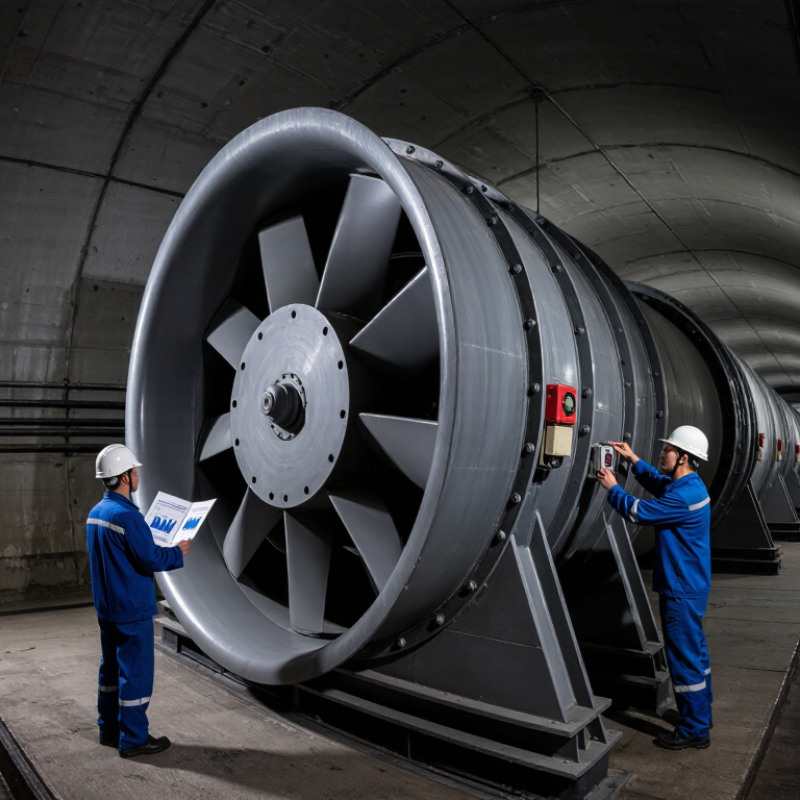
China Top Coal Mine Fans Manufacturers How to Choose?

What Makes China’s Coal Mine Fan Manufacturers Stand Out?

China’s coal mine fan manufacturers stand out through engineering depth, not simply low prices. The National Bureau of Statistics reported China produced about 4.66 billion tonnes of raw coal in 2023. The IEA also recorded global coal demand at a historic 8.7 billion tonnes that year. Such operating scale creates demanding test conditions for ventilation equipment.

Experienced manufacturers usually offer axial or centrifugal fans matched to tunnel length, airflow, pressure, dust, and temperature. Strong suppliers test performance against ISO 5801 methods and provide motor curves, vibration records, noise data, and maintenance guidance. Many also support explosion-protected designs and local electrical requirements. These details matter underground. A fan that looks powerful may still waste energy or fail under unstable pressure. The weakness is obvious: some product documents remain too general, so buyers must verify every figure.

Tips: Request a witnessed factory test. Compare measured airflow, static pressure, efficiency, and noise at the same operating point. Ask for spare-part lead times and service records. Do not accept “high efficiency” without test conditions. The U.S. Mine Safety and Health Administration emphasizes effective mine ventilation planning, but real sites change constantly. Therefore, a manufacturer should explain adjustment methods, emergency support, and inspection intervals. A cheaper quotation may become expensive after installation. Recheck the assumptions.

Which Types of Coal Mine Fans Are Available?

Coal mine fans are not one-size-fits-all equipment. Their type should match the mine layout, airflow demand, pressure resistance, and operating environment. Axial-flow fans move large air volumes through relatively straight passages. They are common as main ventilation fans because their structure is compact and efficient. Centrifugal fans create stronger pressure and can handle complex duct systems, bends, and higher resistance. However, they usually require more installation space.

Auxiliary fans support ventilation near advancing headings, blind tunnels, and temporary work areas. They normally connect with flexible ducts, which need careful inspection for leaks, damage, and poor joints. Local fans can improve airflow around machinery, but they must not disturb the planned ventilation pattern. Reversible fans are useful when airflow direction may need to change during an emergency or maintenance event. That feature requires reliable controls and tested procedures.

Selection should begin with measured airflow and system resistance, not only the fan’s rated power. Engineers should verify methane monitoring, electrical protection, noise levels, vibration limits, and temperature conditions. Explosion-protected components may be required under applicable mining regulations. In practice, a larger motor does not automatically provide safer ventilation. It may increase energy use and create difficult pressure effects. Maintenance records often reveal problems that design calculations miss. Flexible ducts sag. Sensors drift. Operators also prefer simple controls, though simplicity can reduce adjustment options. A qualified ventilation engineer should review the final selection against local laws and the mine’s emergency plan.

How to Evaluate Fan Performance and Safety Standards?

When choosing a coal mine fan manufacturer, evaluate measured performance rather than catalogue claims. Request airflow, pressure, power, efficiency, and noise data at several operating points. A fan should match the mine’s actual resistance, not an ideal laboratory condition. Check impeller balance, bearing temperature, vibration levels, and motor starting current. Small vibration changes can reveal alignment or bearing problems before failure.

Safety evaluation requires more than a certificate. Confirm compliance with applicable mining regulations and recognized international standards. Review explosion-protection documentation for motors, switches, and control equipment. Inspect emergency stops, overspeed protection, airflow reversal, gas monitoring, grounding, and fire-resistant materials. Ask whether testing was performed by an independent laboratory with traceable instruments. Calibration dates matter. So do test conditions.

During a factory or site inspection, compare the test report with the installed fan. Verify weld quality, guard strength, access panels, and maintenance clearances. Examine service records from similar underground applications. A reliable manufacturer should explain failure rates and corrective actions, not hide them. One certificate cannot prove long-term safety. Field conditions are harsher than test rooms. Dust buildup, humidity, unstable power, and poor installation can reduce performance quickly. A detailed acceptance test is useful, but it may still miss aging seals or future corrosion. This is where maintenance planning needs honest revision.

What Manufacturing Capabilities Should Buyers Check?

When choosing a coal mine fan manufacturer, buyers should inspect production capability before comparing prices. A polished showroom proves little. Ask whether the factory builds impellers, casings, shafts, and control systems in-house. CNC machining can improve dimensional accuracy, especially for large rotating parts. Welding quality also deserves close attention. Request inspection records for weld penetration, surface defects, and material grades.

Fan performance must be measured, not simply promised. Check whether the manufacturer owns an airflow test station with calibrated instruments. The facility should record air volume, static pressure, power consumption, vibration, and noise. Dynamic balancing is essential for impellers. Even a small imbalance can create severe vibration underground. Ask for balancing limits and test reports linked to each serial number. Small details matter.

Quality control should continue after assembly. Review incoming material checks, process inspections, final testing, and traceability procedures. A reliable supplier can explain what happens when a test fails. That answer often reveals more than a certificate. Factory visits are useful, but one visit is not enough. Production conditions may change by order. Buyers should also examine maintenance guidance, spare-part availability, and response procedures. I have found that attractive documentation can hide weak follow-up. Therefore, request references from comparable mining projects and verify actual operating results. The manufacturer should discuss limitations honestly, including temperature, dust, pressure, and installation conditions. Clear communication is a manufacturing capability too.

China Top Coal Mine Fan Manufacturers: Manufacturing Capabilities Buyers Should Check

Suggested buyer audit weighting for evaluating industrial coal mine fan manufacturing capabilities. The checklist focuses on engineering validation, production control, safety compliance, testing, and traceability rather than company or brand performance.

Buyers should request documented evidence such as design calculations, material certificates, rotor balancing records, motor protection details, applicable explosion-protection documentation, performance test reports, and final inspection records. The percentages are a practical procurement framework and are not supplier ratings.

How to Select the Right Supplier for Your Mine?

Choosing a mine fan supplier starts with field evidence, not a polished catalogue. The International Energy Agency reported global coal demand reached about 8.7 billion tonnes in 2023. That scale increases pressure on ventilation reliability. Ask suppliers for airflow curves, pressure data, efficiency tests, and noise measurements under your operating conditions. A fan rated for a laboratory point may perform poorly in a dusty underground roadway. Request references from mines with similar depth, gas conditions, and seasonal temperatures. Check whether testing follows recognized standards, such as ISO 13349 or applicable mine-safety requirements.

Maintenance support matters as much as the impeller. The U.S. Mine Safety and Health Administration recorded 27 mining fatalities in 2023 across the country, showing why dependable systems and disciplined inspections remain essential. Supplier evaluations should examine motor protection, vibration monitoring, spare-part availability, emergency response, and technician training. Ask how quickly a damaged bearing can be replaced. Ask for service records, not promises.

Price comparisons can mislead. Lower electricity use may offset a higher purchase cost, especially where fans operate continuously. Still, efficiency figures need independent verification. I would hesitate to accept a single test certificate without raw data and clear tolerances. A practical trial, witnessed by the mine’s engineers, can reveal unstable airflow or excessive vibration. No checklist is perfect. Dust loading, corrosion, and operator habits can change results after installation. Choose the supplier willing to document those uncertainties and correct them openly.

China Top Coal Mine Fans Manufacturers How to Choose? - How to Select the Right Supplier for Your Mine?

Evaluation Dimension Recommended Selection Benchmark Why It Matters in a Coal Mine Evidence to Request from the Supplier Suggested Weight
Explosion Protection Select equipment certified for the intended hazardous-area classification and mine application. Coal dust and methane can create severe explosion risks if electrical and mechanical equipment is unsuitable. Valid explosion-protection certificates, product approval documents, certification scope, and conformity records. 20%
Airflow Capacity The rated airflow should meet the mine ventilation design requirement with an appropriate operating margin. Insufficient airflow can reduce contaminant removal and compromise worker safety. Certified fan-performance curves showing airflow, pressure, speed, and operating-point data. 15%
Static Pressure Verify that the fan can overcome the calculated resistance of ducts, stoppings, regulators, bends, and other system components. A fan may deliver adequate airflow at low resistance but fail when installed in the complete ventilation network. Pressure-versus-flow curves, system-resistance calculations, and duty-point confirmation. 12%
Energy Efficiency Compare total electrical input and efficiency at the actual mine duty point, not only at the maximum rated point. Ventilation equipment can operate continuously, so energy consumption strongly affects operating cost. Motor efficiency data, fan efficiency curves, input-power figures, and variable-speed operating data where applicable. 12%
Reliability and Service Life Prioritize robust casings, balanced impellers, suitable bearings, corrosion resistance, and documented maintenance intervals. Unexpected fan failure may interrupt production and create unsafe ventilation conditions. Material specifications, vibration limits, bearing details, fatigue analysis, inspection procedures, and service records from comparable applications. 12%
Noise and Vibration Require measured noise and vibration data at the proposed operating point and installation arrangement. Excessive noise affects worker health, while vibration can accelerate wear and damage connected equipment. Factory test reports, balancing records, vibration measurements, noise levels, and acceptance criteria. 8%
Customization and Compatibility Confirm compatibility with mine voltage, frequency, duct diameter, mounting arrangement, controls, and environmental conditions. A technically capable fan can still cause installation delays if interfaces are not matched. General arrangement drawings, interface dimensions, wiring diagrams, control protocols, and approved technical submittals. 7%
Testing and Quality Control Choose suppliers that perform documented inspections, dimensional checks, electrical tests, balancing, and performance testing. Factory verification reduces the risk of receiving equipment that does not meet the approved design. Quality plan, inspection and test plan, calibration certificates, test procedures, and final inspection reports. 6%
Delivery and Spare Parts Evaluate realistic production lead time, packaging, export documentation, critical spare-parts availability, and replacement-part support. Long delays or unavailable parts can extend downtime during commissioning or maintenance. Written delivery schedule, packing specification, spare-parts list, stock policy, and logistics responsibilities. 4%
After-Sales Support Prefer suppliers able to provide commissioning guidance, troubleshooting support, manuals, training, and defined response times. Specialized technical support helps maintain safe operation throughout the equipment lifecycle. Warranty terms, service-contact details, maintenance manuals, training plan, and escalation procedure. 2%
Total Evaluation Score Use a documented technical and commercial scoring matrix before making the final purchasing decision. A weighted assessment reduces the risk of selecting equipment based only on purchase price. Completed bid comparison, technical clarifications, risk register, and approved supplier evaluation record. 100%
Selection Note: Final fan sizing and certification requirements should be confirmed by the mine ventilation engineer and the applicable mining-safety authority for the installation location.

Article Source:

We will help turn your vision into reality

Contact Us