2026 How to Choose the Best Injection Molding Materials?
Choosing the right injection molding materials is crucial for various industries. According to a report by Grand View Research, the global injection molding market was valued at approximately $299 billion in 2020 and is expected to grow significantly. The materials chosen directly impact production efficiency and final product quality.
Different applications require specific properties in injection molding materials. Factors such as strength, flexibility, and thermal resistance play a significant role in material selection. For instance, ABS is valued for its impact resistance and ease of processing. However, not all projects can accommodate its characteristics.
Decision-makers often face challenges in material selection. There can be a lack of clarity about long-term performance. A comprehensive understanding of materials can lead to better product outcomes. However, the variety of available options can overwhelm even seasoned professionals. It's essential to reflect on both the advantages and limitations of each material to make informed choices.
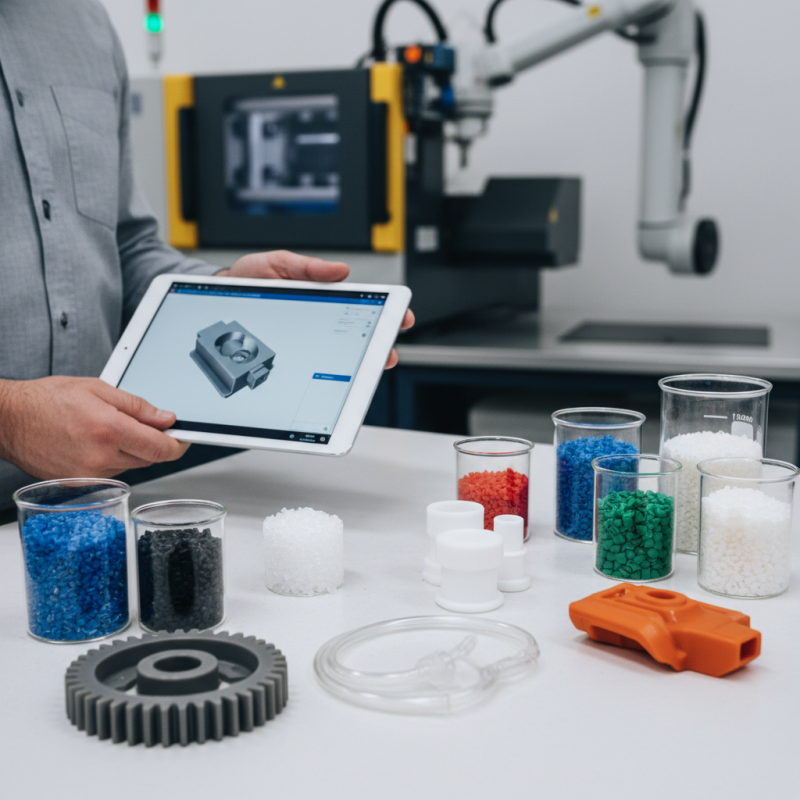
Understanding Injection Molding: Key Concepts and Importance
Injection molding is a key manufacturing process. It produces various plastic parts efficiently. Understanding this process helps in selecting the right materials. According to a report from Smithers Pira, the global injection molding market is expected to reach $400 billion by 2026. This growth emphasizes its significance across industries.
Selecting materials for injection molding is critical. Specific criteria include durability, flexibility, and temperature resistance. ABS and polypropylene are popular choices due to their versatility. Notably, ABS offers great impact resistance. However, it's not suitable for high-temperature applications. In contrast, nylon shines in high-temp environments but can be expensive. Make sure to analyze which material fits your needs.
Cost and production speed also matter. Some materials can lead to longer cycle times due to cooling rates. This factor may impact overall production efficiency. Realigning your approach may require re-evaluating your material choices. While striving for the best outcome, one must not overlook the sustainability of material sources. Balancing performance with environmental impact is crucial for future developments.
2026: Understanding Injection Molding - Material Cost Comparison
This chart displays the cost per kilogram of various injection molding materials. When choosing the best material for your applications, consider factors like cost, mechanical properties, and the specific requirements of your project.
Types of Injection Molding Materials and Their Properties
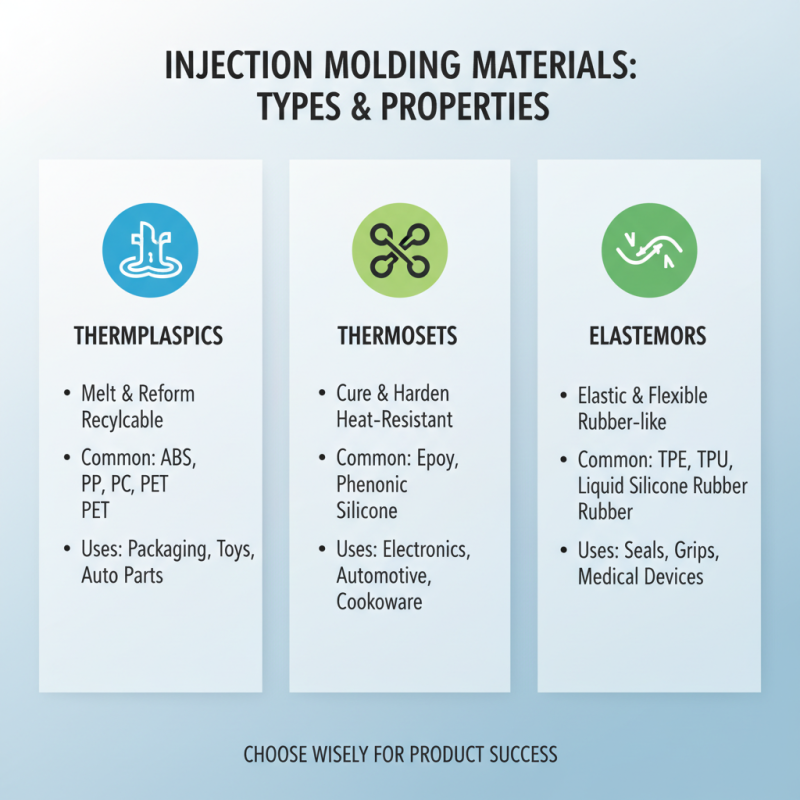
Choosing the right injection molding materials is crucial for product success. Various types of materials can impact both cost and performance. Common types include thermoplastics, thermosets, and elastomers. Each type has specific properties that affect their suitability for different applications.
Thermoplastics are popular for their versatility and ease of processing. They can be heated and molded multiple times. Materials like ABS and polycarbonate offer good strength and impact resistance. However, some thermoplastics have limited heat resistance, which can be a drawback. On the other hand, thermosets are durable and heat-resistant. Once molded, they cannot be reshaped. This makes them ideal for high-temperature applications but reduces flexibility.
Elastomers provide excellent flexibility and stretchability. They are often used in products requiring a rubber-like quality. However, their processing can be challenging and may require special equipment. It's essential to consider the intended use of the product, the environmental conditions it will face, and the production cost. Finding the right material is not always straightforward. It often requires testing and adjustments, creating room for reflection and improvement.
Factors to Consider When Selecting Injection Molding Materials
Selecting the right materials for injection molding is crucial. Several factors play a critical role in this decision. One key factor is the mechanical properties of the materials chosen. For example, materials with high tensile strength are often preferred for durable products. According to a 2022 market report, around 32% of manufacturers prioritize strength over other properties.
Another important aspect to consider is thermal stability. Many applications require materials to withstand high temperatures without deforming. A study found that materials with a heat deflection temperature above 100°C are used in 45% of automotive applications. However, this choice can lead to higher costs, which some firms may overlook.
Additionally, the environment plays a role in material selection. Whether the product will face UV exposure or chemicals can influence decisions. A report indicates that 60% of companies consider environmental conditions when selecting materials. Ignoring these factors might lead to failures, which is a hard lesson for many. Balancing cost, performance, and environmental impact is complex but necessary for optimal results.
2026 How to Choose the Best Injection Molding Materials? - Factors to Consider When Selecting Injection Molding Materials
| Material Type |
Mechanical Properties |
Thermal Resistance |
Cost per Kg |
Recommended Applications |
| ABS |
Good impact resistance, flexible |
Up to 80°C |
$2.50 |
Consumer goods, toys, automotive parts |
| Polycarbonate (PC) |
High strength, durable |
Up to 130°C |
$3.50 |
Safety glasses, electronic housings |
| Nylon (PA) |
Good tensile strength, wear-resistant |
Up to 100°C |
$2.80 |
Gears, automotive components |
| Polypropylene (PP) |
Lightweight, chemical resistance |
Up to 100°C |
$1.50 |
Containers, automotive interior |
| Polystyrene (PS) |
Brittle, easy to mold |
Up to 70°C |
$1.20 |
Packaging, disposable cutlery |
Applications of Different Materials in Injection Molding
When selecting materials for injection molding, it’s vital to understand the unique properties of various substances. For instance, thermoplastics dominate the market due to their versatility. According to a recent report by MarketsandMarkets, the global thermoplastics market is expected to reach $200 billion by 2026. This wide range allows for various applications, from automotive components to consumer goods.
Acrylics are popular for their clarity and weather resistance. Polystyrene offers a balance of cost and moldability. Both materials excel in different applications. Polycarbonate stands out in industries needing impact resistance, while polyethylene is widely used for its durability. However, choosing the right material requires careful consideration of application requirements.
Tips: Always identify the specific mechanical and thermal properties your product needs. Conduct a cost-benefit analysis. Aim to strike a balance between performance and budget constraints. Remember, not every material is perfect. Some may not meet long-term reliability goals. It’s crucial to reflect on past material choices and adapt future selections accordingly. Consider the environment too; sustainable materials can enhance your brand's value.
Future Trends in Injection Molding Materials Selection
In recent years, the selection of injection molding materials has evolved significantly. According to a report from Allied Market Research, the global injection molding market is projected to reach $407 billion by 2027. This growth signals a rise in demand for advanced materials. It emphasizes the importance of making informed choices based on sustainability, performance, and cost-effectiveness.
As companies face increasing pressures to adopt eco-friendly practices, recycled materials are gaining traction. For instance, using recycled polypropylene can reduce carbon emissions by up to 60%. However, not all recycled materials offer the same mechanical properties. This inconsistency can lead to challenges in achieving desired performance standards. Companies must evaluate the strength and durability of available options carefully.
Emerging trends indicate that materials offering enhanced functionality will be increasingly sought after. Bioplastics and high-performance composites are on the rise. However, these materials often come with a higher price tag. The challenge becomes balancing cost against performance. Innovating new materials may also result in unforeseen complications in the manufacturing process. Thus, industry players need to remain adaptable and open to exploring various material avenues.