How to Choose a 22m Telescopic Diesel Boom Lift in 2026
Choosing a 22m Telescopic Diesel Boom Lift in 2026 is not just a matter of reaching a stated height. The machine must also place workers, tools, and materials safely at the required point. Check whether the quoted 22 metres means platform height or working height; manufacturers may present these figures differently. A few centimeters matter.
IPAF’s 2024 Global Safety Report reviews reported powered-access incidents and highlights recurring risks, including falls, entrapment, and overturning. It is useful context, not a machine-rating system. The practical lesson is clear: compare the lift’s load chart, platform capacity, operating envelope, and ground conditions before comparing price. A diesel model may suit rough, outdoor sites, but noise, emissions, access routes, and refuelling needs still affect daily work.
Look closely at the outreach chart. At full extension, a lift may not carry its maximum platform load, and the basket may not reach across an obstacle as expected. Check axle load, gradeability, turning space, wind limits, and stabilizer requirements against the actual site plan. Ask for current inspection records and maintenance history, too. A polished brochure cannot show worn tires or a sluggish control. That is easy to overlook.
This guide explains how to assess a 22m Telescopic Diesel Boom Lift in 2026, from reach and capacity to service support and total ownership cost. Specifications vary by model and configuration, so confirm critical figures with the manufacturer or an authorized dealer. The right choice is the one that fits the task—not simply the tallest machine on the quote.
What a 22m Telescopic Diesel Boom Lift Is and How It Works
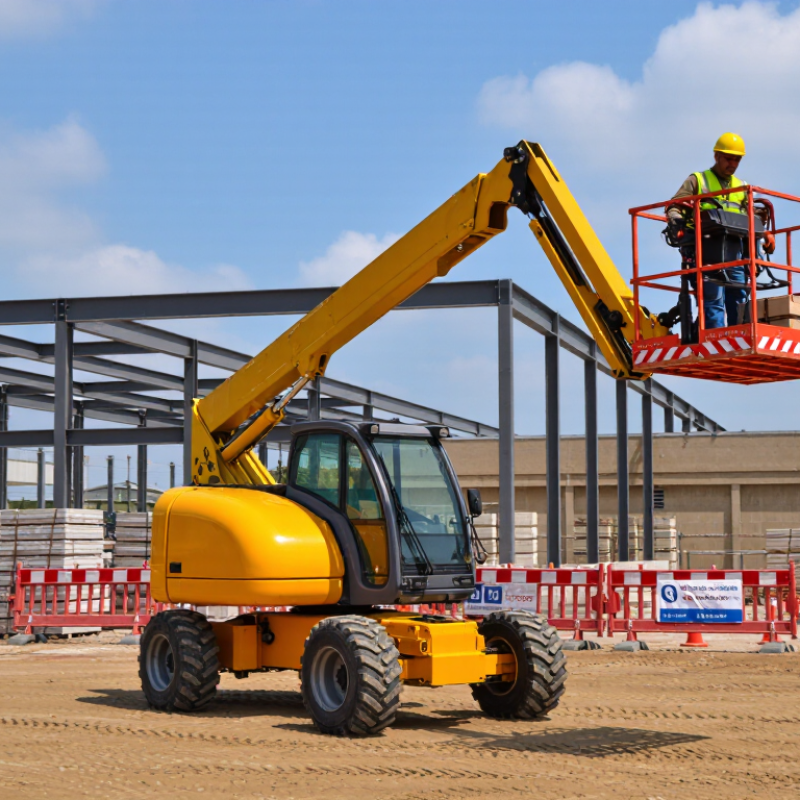
A 22m telescopic diesel boom lift is a mobile machine that raises a work platform on a long, straight, extendable arm. The “22m” figure may describe maximum working height or another rated dimension, depending on the specification. Check the data plate and operating manual rather than assuming it means platform height. Reach matters. Unlike an articulating boom, a telescopic model extends mainly outward in a straight line, which can help workers access high façades, steelwork, or roof edges from a distance. A diesel engine supplies power for travel and hydraulic movement. Four-wheel drive and rough-terrain tires are common, but features vary by machine.
From the platform, an operator uses controls to raise, lower, extend, or retract the boom and steer the chassis. The base must be positioned on suitable ground, with slopes and obstacles checked before elevation. Small changes in ground level can matter. Wind, platform load, and boom extension affect stability and permitted reach; the capacity chart sets the actual limits. Not magic. A pre-use inspection should cover tires, leaks, controls, alarms, and visible structural damage. Operators should follow the machine’s manual and training, since a quick glance cannot reveal every fault.
How to Assess Work Height, Outreach, and Site Conditions
A 22 m telescopic boom lift is not automatically suitable for a 22 m task. Check whether the stated figure means platform height or working height; specifications vary. A worker’s reach above the platform may be included in working-height figures. Measure the highest point to be reached, then allow room for safe positioning. Measure twice. Keep the platform below overhead structures and consider how the boom must move around them.
Outreach matters as much as height. Mark the target point and the lift’s planned position on a site sketch. Compare the required horizontal reach with the machine’s rated envelope, not just its maximum figure. That matters. Boom angle, platform load, and obstacles can reduce useful reach. Include workers, tools, and materials when checking platform capacity. A rough sketch can still miss a pipe or roof edge, so verify clearances on site.
Check the ground before choosing a diesel unit. Look for soft shoulders, drains, slopes, and uneven paving; ask for ground-bearing pressure details where needed. Leave room. Confirm access width, turning space, and overhead clearance along the entire route. Diesel power may suit outdoor work, but exhaust and ventilation need careful attention near enclosed areas. Wind limits and surface conditions also affect safe operation. Recheck the plan when site conditions change; they often do.
Choosing a 22m Telescopic Diesel Boom Lift: Site Measurements
Example site-survey measurements for assessing work height, horizontal outreach, and access constraints. These are planning values, not specifications for a particular lift.
Before selecting equipment, compare the required platform height and outreach with the lift’s manufacturer load chart. Verify machine width, transport height, ground bearing capacity, slope limits, and overhead hazards at the actual site.
Which Performance Specifications to Compare in 2026
A 22m telescopic diesel boom lift should be compared by its working envelope, not its headline height alone. Confirm whether 22m means working height or platform height; suppliers may describe these differently. Then check horizontal outreach at the required platform load. Maximum outreach figures can hide reduced capacity at full extension. Review the load chart across boom angles and rotation, especially if the work area includes a roof edge or recessed façade.
Compare rated platform capacity, platform dimensions, machine width, transport weight, gradeability, ground pressure, and allowable wind speed. These figures affect whether the lift can reach the task and travel across the site. IPAF’s 2024 Global Safety Report recorded 4,374 incident reports from 23 countries, including 118 fatalities. Such reports do not prove that one specification prevents incidents, but they reinforce the need to assess stability, access, and operator protection—not reach alone. Check the exact configuration and operating limits in the equipment manual; small differences matter.
Tips: Ask for the load chart, transport dimensions, and ground-pressure data for the quoted configuration. Compare them with your site plan and surface conditions. I would double-check the access route too; it is easy to overlook.
How to Choose a 22m Telescopic Diesel Boom Lift in 2026 - Which Performance Specifications to Compare in 2026 | Performance specification | Useful comparison benchmark | What to verify before choosing |
| Working height and platform height | A 22 m working-height machine generally provides about 20 m of platform height; working height commonly includes approximately 2 m for a person’s reach. | Check the manufacturer’s stated platform height and confirm that the required work area can be reached without relying on the working-height figure alone. |
| Horizontal outreach | Around 16–18 m is a useful initial screening range for some 22 m-class telescopic lifts; actual outreach varies with boom design and configuration. | Compare the working-envelope diagram. Maximum outreach may not be available at maximum platform height or at the machine’s full rated capacity. |
| Platform capacity | Approximately 230–450 kg is a broad comparison range for machines in this class; some models have different capacity limits at different outreach positions. | Check the load chart and include occupants, tools, and materials in the total. Confirm whether capacity changes with boom extension or platform position. |
| Platform size and access | Compare usable platform floor area, gate opening, entry arrangement, and any platform extension rather than relying on capacity alone. | Make sure the platform can accommodate the crew and equipment while keeping the load within the rated limit and any extension-platform restrictions. |
| Gradeability and rough-terrain mobility | Published gradeability varies by machine; figures are commonly specified for travel with the boom stowed and should not be treated as an operating slope limit. | Compare the gradeability, allowable operating slope, axle or traction features, and tire type. Check the manual for separate travel and elevated-operation limits. |
| Machine weight and transport dimensions | Weight and stowed dimensions vary substantially by configuration; use the exact machine’s transport data rather than a class-wide estimate. | Check trailer payload, axle limits, overall width and height, transport length, loading method, and any permits required on the planned route. |
| Wind rating and outdoor operation | Some outdoor MEWPs have a rated maximum wind speed of 12.5 m/s (about 28 mph); the permitted value depends on the specific machine and configuration. | Confirm the wind-speed limit on the machine’s rating plate and in its manual. Do not assume an indoor-rated platform is suitable for outdoor use. |
| Diesel engine and emissions compliance | Engine emissions requirements depend on the country, application, and applicable regulations; Stage V or Tier 4 Final may be relevant in certain markets. | Verify local compliance, fuel requirements, exhaust after-treatment needs, service access, and suitability for work near occupied buildings. |
| Safety systems and standards | Safety equipment and applicable MEWP standards vary by market and model year. | Check emergency lowering, platform overload protection, tilt and motion alarms, ground controls, and compliance with the standards required at the job site. |
Note: Ranges are indicative screening benchmarks, not guaranteed specifications. Confirm all dimensions, capacities, limits, and regulatory requirements in the exact machine’s current specification sheet and operator’s manual.
How to Check Safety Features, Standards, and Operator Requirements
A 22m telescopic diesel boom lift can reach work areas that are difficult to access, but height leaves little room for guesswork. Before hiring, check the platform load chart, rated capacity, and permitted wind speed. Confirm that guardrails, toe boards, emergency-stop controls, and the ground-level lowering system are present and working. Test alarms and controls from the ground before raising the boom. Look for hydraulic leaks, damaged hoses, worn tires, and a readable inspection record. Small defects matter.
Tips: Compare the machine’s data plate with its manual and the job plan. Check that required inspections and applicable regional standards are documented. Keep the ground firm and level; soft soil can shift under the chassis. Never assume yesterday’s setup is safe today.
Operators should have task-specific training and authorization, with any required licence or certification verified under local rules. They need to understand the lift’s controls, load limits, emergency procedures, and site hazards—not just how to drive it. Review overhead lines, nearby traffic, and rescue arrangements before work begins. A pre-start checklist helps, though it can miss things when rushed. Pause if a warning light appears or conditions change, and lower the platform before investigating.
How to Evaluate Ownership Costs and Supplier Support
For a 22m telescopic diesel boom lift, the purchase price is only the visible part of the bill. Estimate annual operating hours, fuel use, scheduled servicing, tyres, hydraulic hoses, and transport between sites. Ask for a maintenance schedule and prices for common wear parts before comparing quotes. Small details matter. Rough ground can wear tyres faster than paved work areas. Usage forecasts are guesses, so revisit them after the first season.
Compare ownership costs across several years, not just the first invoice. Include financing, operator familiarization, inspections, downtime, and likely resale value. Check what the warranty covers and whether travel, labor, or replacement components are excluded. A low estimate may leave out repairs that are hard to predict. That is worth questioning.
Supplier support affects whether a small fault becomes a costly delay. Ask how quickly parts are typically dispatched and whether qualified technicians can reach your work area. Request clear service contacts, practical operator guidance, and access to manuals. If a supplier promises fast support, ask how that response works during a busy period. Keep the answers in writing, then compare them with your site schedule and available backup equipment.