
How to Choose the Best Milk Cup for Your Business?

Choosing a Milk Cup for your business is a practical decision, not just a branding exercise. The right cup should suit the drinks you serve, the way customers use them, and the pace of your operation. A takeaway counter may need secure lids and easy stacking, while a dine-in café may care more about how a cup feels in the hand. Small details matter. A lid that leaks during a short walk can undo the care put into a carefully prepared drink.

Start by checking capacity, material, insulation, rim comfort, and compatibility with your lids and dispensers. Then compare unit price with storage needs, product consistency, and the amount of waste or inconvenience a poor fit could create. Do not rely on a product photo alone. Request samples and test them with actual hot and cold drinks, using the serving process your team follows. Notice whether the cup softens, becomes uncomfortable to hold, or fits neatly in your storage area. These checks cannot predict every customer preference, but they can reveal avoidable problems.

It is tempting to choose the lowest quote or the most attractive design. That is not always the best answer. A lower-cost option may work well for one menu and poorly for another, so judge it against your own service needs. Ask suppliers clear questions about specifications and ordering consistency, and verify claims against product information. The choice may still involve trade-offs. A thoughtful comparison helps you select a Milk Cup that supports presentation, handling, and day-to-day reliability without paying for features your business will not use.
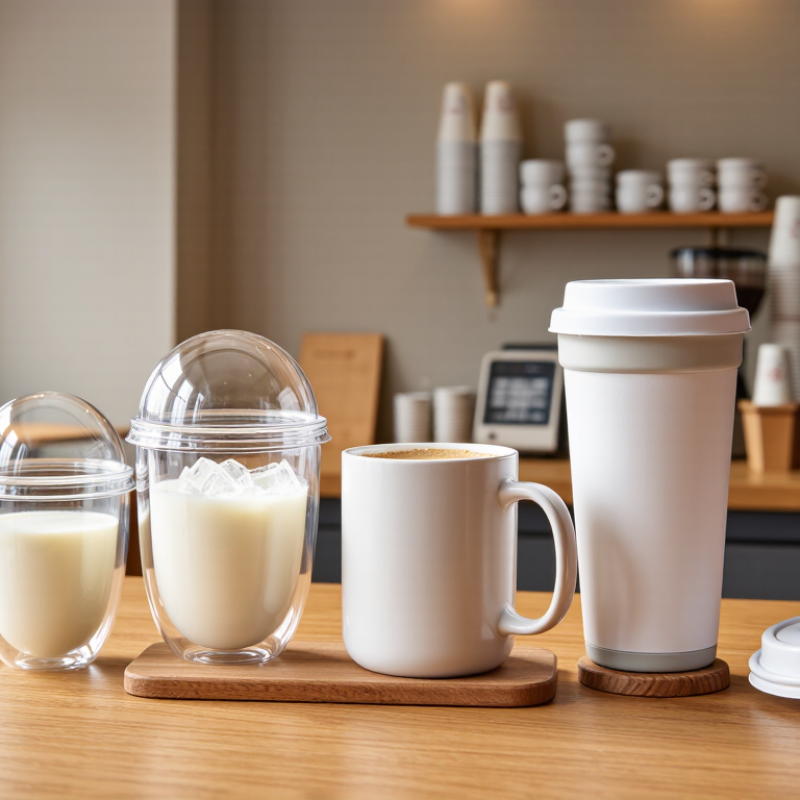
How to Choose the Best Milk Cup for Your Business?

Define Your Business Needs and Customer Use Cases

Before comparing Milk Cups, map how customers will use them. A café serving steamed milk needs a cup that feels comfortable in hand and tolerates heat. A hotel breakfast station may need stackable cups for quick self-service. For takeaway orders, check lid fit, spill resistance, and whether staff can fill cups quickly during a rush. The National Coffee Association’s Spring 2024 National Coffee Data Trends report found that 67% of U.S. adults had coffee the previous day. That figure does not predict your sales, but it shows why coffee-service needs deserve close attention. Small details matter.

Match cup capacity to the actual serving, not just the menu label. Test samples with cold milk, warm milk, and any toppings or add-ins you serve. Note condensation, rim comfort, and how easily cups separate from a stack. Ask staff to use them during a busy shift; customers may hold a cup longer than expected. It is easy to overrate a polished-looking sample. Weigh that against storage space, unit cost, and waste handling at your location. Keep it simple. Record feedback from both employees and customers, then compare options against your real use cases before ordering in bulk.

How to Choose the Best Milk Cup for Your Business? - Define Your Business Needs and Customer Use Cases

Business Use Case Typical Serving Size Suitable Cup Type Lid or Service Format Customer and Operational Priorities What to Check Before Ordering
Dine-in café or restaurant About 180–300 ml (6–10 fl oz), depending on the menu Reusable glass or food-contact-grade ceramic; reusable plastic may suit some settings Usually served without a lid Comfortable handling, presentation, durability, and compatibility with the dishwasher and storage space Check dimensions, stackability, breakage risk, and care instructions
Takeaway coffee, tea, or hot chocolate About 240–480 ml (8–16 fl oz) Insulated paper cup or another cup specifically designed for hot drinks Compatible sip-through lid; sleeve may improve handling comfort Heat handling, leak resistance, secure lid fit, and fast service Match cup and lid dimensions; test with the actual drink temperature and filling process
Cold milk, smoothies, or iced drinks About 300–700 ml (10–24 fl oz) Clear food-contact-grade plastic or a cold-drink paper cup with an appropriate lining Flat or dome lid; straw opening if required for the menu Cold-liquid leak resistance, enough room for ice, visibility of the drink, and easy carrying Confirm cold-use suitability, lid fit, condensation handling, and local rules for disposable items
School, childcare, or staff cafeteria About 150–250 ml (5–8 fl oz), adjusted for age group and serving policy Reusable, durable cups for wash-and-return service, or single-use cups where operations require them Open cup for supervised service; lid when needed for transport Easy-to-hold shape, manageable portion size, safe cleaning, and efficient distribution Review age suitability, washing procedures, food-contact requirements, and applicable local regulations
Delivery and catering About 240–500 ml (8–17 fl oz) Rigid cup or suitably constructed paper cup selected for the drink and delivery duration Close-fitting lid; tamper-evident packaging where required by the operation Resistance to spills, secure packing, cup stability, and fit inside delivery bags Run a packed-order test for leakage, movement, stacking, and temperature changes
Vending or self-service station About 180–300 ml (6–10 fl oz) Cup sized and shaped for the machine, dispensing mechanism, and beverage temperature Usually open for immediate consumption; optional lid if the setup supports it Reliable dispensing, consistent fill level, storage efficiency, and low jam risk Verify rim diameter, height, taper, cup-stack fit, and machine specifications

Note: Serving sizes are practical planning ranges, not fixed standards. Confirm food-contact suitability, temperature limits, cup-and-lid compatibility, and local requirements before purchasing.

Compare Milk Cup Materials, Sizes, and Designs

When choosing a milk cup, compare how each material performs during your actual service. Paper cups feel familiar and are easy to handle, but thin walls may soften when filled with hot drinks. A compatible inner lining can improve leak resistance; check that the cup and lid are designed to work together. Plastic cups show cold drinks clearly and resist splashes, though they may feel less suitable for a premium hot-drink presentation. Reusable cups can support repeat use, but washing, storage, and return routines take space. Small details matter.

Capacity should match the drink, not just the menu label. A 4-ounce cup may suit espresso-based samples, while 8- or 12-ounce sizes often allow room for milk and foam. Larger cups can reduce spills from generous pours, but they may also encourage oversized servings. Measure a real recipe in the cup before ordering. Foam takes up room.

Shape affects both comfort and workflow. A tapered cup stacks neatly, while a wider opening makes latte art easier to see and sip. A rolled rim can feel smoother against the mouth; test it with a hot drink, since comfort varies. Clear walls help display iced milk drinks, whereas opaque cups hide condensation and keep branding or labels readable. Test filled cups at the counter, in a carrier, and after several minutes. One detail is easy to miss: a lid that fits perfectly on a sample may feel loose after repeated handling.

Assess Safety, Durability, and Ease of Cleaning

When choosing a milk cup, check its food-contact surface, rim, and lid—not just its appearance. The 2022 FDA Food Code calls for food-contact surfaces to be smooth, durable, nonabsorbent, and easily cleanable. Treat that as a useful screening standard, not proof that every cup suits your washing equipment. Milk residue can collect under lid seals and around narrow spouts. Small details matter.

Cleaning affects safety. The World Health Organization estimates that unsafe food causes about 600 million illnesses worldwide each year; this figure covers all foods, not milk cups specifically. For daily service, look for clear cleaning instructions and inspect seams where residue may remain. NSF/ANSI 51 provides criteria for food-equipment materials, so ask suppliers for relevant compliance documentation. Then run a practical wash test: use the cup, leave it to dry, and check the rim, handle joint, and lid channel for residue or odor. It can be easy to overlook a stubborn corner.

Durability matters too. Repeated washing, hot water, and drops can wear surfaces or loosen seals. Test a sample through your actual cleaning routine before ordering in volume. Check for cracks, rough edges, fading, and trapped moisture. A cup that cleans quickly but degrades early may cost more in replacement time and stock. I would not choose by finish alone; it can look sturdy and still be awkward to clean.

How to Choose the Best Milk Cup for Your Business

Check that cups can withstand the hot-water sanitizing method used by your operation.

The FDA Food Code specifies minimum hot-water sanitizing temperatures for these methods: 77°C (171°F) for manual warewashing, 74°C (165°F) for single-temperature stationary-rack machines, and 82°C (180°F) for other machine types. Choose cups rated for your actual washing process, and check applicable local requirements and the cup manufacturer’s care instructions. Reference: FDA Food Code §4-703.11.

Evaluate Costs, Sustainability, and Supplier Reliability

Start with landed cost per usable cup, not the quoted unit price. Add lids, freight, storage, breakage, minimum orders, and disposal fees. Compare the cost per 1,000 drinks under both normal and peak demand. Small differences matter. Ask suppliers for material specifications, food-contact documentation, and current price validity. A low quote loses value when cartons arrive late or cup sizes vary.

The OECD’s Global Plastics Outlook (2022) estimated that just 9% of plastic waste was recycled worldwide in 2019. This is a system-wide figure, not a cup-specific rate. A recyclable label does not prove local recovery. Check whether nearby facilities accept the cup’s actual lining, and request evidence for recycled or responsibly sourced content. Compare lighter and compostable options only where suitable collection exists. Paper is not automatically the better choice.

Reliability needs numbers too. Request the supplier’s on-time, in-full performance, backup capacity, and lead-time range. Run a small trial. Inspect rim seams, hot-drink leakage, sleeve fit, and pallet damage; record defects per 1,000 cups. One awkward truth: forecasts are often wrong, including ours. Keep a second qualified supplier, even if its unit price is slightly higher.

Select and Test the Best Cup for Your Business

Choosing a milk cup starts with the way your business serves drinks. Note your usual sizes, service speed, and whether customers drink in or take away. A cup that looks right on a shelf may feel awkward during a busy morning rush. Small details matter. Check the rim, grip, and how easily the cup fits your storage space.

Test candidate cups with the drinks you actually sell. Pour in a hot latte and a chilled milk drink, then check comfort, leaks, and temperature changes. Add your usual lid if you use one. Look for drips around the rim and condensation that makes the cup slippery. Ask staff to carry a full cup across the counter. Their feedback can reveal problems a quick desk test misses.

Record the cup size, drink temperature, handling notes, and any customer comments. Compare the results with your target cost per serving, but do not let price decide alone. A cheaper cup can create extra spills or slow service. One test is rarely enough; I have found that busy shifts expose flaws a quiet trial does not. Revise your shortlist and repeat the test before placing a larger order.

Article Source:

We will help turn your vision into reality

Contact Us