
China has a broad supplier base for Fiber Opening And Pillow Filling Machine equipment, but “top” depends on your production needs. A small pillow workshop may value quick changeovers, while a larger factory may prioritize steady output and automated weighing. The right supplier should explain those differences clearly.
Manufacturing expert Taiichi Ohno said, “Having no problems is the biggest problem of all.” His point applies to equipment evaluation: a smooth demonstration is useful, but real operating conditions reveal more. Ask suppliers to process your fiber sample. Watch how evenly the opener separates it, whether dust extraction keeps the work area clean, and how consistently the filling nozzle distributes material. Small details matter. A hopper that bridges or a scale that drifts can slow a shift.
This guide examines Chinese suppliers through practical questions about machine configuration, capacity, controls, spare parts, and technical support. Request measurable output data, not just a catalogue figure. Check whether the quoted capacity matches your fiber type and pillow size. A polished video can hide a rough adjustment. No single specification tells the whole story, and supplier claims still need verification. Comparing sample results, service response, and operating costs gives buyers a more dependable basis for choosing a Fiber Opening And Pillow Filling Machine.
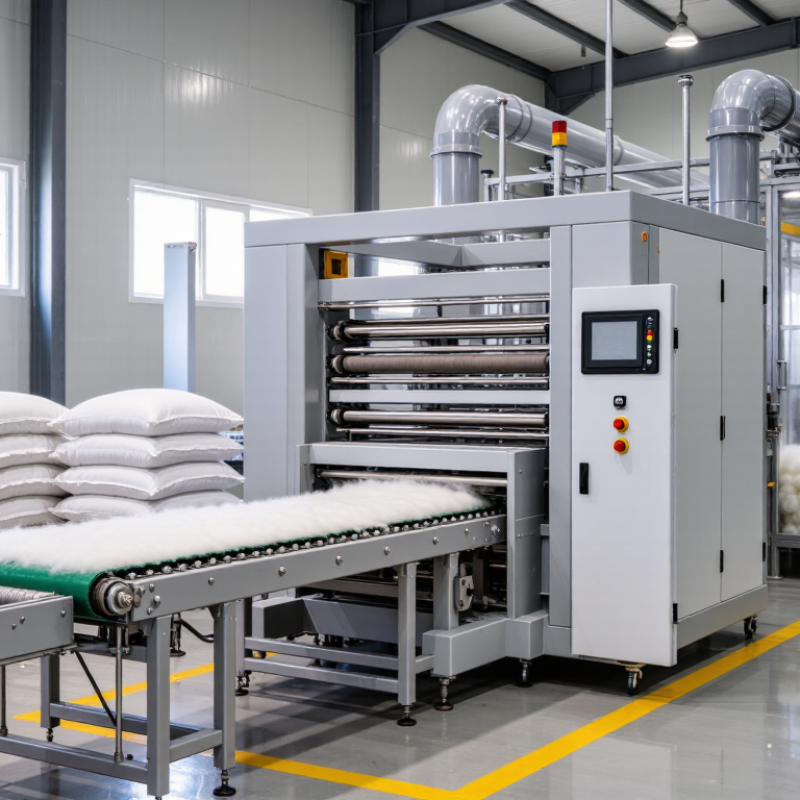
Fiber opening and pillow filling machines handle two connected stages of textile processing. An opener loosens compressed staple fiber, separates clumps, and helps create a more even feed. Depending on the line, it may also blend fiber types or remove some loose dust. A pillow filling machine then moves measured fiber into a pillow shell, often through a delivery tube using airflow. Operators adjust feed rate and filling time to control weight and feel. Small settings matter: a dense corner can make a pillow lumpy.
These machines support production using polyester, cotton, recycled fiber, and blends, but performance depends on fiber length, moisture, and cleanliness. Textile Exchange’s Materials Market Report 2024 estimates that global fiber production reached 124 million tonnes in 2023. That figure covers the wider fiber industry, not pillow filling alone, yet it shows the scale of material handling behind textile goods. In practical use, operators should check fill weight, shell seams, and fiber distribution during setup. The machine cannot correct every variation in incoming material. That is easy to overlook. Even a well-adjusted line may need retuning when the fiber batch changes.
Fiber opening and pillow filling machines prepare loose or compressed filling for use in cushions and pillows.
At the opening stage, fiber enters a hopper and moves toward rotating rollers or toothed components. These parts separate clumps and loosen the fibers without needing to cut them. Airflow may then carry the opened material through a duct toward the filling point. The goal is a soft, consistent feed, not simply maximum speed.
For filling, an operator places a pillow shell over a nozzle and controls the material flow with a pedal or switch. The fiber travels into the shell until it reaches the target weight or firmness. Small adjustments matter. Too much airflow can make filling uneven, while a clogged nozzle slows production.
In practice, the process is less tidy than diagrams suggest. Fiber type, moisture, and storage condition can all change how material behaves. A machine setting that works well in the morning may need a little adjustment later. Regularly checking the feed path and weighing sample pillows helps keep output consistent. Even so, some variation is hard to eliminate.
Fiber opening and pillow filling machines are used across home-textile manufacturing, especially by bedding and mattress producers. Opening loosens compressed polyester or other suitable fibers before they enter cushions, pillows, or quilted products. A well-adjusted line can help distribute fill more evenly and reduce dense clumps. Small details matter: fiber condition, feed rate, and the required softness all affect the result.
Furniture makers also use these machines for sofa cushions, chair pads, and decorative pillows. Some automotive interior suppliers use loose fiber in selected comfort components, while toy and pet-product manufacturers fill plush toys and washable beds. In hospitality, steady output can help meet recurring demand for guest-room pillows and replacement bedding. It matters.
The right setup depends on the product, not just the machine’s rated capacity. Operators should check whether fibers feed smoothly, whether filling weight stays consistent, and how often cleaning or adjustment is needed. A fast machine is not always the best fit. There is no perfect setting for every fiber; teams may need to test samples and refine the process. That practical step is easy to overlook.
A supplier should prove that its fiber opening and pillow filling machines fit the buyer’s actual material, product size, and production target. Textile Exchange’s Materials Market Report 2024 estimates global fiber production reached 124 million tonnes in 2023 and could rise to 160 million tonnes by 2030. This signals a growing materials market, but it does not prove any machine’s performance. Buyers need their own evidence.
Run a real trial. Send representative fiber and ask the supplier to record output, power use, and filling weight consistency. Check whether the opener creates uneven clumps or excess dust. For pillow filling, inspect several finished samples, not just one. A quoted output rate can look convincing; it is not the whole story. Ask how the rate was measured and under what operating conditions.
Review the machine layout, guarding, emergency stops, and cleaning access in person or through a detailed live video. Request a written list of included parts, maintenance intervals, and service response times. Confirm that the supplier can provide operating manuals and training in a language your team understands. Compare the warranty terms carefully. I would also ask for a factory acceptance test, though the criteria must be agreed in writing beforehand. A small oversight here can become an expensive production delay.
Comparing China’s fiber-opening and pillow-filling machine suppliers takes more than comparing quotations. Ask each supplier to process the same sample fiber, such as recycled polyester or hollow conjugated fiber. Record throughput, fiber condition, and pillow weight variation. Ask for proof. A useful test report states the material, machine settings, and run time, rather than only showing a best-case capacity figure.
Inspect the opening unit, feeding system, and filling nozzle during a video call or factory visit. Watch the feed. Does fiber move evenly, or do clumps build near the inlet? Ask about motor power, air pressure, dust collection, and cleaning access. These details affect daily operation and maintenance. Request a demonstration using your target pillow size, then compare actual cycle times and fill-weight consistency across suppliers.
Service deserves equal attention. Confirm which wear parts are included, how quickly replacement parts can ship, and whether installation guidance is available. Ask for the operating manual and a parts list before ordering. A polished demonstration is useful, but it cannot show every production issue. I would also check references from buyers handling similar fibers; this step is easy to skip, and sometimes I still overlook small service details. A low price alone tells little about long-term operating cost.