7 Best Quartzite Slabs for Global Buyers
Choosing the right quartzite slab can shape a project’s appearance, durability, and long-term value. Global buyers often compare color, veining, hardness, finish, availability, and delivered cost. Yet photographs rarely show the full story. Natural stone can vary significantly between batches, even when slabs share the same commercial name.
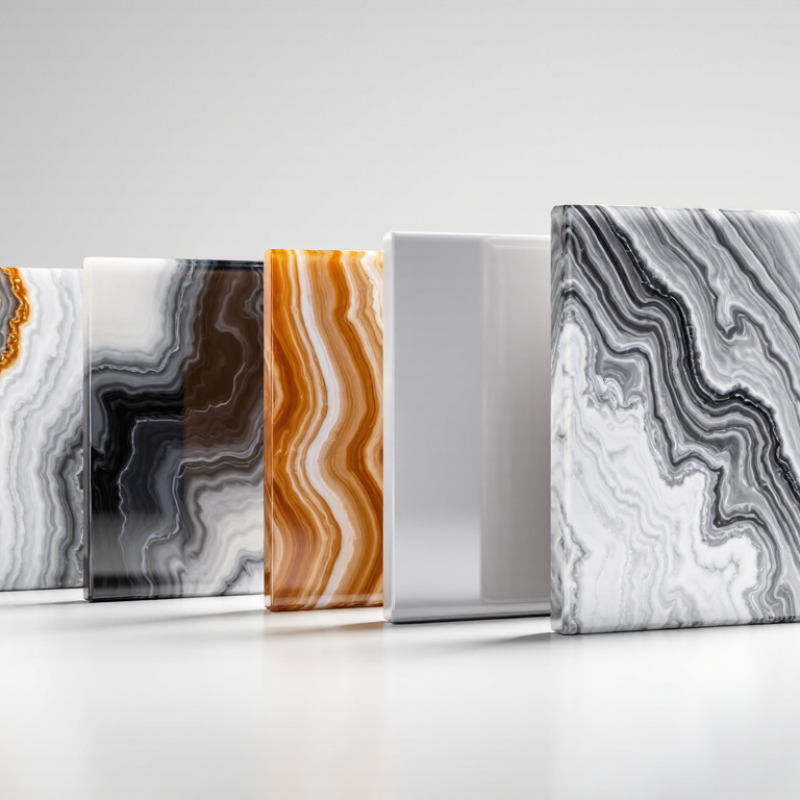
This guide introduces seven standout quartzite options for residential, hospitality, and commercial interiors. Each selection considers practical performance, visual character, fabrication requirements, and international purchasing concerns. Expect detailed white backgrounds, dramatic gray movement, warm gold accents, and deeper tones suited to bold spaces. Some slabs offer consistent patterns, while others reveal surprising mineral shifts across a single block. That difference can be beautiful. It can also complicate layout planning.
Real inspection matters. Ask suppliers for current slab photographs, quarry or block information, thickness details, finish samples, and independent testing where available. Confirm packing standards, moisture protection, crate dimensions, and replacement policies before payment. A reputable supplier should explain sealing needs and fabrication limits without vague promises.
No choice fits every project. A polished slab may highlight veining, but fingerprints and reflections become more visible. A leathered finish can feel tactile, yet maintenance expectations may change. This guide is useful, not infallible. Stone names are sometimes marketed inconsistently across regions, and color judgments can shift under warehouse lighting. Compare samples beside cabinetry, flooring, and natural daylight. The best quartzite is not merely the most dramatic slab; it is the one that performs reliably within your design, budget, climate, and supply conditions.
Quartzite Basics: Mohs 7 Hardness and ASTM C97 Water Absorption
For global buyers comparing seven quartzite slab options, hardness is a practical starting point. Genuine quartzite commonly reaches about Mohs 7, resisting everyday scratching from sand, knives, and ceramic objects. That matters. However, Mohs hardness does not measure impact strength, edge durability, or resistance to thermal shock. A hard slab can still chip around a sink cutout if fabrication or transport is careless.
ASTM C97 provides a more useful water-performance reference. The test measures water absorption and bulk specific gravity under controlled laboratory conditions. Lower absorption often suggests better resistance to liquid penetration and staining. Buyers should request the actual ASTM C97 report, not rely on sales descriptions. Compare the tested stone, thickness, finish, and sample identification. Results can vary slightly across quarry blocks, so one report may not represent every slab.
In practical inspection, I look for consistent color, filled fissures, open seams, and polished areas that react differently to water. A simple site check can reveal uneven absorption, but it cannot replace laboratory testing. Sealing may improve maintenance, yet it does not repair structural cracks or poor installation. I would also question any unusually low absorption claim without traceable test details. The less glamorous defects often appear under strong warehouse lighting. Temperature changes, moisture behind the slab, and unsupported overhangs deserve attention too. Hardness is valuable, but it is only one part of a reliable purchasing decision.
Global Buying Checks: EN 13755, Crating, Lead Times, and HS Codes
For global buyers comparing the seven best quartzite slabs, technical checks matter as much as color and veining. Request a current EN 13755 test report for natural quartzite. This method measures water absorption at atmospheric pressure. Low absorption supports better stain resistance, but it does not guarantee installation performance. Ask for the tested lot number, laboratory details, and sample dimensions. The report should match the shipped material, not an old quarry sample.
Crating deserves close attention. I prefer reinforced A-frame crates, rigid separators, edge protection, and clear lifting points. Slabs should not touch bare timber or metal. Confirm crate dimensions, gross weight, and forklift access before booking freight. Wood packaging may require ISPM 15 treatment and marking. Photograph the loaded crate from every side. Small gaps can become expensive breakage.
Lead times need written milestones. Include slab selection, cutting, polishing, quality inspection, packing, vessel booking, and customs documentation. A quoted 25-day schedule may extend during port congestion. Build a practical buffer. HS codes also require care. Classification can change with material type, processing level, surface treatment, and destination rules. Do not copy a code from another shipment. Compare the commercial invoice, packing list, product description, and country-of-origin documents with a customs professional. I once focused too heavily on appearance and treated paperwork as secondary. That was a costly assumption. A beautiful slab is not ready for purchase until its testing, protection, timing, and classification are clear.
Best Uses by Performance: Countertops, Walls, Floors, and Outdoor Areas
7 Best Quartzite Slabs for Global Buyers
Best Uses by Performance: Countertops, Walls, Floors, and Outdoor Areas
Performance matters more than color when choosing quartzite for a global project. These seven slab profiles offer practical options: cloud-white veined, warm ivory, silver-gray, green, blue-gray, golden, and charcoal quartzite. Cloud-white and ivory slabs suit kitchen countertops because their lighter surfaces brighten compact rooms. Silver-gray quartzite works well for floors and high-traffic halls, where subtle patterns hide small marks. Every slab behaves differently.
For feature walls, green and blue-gray quartzite create depth without heavy decoration. Their mineral movement looks striking behind a reception desk or fireplace. Golden quartzite adds warmth to bathroom walls and island panels. Charcoal slabs suit floors, stair risers, and modern exterior cladding. Dark surfaces can show dust, though. That detail is easy to overlook.
Outdoor areas demand careful selection. Dense silver-gray, charcoal, and some golden quartzites can perform well on covered patios, steps, and walls. Confirm frost resistance, water absorption, slip rating, and ultraviolet stability before ordering. Countertops still need correct edge support and professional sealing. A small sample can mislead; view the full slab under daylight. Also verify the stone’s classification, because some materials marketed as quartzite are actually softer metamorphic stones. No option is perfect. Local climate, fabrication quality, and maintenance habits can change the final result.
7 Best Quartzite Slabs for Global Buyers - Best Uses by Performance: Countertops, Walls, Floors, and Outdoor Areas
A practical comparison of natural quartzite slab categories by durability, maintenance, appearance, and application suitability.
Performance figures are indicative ranges for natural quartzite and can vary by quarry, batch, mineral composition, resin treatment, finish, and testing method. Always request the supplier’s current technical data sheet and a sample before specification. | Quartzite slab type | Typical visual character | Common source region | Typical Mohs hardness | Typical water absorption | Scratch resistance | Recommended maintenance | Best uses by performance |
| Warm Veined Quartzite | Ivory to cream background with soft gold, taupe, and gray movement | Brazil and other South American deposits | 6.5–7 | 0.1–0.5% | Excellent | Seal periodically; clean spills promptly | Premium kitchen islands, bathroom vanities, feature walls, fireplace surrounds, covered outdoor kitchens |
| White Linear Quartzite | Bright white to pale gray base with elongated gray veining | Brazil | 6.5–7 | 0.1–0.4% | Excellent | Use a pH-neutral cleaner; reseal according to testing | Light-colored countertops, backsplashes, shower walls, reception desks, low- to medium-traffic floors |
| Blue Veined Quartzite | Blue, gray, and white tones with dramatic directional veining | Brazil, Madagascar, and selected African deposits | 6.5–7 | 0.1–0.6% | Excellent | Seal after fabrication; protect edges from impact | Statement islands, luxury wall panels, bathroom counters, fireplace features, protected exterior cladding |
| Silver-Gray Quartzite | Cool gray, silver, and charcoal layers with subtle linear texture | Brazil, India, and Norway | 6.5–7 | 0.2–0.8% | Excellent | Routine cleaning; honed finishes may need more frequent resealing | High-traffic floors, commercial countertops, stair treads, wall cladding, exterior paving where slip rating is confirmed |
| Green-Gray Quartzite | Sage, olive, gray, and white mineral patterns with natural variation | Brazil, India, and parts of Africa | 6.5–7 | 0.2–0.8% | Excellent | Use breathable stone sealer where required; avoid acidic cleaners | Kitchen counters, spa bathrooms, accent walls, hotel interiors, covered patios and outdoor bars |
| Translucent White Quartzite | White to translucent crystalline background with soft gray or beige veining | Brazil and Madagascar | 6.5–7 | 0.1–0.5% | Excellent | Seal carefully; inspect for resin reinforcement before fabrication | Backlit walls, luxury vanities, bar fronts, kitchen islands, interior feature panels |
| Dark Charcoal Quartzite | Deep charcoal to black field with white, bronze, or gray mineral movement | Brazil, India, and South Africa | 6.5–7 | 0.2–0.8% | Excellent | Use non-abrasive cleaner; choose a finish with verified wet slip performance | Heavy-use countertops, commercial floors, exterior walls, outdoor kitchens, entrance areas |
Global buyer checklist: Confirm that the material is true quartzite rather than a softer stone sold under a quartzite trade name. Request water absorption, flexural strength, abrasion resistance, freeze-thaw suitability, slip resistance, UV exposure guidance, finish information, and the exact slab lot before purchase.