Choosing the best plastic water tanks from China requires more than comparing prices or glossy product photos. The right decision begins with resin quality, manufacturing control, capacity, and intended use. A tank for rooftop drinking water faces different demands than one used for irrigation, construction, or industrial storage.
According to polymer engineer Dr. Mark A. Smith, “Material choice is only the beginning; performance depends on design, installation, and maintenance.” That observation deserves attention. Most reliable plastic water tanks use food-grade polyethylene, rotational molding, UV stabilizers, and carefully designed fittings. Buyers should request material certificates, wall-thickness information, leak-test records, and documentation for potable-water applications. A tank may look strong outside while hiding uneven walls or weak seams.
The best Chinese suppliers usually explain their production process clearly. They provide drawings, inspection photos, sample approvals, and practical guidance for transport and installation. Look closely at the lid seal, outlet position, support requirements, and resistance to sunlight. Small details matter. A loose fitting can waste thousands of liters.
Factory experience is valuable, but it is not perfect evidence. Some suppliers advertise impressive capacity while offering limited after-sales support. Others provide certifications that do not match the destination market. This is where careful verification becomes necessary. Compare several manufacturers, inspect samples when possible, and ask difficult questions before placing a bulk order. The cheapest plastic water tanks may become expensive after cracking, contamination, or premature replacement.
Choosing the best plastic water tank from China starts with the water, not the factory location. The WHO/UNICEF Joint Monitoring Programme reported that 2.2 billion people lacked safely managed drinking water in 2022. This makes hygienic storage a practical concern. For potable water, select virgin, food-contact polyethylene and request compliance evidence for NSF/ANSI/CAN 61 or an equivalent national standard. Rotational molding usually produces seamless tanks, reducing weak points around the base and corners. Still, a thick wall does not automatically mean a better tank.
Tank suitability depends on capacity, installation, climate, and cleaning habits. A compact 500-liter tank may serve a small household, while farms or commercial sites need several thousand liters and stronger foundations. Look for UV-stabilized material, a secure lid, smooth internal surfaces, screened vents, and replaceable fittings. ASTM D1998 provides useful guidance for vertical polyethylene tanks, especially regarding design and inspection. Industry testing reports should show wall thickness, impact resistance, leak testing, and material traceability. Ask for batch records, not only attractive photographs. Darker tanks can limit light penetration and algae growth, but color alone cannot prove sanitation. One overlooked detail is the outlet position; poor drainage can leave stagnant water behind. Local temperature and water chemistry also matter. A tank may pass factory testing, yet fail after careless transport or uneven installation. That part deserves honest review.
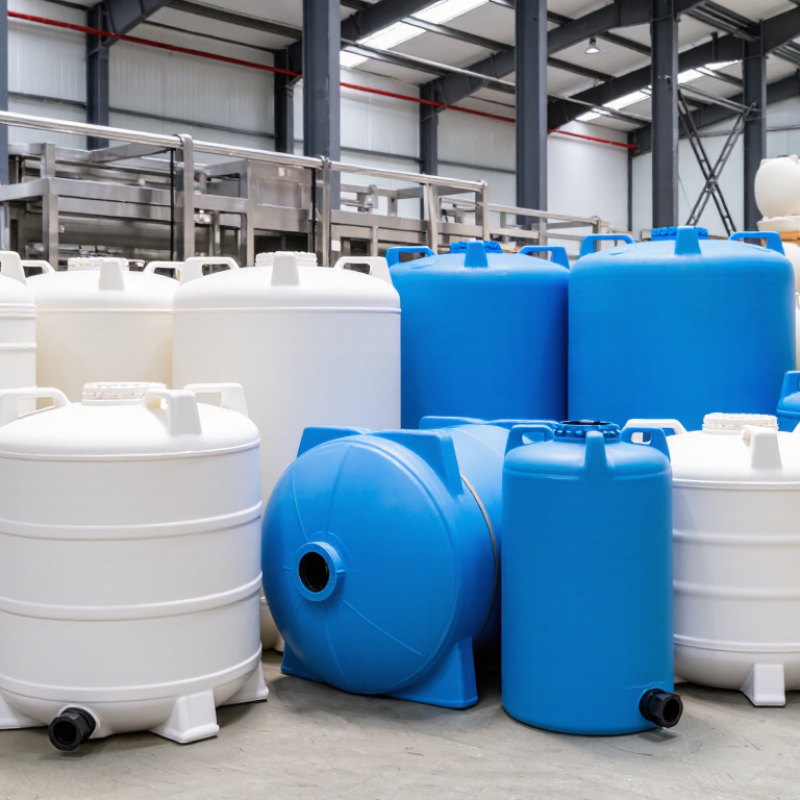
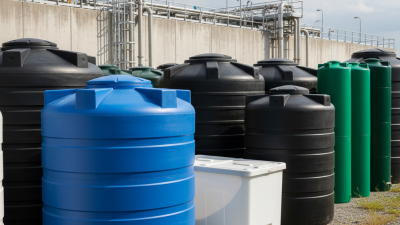
China commonly manufactures rotationally molded polyethylene water tanks for farms, factories, construction sites, and homes. These tanks usually use LLDPE or HDPE, with UV stabilizers for outdoor exposure. Vertical tanks save floor space, while horizontal tanks suit low-clearance areas and vehicle platforms. Some suppliers also produce underground tanks, rainwater tanks, and slimline models for narrow balconies or service corridors.
Blow-molded plastic tanks are another common type. They are lighter and often used for smaller household capacities. Panel tanks, assembled from modular plastic or composite panels, serve buildings requiring larger storage volumes. IBC-style containers are also widely produced, although their metal frames and transport design make them different from permanent tanks. According to PlasticsEurope’s Plastics—The Fast Facts 2024, global plastics production reached about 414 million tonnes in 2023. China represented roughly one-third of global output, supporting a broad manufacturing base for molded storage products.
Material choice still requires caution. Grand View Research reports that polyethylene remains a leading material in global water storage systems because of its corrosion resistance and low weight. However, a report is not a product inspection. Wall thickness, resin grade, weld quality, UV testing, and food-contact documentation should be checked separately. A tank may appear clean but deform under heat or uneven support. That detail is easy to overlook. Certification claims also need verification through test reports, not attractive catalog language.
Common plastic water tank formats made in China vary by structure, installation method, and intended use. The chart shows typical commercial capacity ranges for widely used tank types.
Capacity ranges are indicative specifications commonly found across the plastic water tank industry. Actual sizes vary according to application, material thickness, and mold design.
The best Chinese plastic water tanks usually use rotationally molded LLDPE or HDPE. These materials resist corrosion, impact, and many household chemicals. LLDPE bends slightly under pressure, while HDPE generally offers greater stiffness. Polypropylene can tolerate higher temperatures, but it is less common for large outdoor tanks.
Plastics Europe’s Plastics—The Facts 2024 report recorded 413.8 million tonnes of global plastic production in 2023. China represented the largest production share. This scale supports competitive manufacturing, but it does not guarantee every tank has equal quality. Durability depends on resin grade, wall thickness, UV stabilizers, and molding control. ASTM D1998 provides useful design guidance for rotationally molded polyethylene tanks. Look for tanks tested against comparable standards. A catalog claim is not enough. I would not trust a glossy product photo alone.
Tips: Ask for resin specifications, wall-thickness measurements, UV-resistance testing, and fitting details. Check whether the tank uses virgin or recycled material. Recycled content may reduce cost, but inconsistent processing can weaken performance. Inspect welds and outlets carefully. Small flaws often appear there first. Also confirm the tank’s temperature range and installation support. A dark tank placed under strong sunlight may heat water quickly, even with UV protection. That detail is easy to overlook.
Choosing the best plastic water tank from China starts with its intended use. A potable-water tank needs more than a “food-grade” label. Buyers should request test evidence for the actual tank material, fittings, and internal surface. Standards such as NSF/ANSI 61 or equivalent local requirements can help verify drinking-water safety. Requirements vary by country.
Check whether the manufacturer follows a documented quality system, such as ISO 9001. This does not prove the tank is safe for drinking water. It shows that production processes are controlled. Ask for independent laboratory reports, certificate numbers, testing dates, and the exact model covered. Not every certificate proves the tank is suitable. A certificate for raw resin may not cover the finished tank.
Inspect practical details as well. The polyethylene should include suitable UV protection for outdoor storage. Wall thickness should be consistent, especially around the base and outlet. Look for clean molding, smooth internal surfaces, secure lids, and leak-tested fittings. Ask for batch traceability and written installation instructions. A vague warranty deserves caution. I would also compare the stated capacity with measured dimensions, because advertised volume can be slightly optimistic. One overlooked issue is chemical compatibility; water tanks may not suit fuels, solvents, or concentrated chemicals. Clear limitations make a supplier more trustworthy.
| Quality Dimension | What Buyers Should Check | Relevant Standard or Reference | Recommended Evidence from the Supplier | Importance for Selection |
|---|---|---|---|---|
| Tank Material | Confirm that the tank is manufactured from virgin, food-contact-grade polyethylene when it will store drinking water. Ask whether recycled material is used in any water-contact layer. | EU Regulation (EU) No 10/2011 for plastic food-contact materials; China GB 4806.7 for food-contact plastic materials; U.S. FDA 21 CFR 177.1520 where applicable. | Material declaration, resin technical data sheet, batch traceability records, and a food-contact compliance statement for the destination market. | Required for potable water |
| Manufacturing Process | For rotationally molded tanks, check whether the powder distribution, heating cycle, cooling cycle, and mold condition are controlled to prevent thin areas, voids, warping, and weak weld-free corners. | ISO 9001 can support process control, but it does not by itself certify tank performance or drinking-water safety. | Process-control plan, molding records, inspection checklist, and photographs or video of production and inspection stages. | Required |
| Wall Thickness and Uniformity | Measure wall thickness at representative locations, especially the base, corners, outlet area, and upper sidewall. Compare the results with the approved drawing and design specification. | Use the applicable product specification or engineered drawing. AS/NZS 4766 provides requirements for rotationally molded polyethylene tanks in its scope. | Dimensional inspection report, thickness measurement map, approved drawing, and sample inspection results. | Required |
| Structural and Load Performance | Check resistance to hydrostatic pressure, deformation when full, lifting or handling loads, stacking requirements if applicable, and long-term outdoor service conditions. | AS/NZS 4766 is a recognized reference for rotationally molded polyethylene tanks designed for water storage, where applicable to the product and market. | Type-test report, design calculations, filled-tank stability test, and clearly stated installation limitations. | Required |
| Leak Tightness | The completed tank should be checked for leakage after molding and after installation of fittings. Inspect the tank body, lid, threaded outlets, gaskets, and bulkhead fittings. | Test method and acceptance criteria should be stated in the purchase specification or applicable tank standard. | Documented water-fill or leak-test procedure, inspection record, and test duration and result for each production batch. | Required |
| UV and Weather Resistance | For outdoor use, verify that the polyethylene formulation includes suitable UV stabilization and that the tank is rated for the expected climate, sunlight exposure, and service life. | Applicable outdoor-tank standard, accelerated-weathering test method, and the supplier’s stated service conditions. UV claims should not be accepted without supporting test data. | UV-stabilizer declaration, accelerated-weathering report, color and material specification, and installation guidance. | Recommended for outdoor tanks |
| Drinking-Water Safety | Check that all water-contact components are covered, including the tank body, lid, outlet fittings, seals, gaskets, valves, and internal accessories. | NSF/ANSI/CAN 61 may apply in North America; WRAS approval may be relevant in the United Kingdom; GB 4806 and EU food-contact rules may apply in China or European markets. | Valid product-specific certification or test report, scope of approval, laboratory name, certificate number, and expiration or renewal information. | Required for potable water |
| Color and Light Protection | Opaque or suitably light-blocking tanks can help reduce light penetration, which is important where algae growth is a concern. Confirm that colorants are approved for the intended water-contact use. | Food-contact material rules applicable to the destination market; the tank standard may also specify permitted construction and material requirements. | Colorant declaration, opacity specification or test result, and samples from the actual production material. | Recommended |
| Fittings and Connections | Review outlet size, thread type, inlet and overflow arrangement, gasket material, valve compatibility, and resistance to overtightening. Confirm that fittings are replaceable where maintenance is expected. | Thread and plumbing requirements depend on the destination market; water-contact components should meet the same applicable safety requirements as the tank. | Fitting drawings, thread specification, gasket material certificate, assembly instructions, and spare-parts list. | Required |
| Lid, Ventilation, and Contamination Control | The lid should fit securely and prevent insects, dust, and debris from entering. The vent should allow safe pressure equalization while limiting contamination. | Use the applicable tank design specification and local public-health or plumbing requirements. | Lid and vent drawings, photographs of the assembled tank, gasket details, and cleaning and maintenance instructions. | Required |
| Dimensions and Capacity | Confirm nominal volume, usable volume, overall dimensions, inlet and outlet positions, empty weight, filled weight, and the required foundation area. Nominal capacity may not equal usable capacity. | Approved product drawing and purchase specification; capacity tolerance should be clearly stated before ordering. | Dimensioned drawing, capacity calculation or measurement report, packed and unpacked dimensions, and tolerance information. | Required |
| Installation and Foundation Requirements | Check whether the tank requires a flat, smooth, continuous, load-bearing foundation and whether anchoring is needed in high-wind, earthquake, or flood-prone areas. | Manufacturer installation instructions plus applicable local building, plumbing, seismic, and wind-load requirements. | Installation manual, foundation diagram, anchoring guidance, maximum unsupported height, and warranty conditions. | Required |
| Quality-Control Testing | Check whether the supplier performs incoming-material inspection, first-piece inspection, dimensional checks, visual inspection, leak testing, and final packing inspection. | ISO 9001 may provide a framework for a quality-management system, but the buyer should still verify product-specific testing. | Quality-control plan, inspection and test plan, calibration certificates, nonconformance procedure, and batch release records. | Strongly recommended |
| Traceability | Each tank or production batch should be traceable to the material batch, production date, inspection results, and applicable certificates. | Traceability expectations should be included in the purchase contract and quality agreement. | Tank identification mark, batch code, material lot record, certificate index, and retention period for inspection records. | Recommended |
| Independent Inspection | For large, custom, or regulated orders, arrange pre-shipment inspection and, where necessary, independent laboratory testing of material and water-contact components. | Testing should use the standard and laboratory requirements accepted by the importing country or project authority. | Independent inspection report, sealed sample record, laboratory accreditation details, and comparison with the approved sample. | Useful for higher-risk orders |
| Warranty and After-Sales Support | Review warranty duration, exclusions, allowable installation conditions, spare fittings, replacement lids, repair policy, and response time for defects. | Warranty terms are contractual and should not be treated as a substitute for compliance certification or performance testing. | Signed warranty, spare-parts list, installation requirements, claims procedure, and service contact details. | Recommended |

Note: The applicable standard depends on the tank design, intended water use, installation environment, and destination market. Buyers should verify the current edition and scope of every standard or certificate before placing an order.
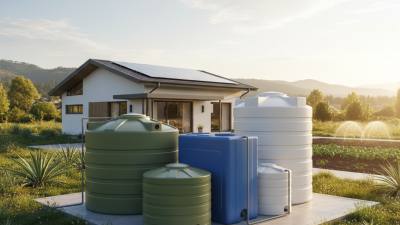
Choosing the best Chinese plastic water tank starts with your project conditions, not the lowest quotation. Measure daily water demand, installation space, access routes, and local weather exposure. A rooftop tank needs strong UV resistance and stable support. An underground tank needs suitable wall strength and protection against soil pressure.
Ask the manufacturer about resin quality, wall thickness, molding method, and connection design. For drinking water, request food-contact compliance documents and recent material test reports. Check whether the tank uses virgin resin or recycled content. This detail matters. Also review production photos, inspection records, and batch traceability before payment.
I once focused too much on capacity and ignored the outlet position. That caused extra piping work and delayed installation. Do not repeat that mistake. Confirm inlet, outlet, drain, overflow, cover, and valve sizes in writing. Request a dimensional drawing before production. A reliable supplier should explain load limits, cleaning requirements, delivery protection, and warranty terms clearly. Ask for references from projects with similar climates and tank sizes. Visit the factory when possible, or arrange an independent inspection. It may cost more. It can prevent expensive surprises. Check the tank after arrival for cracks, deformation, odor, and missing fittings. A perfect brochure is not enough. Your final choice should match actual use, maintenance habits, and installation skills.