
2026 Best AWWA C504 Butterfly Valve for Water Projects?

Choosing the 2026 best AWWA C504 Butterfly Valve starts with the project, not the catalog. A valve in a municipal pump station may face frequent operation, while one on a reservoir outlet may sit closed for months. Both need dependable sealing, but their operating demands differ. Check the specified pressure class, diameter, flow direction, actuator type, and installation position. Then review the manufacturer’s documentation for testing, materials, and applicable standard edition. Details matter: a mismatch between the valve, actuator, and available space can turn a routine installation into a costly field correction.

AWWA C504 compliance is an important starting point, not a complete selection decision. Seat design, shaft arrangement, corrosion protection, and service access deserve close review. Ask how the valve performs under the actual operating conditions, and confirm that submittals match the project specification. A clear answer helps. A vague one should prompt another question.

I can’t responsibly attach a quotation to a named valve expert without a verifiable source. Rather than invent one, this guide treats documented requirements and project-specific evidence as the authority. That is less dramatic. It is also more useful when a valve must seal reliably behind a concrete vault wall, years after commissioning.
2026 Best AWWA C504 Butterfly Valve for Water Projects?

What an AWWA C504 Butterfly Valve Is and Where Water Projects Use It

An AWWA C504 butterfly valve is a rubber-seated valve designed for waterworks service. Its round disc turns inside the pipe to control or stop flow. A quarter-turn can open or close it quickly. The AWWA standard sets requirements for matters such as design, materials, and testing; it does not select a valve for every site. Check the project’s pressure, water quality, operating frequency, and installation conditions.

These valves commonly serve at treatment-plant outlets, pump stations, reservoirs, and distribution-system junctions. In a pump station, a valve may isolate a line during maintenance. In a buried pipeline, operators may use one to section off a stretch of main. Space matters here: the compact body can suit locations where a gate valve would be difficult to fit. Still, throttling is not automatically appropriate; flow conditions and manufacturer guidance need review.

The scale of renewal work is substantial. The U.S. Environmental Protection Agency’s 2023 Drinking Water Infrastructure Needs Survey and Assessment estimates $625 billion in drinking-water infrastructure needs over 20 years. That figure is not a valve forecast, but it shows why dependable isolation equipment matters in planned upgrades. A valve can meet the standard and still disappoint if its actuator, access vault, or maintenance plan is poorly matched. That detail is easy to underestimate.

2026 Best AWWA C504 Butterfly Valve for Water Projects? — What an AWWA C504 Butterfly Valve Is and Where Water Projects Use It
Data Dimension What It Means Water-Project Application or Selection Guidance
Valve type An AWWA C504 valve is a rubber-seated butterfly valve designed for waterworks service. A circular disc rotates inside the valve body to open, close, or—when suitable for the service—modulate flow. Commonly selected for water pipelines where a compact quarter-turn valve is appropriate. It is not a check valve and does not automatically prevent reverse flow.
Typical project uses Butterfly valves are used in water conveyance, treatment, storage, and distribution systems. Typical locations include treatment-plant piping, transmission and distribution mains, pump stations, reservoir connections, and isolation points in water facilities.
Primary function The disc turns approximately a quarter-turn between open and closed positions. The resilient seat provides the sealing interface when the valve is closed. Use for shutoff or isolation where the selected valve is rated for the project’s operating conditions. Use for throttling only when the valve and operating range are specifically suitable for that duty.
Pressure requirements Required working pressure, differential pressure, and any surge or transient conditions are project-specific. The applicable C504 edition and valve configuration should be checked against the design documents. Confirm the valve’s rated pressure and allowable operating conditions against normal pressure, pump shutoff pressure, surge analysis, and the system’s test requirements. Do not select by nominal pressure alone.
Nominal size and connection Valve size and end configuration must match the pipeline and the applicable project specification. Available sizes and dimensional details depend on the standard edition and valve design. Verify pipe outside diameter, flange drilling, face-to-face dimensions, adjoining fittings, and installation clearances before procurement.
Actuation Operation may be manual or powered, depending on valve size, duty, accessibility, and project requirements. Choose the actuator and operating arrangement based on required operating torque, opening and closing time, access, control-system requirements, and any specified fail-safe behavior.
Installation position Installation requirements depend on the valve design, actuator, pipeline layout, and manufacturer’s instructions. Check the permitted orientation, disc clearance, flow direction guidance, support needs, and access for inspection or operation. Avoid positions that conflict with the project drawings or installation instructions.
Materials and water quality Wetted materials and coatings should be compatible with the conveyed water and the specified service conditions. Review seat, disc, body, shaft, coating, and any drinking-water contact requirements. Confirm that specified materials are suitable for the project’s water chemistry and applicable regulations.
Testing and documentation Project specifications define required inspection, pressure testing, acceptance criteria, and submittal records in addition to the applicable standard. Request the applicable standard edition, pressure and leakage test records, material documentation, dimensional drawings, and operation instructions as required by the contract documents.
Practical selection criteria There is no single “best” C504 butterfly valve for every water project; selection depends on system conditions and installation needs. Compare pressure rating, size, end connections, seat and material compatibility, actuator requirements, operating frequency, access, testing provisions, and lifecycle maintenance needs.

Project note: Confirm the current applicable AWWA C504 edition and all design, material, dimensional, testing, and acceptance requirements in the project documents before specifying or installing a valve.

How the AWWA C504 Standard Defines Valve Design and Performance

AWWA C504 is not a product ranking. It is a technical framework for rubber-seated butterfly valves used in waterworks service. The standard sets requirements for design, materials, dimensions, pressure ratings, and testing. These requirements give engineers and utilities a shared basis for reviewing a valve. Details matter.

The applicable edition should be checked during procurement, since requirements can change between revisions. Project teams should also confirm that the selected valve’s size and pressure class match the system conditions. A pressure rating by itself does not describe every operating demand. Flow velocity, differential pressure, cycles, and installation orientation can all affect performance.

On a drawing, the valve may look simple: a disc turns inside a circular body. In service, seat condition, shaft support, and clearances influence how reliably it closes. Check the submittal for test documentation and stated operating limits, then compare these with the project specification. AWWA C504 helps establish the baseline, but it cannot replace application-specific review. There is room for judgment here, and sometimes a detail gets missed. A clear review before installation can catch mismatched dimensions or actuator requirements while the valve is still on paper.

Key Components, Materials, and Operating Mechanisms

For 2026 water projects, an AWWA C504 butterfly valve is more than a disc inside a pipe. Its main components include the body, shaft, disc, resilient seat, bearings, and actuator. The disc turns a quarter-turn to regulate or stop flow. AWWA C504 provides requirements for rubber-seated butterfly valves, while project specifications define the needed size, pressure class, and materials.

Material selection affects corrosion resistance, wear, and maintenance. Ductile iron is a common body choice; shafts may use stainless steel, and seats typically use resilient elastomers. Disc materials and coatings vary with water chemistry and operating conditions. EPA’s 2023 Drinking Water Infrastructure Needs Survey and Assessment estimates $625 billion in U.S. drinking-water infrastructure needs over 20 years. That figure is not a valve forecast, but it underscores why durable, maintainable components matter. Check the actual water chemistry. Generic “corrosion resistant” claims are not enough.

Operating mechanisms range from levers and manual gear operators to electric actuators. Lever operation can suit smaller valves with accessible locations; geared or powered options can help with larger valves or remote control. Verify operating torque, cycle frequency, access, and any need for position indication before specifying an actuator. A practical detail: a buried valve still needs a workable maintenance plan. The valve may meet the standard, yet poor access can complicate service. That part is easy to overlook.

2026 Best AWWA C504 Butterfly Valve for Water Projects? Key Components, Materials, and Operating Mechanisms

This chart compares the pressure classes specified for AWWA C504 butterfly valves. Select a class based on project design conditions and verify the applicable standard edition, valve size, and service requirements.

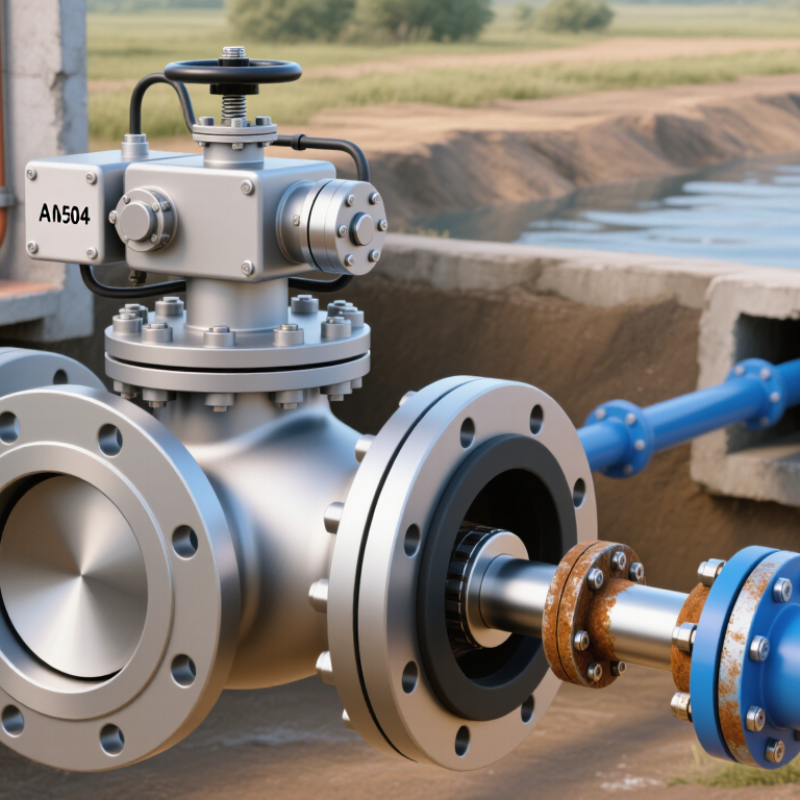
Key components include the valve body, disc, shaft, resilient seat, and bearings. Depending on the design and project specification, materials may include ductile iron for the body or disc, stainless steel for the shaft, and elastomers such as EPDM for the seat. Operators may be manual gear, electric, or hydraulic; the choice depends on valve size, operating frequency, and control needs.

How to Select a Valve for Project Conditions and Requirements

Selecting an AWWA C504 butterfly valve starts with the project’s actual operating conditions, not a catalog headline. Confirm line size, working pressure, shutoff differential, and expected surge pressure. A valve that meets normal pressure may still be unsuitable during pump starts or rapid closure. Check the project specification and applicable standard edition before comparing options.

Details matter. Review disc and body materials against the water chemistry, temperature, and any treatment chemicals. Then match the operator to the required torque and operating frequency. A buried valve may need an extension stem and clear access for maintenance; a valve in a cramped chamber needs room for the actuator and piping connections. Verify face-to-face dimensions and flange compatibility against approved drawings. Measure twice. Small mismatches can delay installation.

Ask how the valve will be tested, inspected, and maintained after installation. Confirm pressure-test requirements, coating or lining expectations, and availability of service parts. For critical isolation, clarify acceptable leakage criteria rather than assuming every project uses the same threshold. One easy-to-miss issue is future access: a valve that fits today may be difficult to operate after nearby equipment is installed. The “best” choice is the one that satisfies documented project conditions, with assumptions recorded and checked before procurement.

Installation, Operation, and Maintenance Considerations in 2026

2026 Best AWWA C504 Butterfly Valve for Water Projects?

Installation, Operation, and Maintenance Considerations in 2026

A reliable installation begins with the project specification, not the valve nameplate alone. Confirm that the selected valve meets the specified edition of AWWA C504 and matches the line pressure, service conditions, and connecting dimensions. Before setting it between flanges, check that the pipe is supported, faces are clean, and the disc clears the pipe through its full travel. Never use flange bolts to pull a misaligned valve into place. Small details matter.

Operation deserves equal attention. Open and close the valve at a controlled pace to reduce pressure surges, and verify actuator settings against the valve’s operating instructions. Do not assume every butterfly valve is suitable for continuous throttling; confirm its permitted duty with the project engineer. The U.S. EPA’s 2023 Drinking Water Infrastructure Needs Survey estimated $625 billion in drinking-water infrastructure needs over 20 years. That figure is not a valve-performance measure, but it underscores why maintainable assets matter. Keep inspection records, including leaks, unusual vibration, and operating effort.

Tips: During commissioning, cycle the valve and confirm position indication before placing the line into service. Set a routine inspection schedule based on site conditions. Check accessible fasteners, coatings, seals, and actuator operation. Follow the manufacturer’s maintenance instructions; generic torque values can mislead. One imperfect habit is relying on visual checks alone. Record actual operating behavior, too.

Article Source:

We will help turn your vision into reality

Contact Us