
Choosing the best 2026 Toyota Tacoma Side Mirror is not simply a matter of matching paint color. It affects visibility, lane changes, towing confidence, and daily driving safety. A mirror may look identical online yet use different connectors, mounting points, or adjustment controls. That small mismatch can leave a new part useless on the driveway.
Richard Reina, a longtime automotive technician and former Product Training Director at CARiD, offers a practical reminder: “A mirror is a safety component, not a cosmetic accessory.” His point matters with the latest Tacoma, especially when comparing heated glass, power adjustment, turn signals, blind-spot monitoring, and manual folding designs. This guide examines those differences through fitment checks, installation experience, manufacturer specifications, and real-world use.
The details matter.
A quality replacement should sit firmly against the door, move smoothly, and provide a clear view without excessive vibration. OEM assemblies usually offer dependable fitment, but reputable aftermarket options can reduce cost. Cheap listings often hide incomplete wiring or vague compatibility claims. That is where buyers can make expensive mistakes.
We will compare replacement choices for different Tacoma trims and model years. We will also discuss towing mirrors, winter conditions, wiring, and camera-related concerns. Not every “universal” mirror is truly universal. That assumption deserves skepticism. Even careful research has limits, because suppliers sometimes change components without clear notice. Verify the VIN, connector shape, mounting pattern, and vehicle features before ordering.
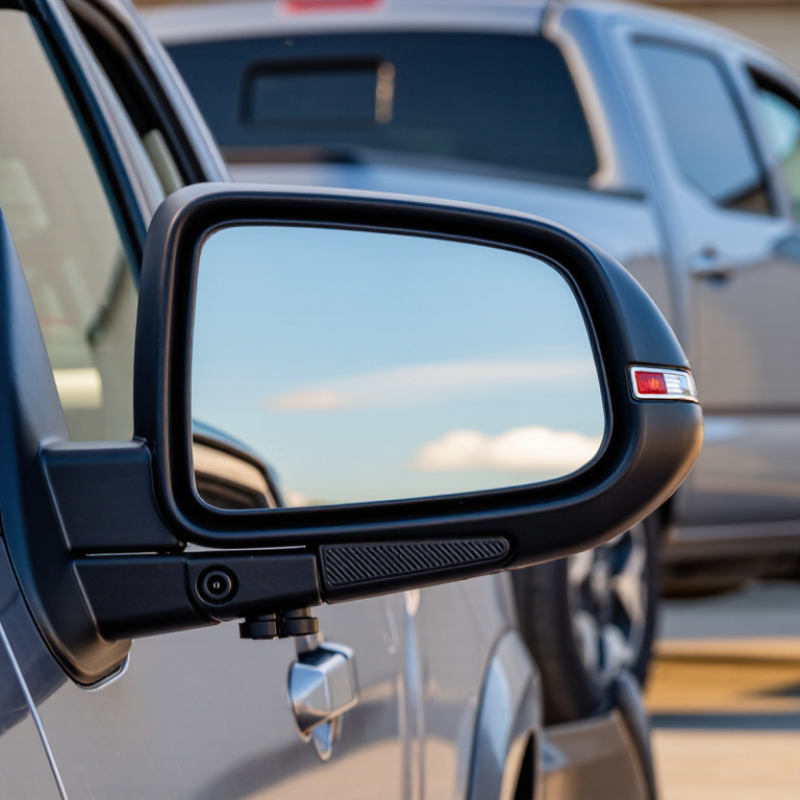
2026 Best Toyota Tacoma Side Mirror Replacement?
Toyota Tacoma mirror fitment changes significantly by generation. The first generation covers 1995–2004, while the second spans 2005–2015. The third generation runs from 2016–2023, and the fourth begins in 2024. A mirror that appears correct may still fail because of connector shape, mounting points, or door wiring.
Check the basics.
Match the model year, cab style, trim, and side. Then compare bolt spacing, mirror housing depth, glass shape, and electrical functions. Heated glass, power adjustment, turn signals, blind-spot sensors, and cameras require special attention. A 2026 replacement should not be judged by appearance alone. Confirm the connector and calibration requirements before ordering. Industry repair data supports this caution: the Auto Care Association reported a U.S. automotive aftermarket exceeding 500 billion dollars annually, showing how many replacement configurations exist. More options do not guarantee correct fitment.
Real workshop checks are useful. Measure the original mirror and photograph its connector before removal. Test adjustment, heating, folding, and signal functions after installation. S&P Global Mobility reported the average U.S. light vehicle age reached 12.6 years in 2024, so older Tacoma generations remain common on the road. I have seen fitment fail when sellers listed only “1995–2026.” That range is too broad. Some listings also omit sensor compatibility, which can create expensive rework. Verify carefully.
Side-mirror replacement fitment is primarily organized by generation and model-year range. The first four generations cover 1995–2026, but a direct replacement should still be checked against the door shape, mounting points, connector, adjustment method, heating function, turn-signal integration, and trim level.
Choosing a replacement side mirror for a Tacoma requires more than matching its shape. The mirror must support safe rear visibility, stable adjustment, and reliable attachment. OEM mirrors usually follow the vehicle’s original specifications. Aftermarket mirrors can cost less, but their quality varies widely.
CAPA certification offers useful evidence. It indicates that an aftermarket part has passed defined checks for materials, fit, finish, and performance. However, certification does not automatically prove perfect compatibility with every Tacoma year. Check the exact model, trim, mounting points, and electrical connections.
FMVSS No. 111 focuses on rear visibility requirements. A compliant mirror should provide the required viewing area without excessive vibration or distortion. Look for clear documentation, not only a seller’s general claim. Heated glass, turn-signal wiring, power adjustment, and blind-spot features may need separate verification. A mirror can fit physically and still fail electronically.
Inspect the package before installation. The glass should sit evenly, and the housing should feel firm when gently moved. I have seen inexpensive replacements with acceptable paint but loose internal joints. That weakness may appear after several weeks, not during installation. Check the adjustment range from the driver’s seat, then confirm visibility on both sides. When certification details are unclear, pausing the purchase is wiser than trusting a polished product photo.
| Evaluation Dimension | OEM Replacement Mirror | CAPA-Certified Aftermarket Mirror | Non-Certified Aftermarket Mirror |
|---|---|---|---|
| Fitment by model year | Usually matched to the original vehicle design and factory mounting points. | May fit correctly when the catalog confirms the exact model year, cab style, side, and equipment. | Fitment can vary; visual similarity does not guarantee correct mounting or adjustment range. |
| Electrical connector compatibility | Normally uses the original connector and vehicle wiring configuration. | Should identify compatibility for features such as power adjustment, heating, turn signals, blind-spot indicators, and folding. | May require different wiring, adapters, or may omit functions shown in the vehicle’s original mirror. |
| FMVSS No. 111 relevance | Designed as the original equipment configuration for the vehicle and its required rear visibility system. | A replacement-part certification can provide evidence of controlled design, testing, and production; verify the exact part’s documentation. | Certification status and test evidence may be unavailable or unclear. |
| What FMVSS No. 111 addresses | The federal standard establishes rear visibility requirements for motor vehicles, including required mirror equipment and specified fields of view. A replacement mirror should not reduce the vehicle’s required visibility. | ||
| CAPA certification meaning | Usually not identified as a replacement-parts certification because it is the original vehicle-equipment component. | Indicates participation in a third-party replacement-parts program involving documented specifications, testing, manufacturing controls, and traceability. | No CAPA certification claim should be assumed without a verifiable certification mark and part listing. |
| Regulatory status | Supplied as the vehicle manufacturer’s original replacement configuration. | CAPA certification is not the same as federal approval or a substitute for meeting applicable federal requirements. | The seller or manufacturer remains responsible for providing accurate compliance information; buyers should request supporting documentation. |
| Adjustment and viewing performance | Generally provides the closest match to the original mirror’s glass shape, adjustment range, and housing geometry. | Can provide comparable performance when the glass curvature, mounting position, and adjustment range are correctly engineered. | Potential risks include distorted images, restricted adjustment, excessive vibration, or a reduced field of view. |
| Installation difficulty | Typically the most predictable direct replacement, although trim removal and electrical calibration may still be required. | Often direct-fit when the exact configuration is selected; installation instructions should be checked before purchase. | May involve connector changes, missing hardware, additional adjustments, or incorrect trim alignment. |
| Durability considerations | Uses the original design specification and typically offers the most predictable material and hinge performance. | Production controls and traceability may reduce variation, but durability still depends on the specific design and installation. | Material quality, hinge strength, paint finish, and glass retention can vary significantly. |
| Feature preservation | Best choice when the vehicle has integrated heating, signaling, camera-related equipment, or blind-spot functions. | Suitable only when the replacement specification explicitly matches every original feature. | Common risk of losing heating, signaling, warning indicators, power folding, or other integrated functions. |
| Typical cost position | Usually the highest purchase cost, especially for assemblies with electronic features. | Often positioned between OEM and uncertified alternatives, depending on features and certification scope. | Often the lowest initial price, but possible rework or feature loss can increase total ownership cost. |
| Best use case | Maximum fit, feature retention, and consistency with the original vehicle configuration. | A cost-conscious replacement when exact fitment, required features, certification details, and visibility performance are documented. | Basic replacement only when specifications, visibility, compatibility, warranty, and return terms have been carefully verified. |
For a 2026 midsize pickup, the best side mirror depends on visibility, adjustment, and daily use. Manual mirrors are simple and often durable. Power mirrors allow quicker positioning from the driver’s seat. Heated glass helps clear thin frost, mist, and road spray. Towing mirrors add a wider view, but their larger housings can increase wind noise.
SAE J941 provides driver-eye location references for evaluating what the driver can see. It is not a simple pass-or-fail label for every replacement mirror. A correct assessment considers the driver’s seating position, mirror adjustment, mounting height, and vehicle geometry. From the normal driving seat, check the lane beside the truck first. Then inspect the area behind a trailer or load. Blind spots should shrink without forcing the driver to lean forward.
Fit matters. A mirror may bolt on correctly but still leave an awkward viewing gap. I have found that small changes in seat height can alter the visible lane noticeably. Power adjustment improves convenience, yet damaged wiring can create intermittent control problems. Heated functions also need testing after installation, not just visual inspection. Towing mirrors should remain stable on rough pavement and fold without excessive looseness. This check is not perfect, because real traffic includes cyclists, parked vehicles, and changing light. Use SAE J941 as a disciplined reference, then confirm visibility during daylight, rain, and nighttime driving.
2026 Best Pickup Side Mirror Replacement: Wiring, Torque, and Glass Alignment
Replacing a pickup side mirror is manageable, but precision matters more than speed. Disconnect the battery before removing the door panel, then photograph every connector. Release the mirror harness without pulling its wires. Compare wire colors and terminal positions with the vehicle service information, especially when heating, power adjustment, or indicator functions are included. HLDI’s 2020 evaluation found blind-spot monitoring reduced lane-change crashes by about 14%, showing why accurate mirror installation supports safer decisions.
Install the replacement mirror against the door, keeping the gasket flat and the harness clear of mounting studs. Tighten each fastener by hand first, then use a calibrated torque wrench with the manufacturer’s specified value. Do not guess; overtightening can distort the door or crack the mounting base. Check electrical functions before reinstalling the trim. The first fit may appear correct, yet a trapped wire can cause later failure. That is easy to miss.
Tips: Sit in the driving position before aligning the glass. Set the inner edge to show only a narrow portion of the vehicle side, while the outer view covers the adjacent lane. Press the glass evenly onto its clips, not at one corner. Test folding, heating, adjustment, and signal functions again after a short road check. If the connector feels loose, stop and inspect it instead of forcing the lock.
2026 Best Toyota Tacoma Side Mirror Replacement?
After installing a replacement side mirror, verify visibility before driving. FMVSS No. 111 focuses on the driver’s rearward view and required mirror coverage. Park on level ground with the vehicle unloaded. Sit in the normal driving position, then adjust the mirror carefully. Check the housing, glass, and mounting points for movement. Even a small tilt can create a dangerous blind area.
Use the applicable FMVSS No. 111 field-of-view checks as your guide. Confirm that nearby lanes, road edges, and rear reference points remain visible. Compare the replacement mirror with the opposite side. The image should stay stable when you gently press the housing. Check visibility during daylight and low-light conditions. A perfectly aligned mirror may still feel unfamiliar. That deserves another adjustment, not a quick assumption.
Tips: Clean the glass before testing. Tighten fasteners evenly. Ask another adult to stand outside the vehicle, safely away from traffic, while you check coverage. Mark the driver’s seat position during repeated tests. Review the installation instructions and applicable vehicle requirements. If the mirror vibrates, blocks part of the view, or will not hold adjustment, stop and correct the issue. A short road test can reveal problems, but it should never replace a stationary visibility inspection.