Top 2025 Compression Molding Trends You Need to Know About
As the manufacturing industry continues to evolve, compression molding has emerged as a pivotal technique, driving innovations across various sectors. By utilizing heat and pressure to shape materials, this method offers enhanced efficiency, sustainability, and versatility, making it a preferred choice for producing complex parts with high precision. With the advent of new materials and technologies, the landscape of compression molding is set to transform significantly in 2025, bringing forth trends that could redefine production processes and applications.
This article delves into the top trends in compression molding that industry professionals need to be aware of in order to stay competitive. From advancements in materials that improve performance and reduce waste, to the integration of smart manufacturing and automation, these developments not only cater to the growing demand for sustainability but also enhance productivity. As we explore these trends, it becomes evident that compression molding is not just about shaping materials, but about shaping the future of manufacturing itself.

Emerging Technologies Shaping Compression Molding in 2025
In 2025, the landscape of compression molding is poised to undergo significant transformation, driven by emerging technologies that promise to enhance efficiency and sustainability. Among the most notable trends is the integration of advanced automation.
Robotic systems are expected to streamline processes, reducing both cycle times and labor costs. This technological evolution not only boosts production rates but also improves precision in the molding process, resulting in higher quality products.
Another critical trend is the increasing use of environmentally friendly materials. As industries strive for sustainability, bio-based resins and recycled materials are becoming commonplace in compression molding. These advancements not only minimize environmental impact but also meet the growing consumer demand for eco-conscious products. Manufacturers looking to stay ahead should consider shifting towards these sustainable practices to ensure compliance and appeal to a wider market base.
Tips: When exploring these trends, invest time in researching automation technologies that fit your production needs. Consider starting with pilot projects that use sustainable materials to assess performance and cost savings before committing to large-scale changes. Keeping an eye on industry reports and attending trade shows can also help you stay informed about the latest innovations in compression molding.
Sustainability Practices in Compression Molding for Eco-Friendly Solutions
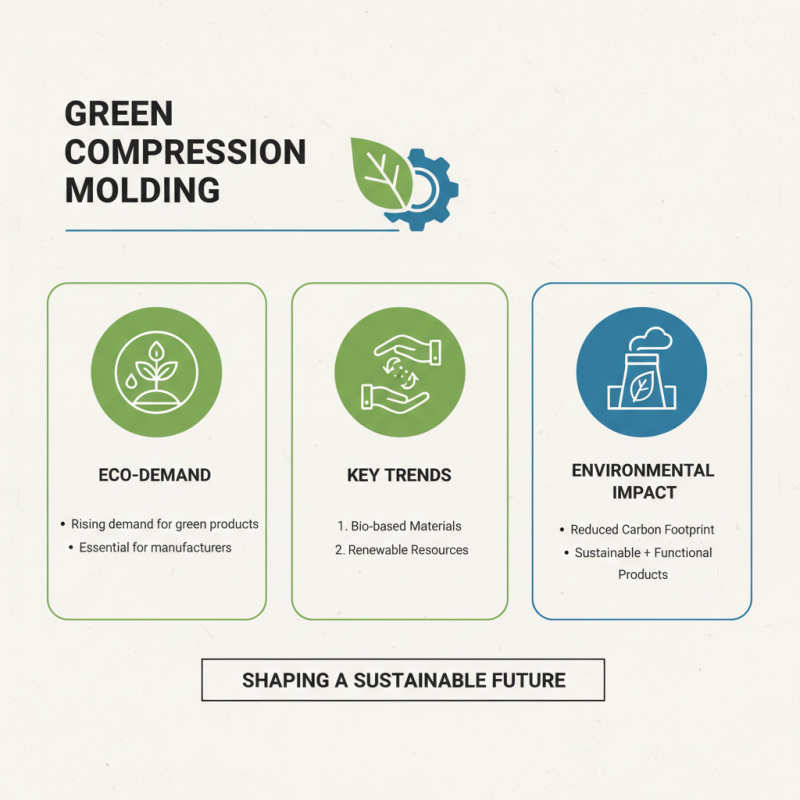
As the demand for eco-friendly solutions increases, the adoption of sustainable practices in compression molding is becoming essential. This manufacturing process, which utilizes high pressure to shape materials, presents unique opportunities for reducing environmental impact. One of the key trends is the shift towards bio-based materials, which are derived from renewable resources. These materials not only help in minimizing the carbon footprint but also satisfy consumer demand for greener products. By integrating alternative fillers and resins made from natural sources, manufacturers can ensure that their products are both functional and environmentally responsible.
Moreover, there is a growing emphasis on recycling within the compression molding sector. Closed-loop systems and recycled materials are being utilized to create high-quality components, thereby reducing waste and conserving raw materials. Companies are investing in technologies that enhance the recyclability of their products and improve the overall sustainability of the molding process. This focus on recycling not only helps in resource conservation but also aligns with global efforts to reduce landfill contributions and promote circular economies. As the industry progresses, these sustainable practices will play a crucial role in shaping a more environmentally friendly future for compression molding.
Market Trends Influencing Compression Molding Demand and Growth
The compression molding industry is poised for significant growth in 2025, driven by several key market trends that shape demand and production capabilities. One of the most notable trends is the increasing adoption of sustainable materials in manufacturing processes. Industries are increasingly prioritizing eco-friendly raw materials, such as bio-based resins, which not only meet regulatory standards but also appeal to environmentally conscious consumers. This shift towards sustainability is pushing manufacturers to innovate and develop new formulations that can be effectively used in compression molding applications.
Additionally, advancements in technology and automation are set to revolutionize the compression molding sector. The integration of smart manufacturing techniques, such as real-time monitoring and precision control systems, enhances efficiency and reduces waste during production. These technologies facilitate faster turnaround times and greater customization options, allowing manufacturers to respond more swiftly to market demands. As industries continue to seek efficient and cost-effective production methods, the growing reliance on advanced technologies will further drive the expansion of compression molding in various applications, including automotive, aerospace, and consumer products.
Advancements in Materials Used in Compression Molding Processes
The advancements in materials utilized in compression molding processes are driving significant changes in the manufacturing landscape. One noteworthy trend is the increased use of sustainable materials, such as bio-based resins and recycled plastics. These materials not only reduce the environmental impact of production but also meet the growing demand for eco-friendly products. As manufacturers embrace sustainability, they are exploring innovative blends that enhance the overall performance and durability of molded parts, leading to greater acceptance in various industries.
Moreover, the development of high-performance composites has revolutionized compression molding techniques. These composites often combine thermoplastics with advanced fibers, resulting in lightweight yet robust components. This enhancement allows for the creation of parts that can withstand greater stress and wear, making them ideal for applications in automotive, aerospace, and construction sectors. As research continues, more sophisticated materials are expected to emerge, pushing the boundaries of what can be achieved through compression molding and expanding its applications across different fields.
The Role of Automation in Enhancing Compression Molding Efficiency
The integration of automation in the compression molding process is revolutionizing the manufacturing industry, significantly enhancing production efficiency and quality. According to a recent report by Mordor Intelligence, the global compression molding market is projected to grow at a CAGR of 4.5% from 2020 to 2025, driven by innovations in automation technologies. Automating the compression molding process not only reduces cycle times but also minimizes human error, leading to greater consistency in product quality. Automation tools such as robotic arms and computer numerical control (CNC) systems enable manufacturers to execute complex molding tasks with precision and speed, ultimately accelerating production rates.
Furthermore, the utilization of advanced data analytics within automated systems is enabling real-time monitoring and predictive maintenance, which significantly reduces downtime. A study by McKinsey indicates that companies harnessing automation can achieve efficiency gains of up to 20-30%. As manufacturers increasingly adopt Industry 4.0 principles, the integration of IoT devices and machine learning algorithms into the compression molding process will empower businesses to optimize their operations further. This technological shift is not only beneficial for boosting productivity but also plays a crucial role in resource management, reducing waste and energy consumption, which aligns with the growing demand for sustainable manufacturing practices.
Top 2025 Compression Molding Trends You Need to Know About
| Trend |
Description |
Impact on Efficiency |
Automation Role |
| Increased Use of Robotics |
Integration of robotic arms for precise placement of materials. |
Reduces cycle time and minimizes human error. |
Automating material handling and insertion processes. |
| Smart Sensors |
Utilization of IoT-enabled sensors for real-time monitoring. |
Improves quality control and offers predictive maintenance. |
Automation in data collection and analysis for decision-making. |
| Material Innovations |
Development of advanced composite materials for better durability. |
Enhances product lifespan and reduces waste. |
Automating the mixing and handling processes of new materials. |
| Process Optimization Software |
Implementation of software that simulates and optimizes molding processes. |
Improves cycle times and reduces production costs. |
Incorporates automation in planning and scheduling production runs. |
| Sustainability Practices |
Adopting eco-friendly materials and recycling processes. |
Increases market competitiveness and reduces environmental impact. |
Automation in recycling and material recovery systems. |